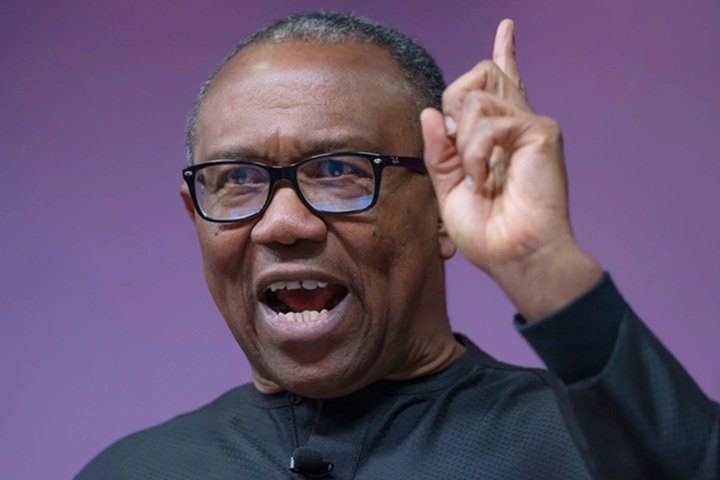
I have read some of our people’s responses to Mr. Peter Obi’s reaction to the conviction of Mr. Nnamdi Kanu. From Obi’s viewpoint, the conviction is an unfortunate development that risks inflaming national tension at a time when Nigeria is already struggling with severe economic hardship and insecurity. He maintained that Kanu should not have been arrested in the first place, arguing that the government failed to address legitimate grievances through dialogue and inclusive governance before resorting to force. Obi cautioned that rigid legalism without political wisdom only deepens division, noting that many countries adopt negotiated or political solutions when legal outcomes threaten national stability. Calling for calm, he urged the Presidency and respected national elders to choose healing over hostility and to pursue a path grounded in justice, fairness, and reconciliation.
I appreciate your viewpoint, as well as the concerns raised by others. They are understandable and rooted in genuine pain. However, to properly frame the issue and avoid conclusions driven by emotion rather than context, a few important clarifications are necessary.
To begin with, Peter Obi has consistently condemned violence and commiserated with families affected by insecurity across Nigeria, not just in the South-East. Each time there was a kidnapping, bombing, or attack anywhere in the country, he issued statements mourning the victims and urging the government to act. His reaction to the abduction of schoolchildren in the North followed the same pattern — condolence, empathy, and calls for decisive action.
On the specific case of Dr. Chike Akunyili, Obi did not treat it as a distant tragedy. He personally led the effort to secure Dr. Akunyili’s remains and take them to the mortuary. He was part of the grieving community.
Now, to the central issue: political solution.
Seeking a political solution does not mean excusing crimes or overlooking victims. It means recognizing that certain crises — especially those with political, ethnic, or ideological roots — cannot be resolved by force alone. This is neither unique to Nigeria nor new in global governance.

Throughout history, nations have resolved seemingly impossible tensions through dialogue, negotiation, and calibrated political compromise:
• Northern Ireland’s “The Troubles” — a 30-year conflict that killed over 3,500 people — ended not by continued military force but through the Good Friday Agreement, a political settlement between the British government, Irish authorities, and previously armed groups.
• South Africa confronted decades of violent apartheid with a political settlement that freed Nelson Mandela and initiated national reconciliation, instead of clinging to punitive measures that would have plunged the nation into deeper bloodshed.
• Colombia’s peace deal with FARC, after over 50 years of guerrilla warfare, was achieved not because crimes were ignored but because political dialogue offered a path that military action could not.
• Rwanda, after the genocide, deliberately pursued national healing through reconciliation courts and political reintegration, not endless cycles of retribution.
• Even the United States, after its Civil War, adopted political and reconstruction measures in place of pure punitive logic, because sustainable peace demanded more than justice — it demanded stability.
These examples underscore a simple truth:
Nations do not solve political crises through force alone. They solve them when courage meets wisdom.
Why was amnesty granted to Niger Delta militants? Not because their actions were condoned, but because the cost of a purely military response was destroying the nation. At some point, the government recognized that negotiations, reintegration, and amnesty were the only pathways to peace.
The same logic applies here.
Whether we like it or not, more people died after the arrest of Nnamdi Kanu than before it. The reprisals, radicalisation, and breakdown of order that followed his detention were painful realities. And we must ask: What concrete steps has the Federal Government taken to secure the South-East since his arrest?
In Anambra, most active security interventions today are from Agụnaechemba forces, not the federal authorities. If a region feels abandoned by the centre, what moral argument remains against exploring political settlement?
If continued detention keeps escalating violence — and the government lacks either the will or capacity to decisively contain it — then political solution becomes not a favour to the offender, but a duty to the innocent.
Consider the sit-at-home crisis.
For years, the South-East lost billions, schools were paralysed, businesses crippled, and fear became a way of life. Much of this worsened because of a leadership vacuum created by Kanu’s detention.
If freeing him through a political resolution can immediately end the sit-at-home, restore normalcy, and save lives, why should a responsible government refuse that option?
Governance is not only about punishment —
it is about preventing avoidable suffering.
Under the balance of probability, any leader must weigh:
• How many more lives will be lost?
• Can the security forces actually enforce stability?
• What is the economic cost of continued tension?
• What path restores peace the fastest?
We all grieve the lives lost — every innocent person, every family shattered. But we must also confront the collateral damage created by the current approach. If political resolution will save more lives than continued force, restore trust, and give the region breathing space, then it is not only a practical choice — it is the moral one.
A political solution is not about the offender.
It is about the nation.
It is about ending bloodshed.
It is about healing a wounded region.
It is about restoring stability where force has failed.
That is the context many people are arguing from — not denial of atrocities, but a desperate search for what will finally stop them.