



Thailand and international authorities have intensified a crackdown on Cambodia’s Prince Holding Group, freezing and seizing billions in assets tied to alleged cyber scams and forced labour operations.
The company’s Chinese-born founder, Chen Zhi, was indicted by the US in October for running forced labour camps in Cambodia. Workers there are reportedly trafficked to carry out online scams targeting people worldwide.
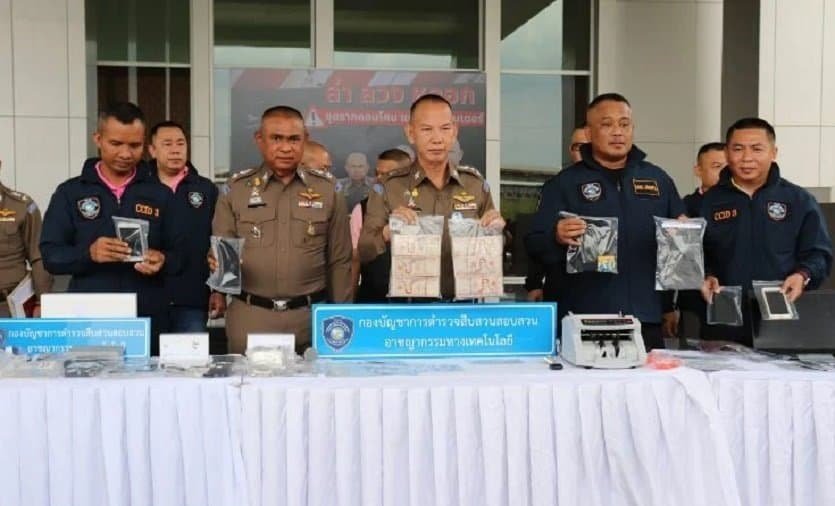
Thailand’s Prime Minister Anutin Charnvirakul told reporters that the latest asset seizures, valued at more than $300 million, included Chen, a Cambodian senator, and two Thai nationals. He stressed that “all those responsible must be brought to justice under the law.”
Thailand’s Anti-Money Laundering Office confirmed the seizure of about 100 items linked to Chen, worth 373 million baht ($11.7 million). These include land, cash, jewellery, and luxury goods. Authorities also confiscated nearly $15 million from Cambodian senator and businessman Kok An, an ally of former Cambodian leader Hun Sen.

Additionally, approximately $290 million in assets were seized from two Thais suspected of involvement in the scam operations. Details on the timing of the seizures were not disclosed.
Cyber-scam networks have grown rapidly across Southeast Asia. Some workers join voluntarily, while others are trafficked and held in prison-like conditions. These operations often operate from ordinary office blocks or warehouses, targeting victims globally.
International authorities have acted alongside Thailand. The UK froze Chen’s London property and business assets worth over $130 million. Taiwan, Singapore, and Hong Kong each seized assets worth up to $350 million.
In October, the US Justice Department described Prince Holding Group as “one of Asia’s largest transnational criminal organisations.” The US also confiscated about $15 billion in bitcoin, allegedly the proceeds of the company’s cyber fraud networks.
Despite the allegations, Prince Holding Group this month denied any wrongdoing. Chen and his company maintain they have not committed crimes.
The global crackdown highlights growing international cooperation in tackling cybercrime and forced labour, sending a warning to illicit operators in Southeast Asia and beyond.




