


The United Nations, ECOWAS and neighbouring Nigeria have declared full support for President Patrice Talon after a swift military operation crushed an attempted coup in Benin Republic.
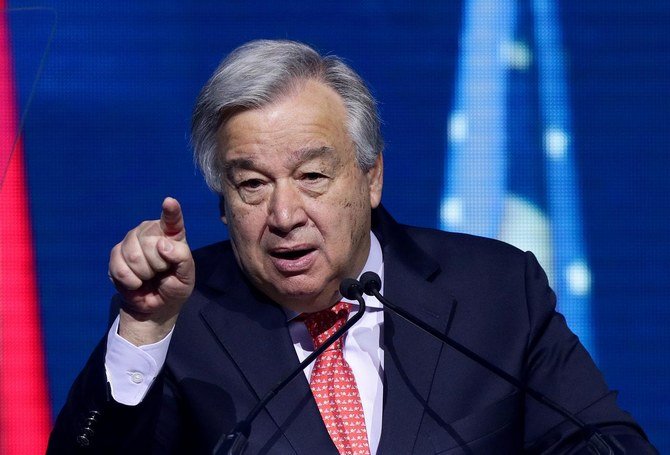
UN Secretary-General António Guterres, in a statement released through his spokesman, said he was “deeply concerned” about the attempt to “unconstitutionally seize power,” warning that any disruption to democratic governance in Benin could worsen instability in an already fragile West African region.
Guterres called for strict respect for Benin’s constitution and urged protection of democratic institutions from military interference.
He added that his Special Representative for West Africa and the Sahel, Leonardo Santos Simão, is in direct contact with Beninese authorities, political actors and regional bodies to support efforts to restore calm.

He reaffirmed the UN’s commitment to helping national and regional institutions defend constitutional order “in Benin and across West Africa,” while coordinating closely with ECOWAS and the African Union.
The attempted takeover began early Sunday when soldiers identifying themselves as the Military Committee for Refoundation seized state television, announced the dissolution of the government and claimed President Talon had been removed.
But within hours, Benin’s interior minister announced that loyal forces had regained control of key installations and foiled the coup.
President Talon later thanked security chiefs for their swift response.
The incident adds to a series of coups and attempted takeovers that have shaken West Africa in recent years, including the recent post-election military seizure of power in Guinea-Bissau.
ECOWAS moved quickly, denouncing the coup attempt as “a subversion of the will of the people.”
The bloc ordered the deployment of troops from Nigeria, Ghana, Sierra Leone and Côte d’Ivoire to reinforce Benin’s military and preserve constitutional order.
The rapid deployment highlights ECOWAS’ efforts to deter further coups after successful military takeovers in Mali, Burkina Faso, Niger and Guinea – and the new instability in Guinea-Bissau.
Nigeria, Benin’s most powerful neighbour, led the emergency response. President Bola Tinubu, who chairs ECOWAS, praised the Nigerian armed forces for their “decisive contribution” to restoring control in Cotonou.
Presidential spokesperson Bayo Onanuga confirmed that Benin submitted two separate requests for air support and for ground forces.
Nigerian troops then joined loyal Beninese units in clearing mutineers from the state broadcaster and strategic sites.
“It took some hours before loyal forces, assisted by Nigeria, flushed out the coup plotters from the national television station,” Onanuga said, adding that Nigeria acted strictly in line with ECOWAS directives on defending democracy.
With authorities declaring the situation “under control,” attention is shifting to the fate of the detained plotters and the broader implications for regional stability.
Both the UN and ECOWAS say they will maintain close engagement with Cotonou to ensure the coup attempt does not trigger further unrest in a region already battling democratic setbacks.




