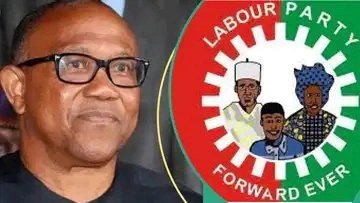
Speculation is growing that Peter Obi, the Labour Party’s presidential flagbearer in the 2023 election, may officially part ways with the party as early as this week.
DDM notes that the possible exit follows prolonged leadership disputes and internal conflicts that have continued to undermine the stability of the Labour Party, raising questions about its future as a credible political force ahead of the 2027 general elections.
Reports indicate that the party’s unresolved leadership crisis, which has persisted for months, is central to Obi’s considerations.
Multiple factions within the Labour Party continue to claim legitimacy, with figures such as Julius Abure, Nenadi Usman, Callistus Okafor, and Lamidi Apapa asserting themselves as rightful national leaders.

Sources told DDM that Obi’s advisers and close allies have reportedly encouraged him to leave the party, citing the inability of its leadership to reconcile internal differences and present a unified front ahead of the upcoming elections.
Obi, a former governor of Anambra State, had previously indicated his readiness to contest the 2027 presidential election on the Labour Party platform.
His potential departure has generated widespread concern among party faithful, popularly known as Obidients, who played a central role in his 2023 campaign and in establishing the party as a credible alternative to Nigeria’s dominant political forces.
An unnamed senior official from the Nenadi Usman faction revealed that while Obi’s supporters would remain loyal to him regardless of his political platform, there is disappointment over the toll the party’s internal disputes have taken on dedicated members who anticipated political and structural rewards in 2027.
Political analysts note that Obi’s influence is significant. In 2023, his campaign reshaped Nigeria’s political landscape, forcing established parties to recalibrate strategies and redefining voter expectations of third-party candidates.
His continued presence in the Labour Party could bolster its chances in 2027, while his departure might trigger further fragmentation and weaken the party’s electoral competitiveness.
Observers also point out that the possible defection highlights the broader challenges facing opposition parties in Nigeria, where internal divisions, contested leadership, and factionalism frequently undermine collective political strategies.
Analysts warn that without urgent reconciliation, the Labour Party risks losing momentum and credibility, particularly as major political parties consolidate support ahead of the general elections.
Meanwhile, Obi’s political moves are being closely monitored by other opposition figures and party strategists, as any shift in allegiance could reshape alliances and voter dynamics ahead of the 2027 elections.
The unfolding situation underscores the delicate balance between individual political ambitions and party cohesion in Nigeria’s multiparty system. For now, both Obi’s supporters and Labour Party loyalists await clarity on the matter, as decisions in the coming days are expected to define the party’s trajectory and influence Nigeria’s broader political landscape in the lead-up to 2027.