


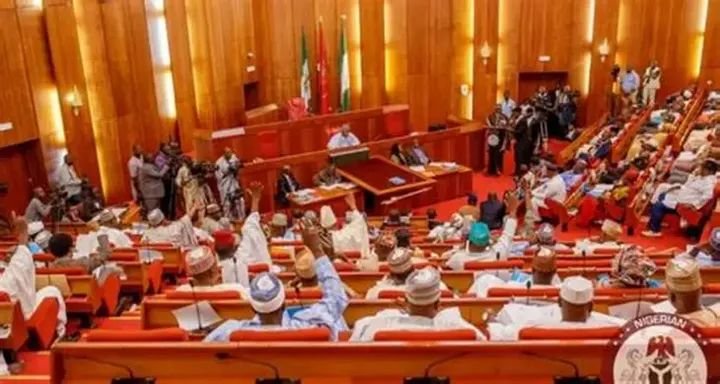
The Nigerian Senate has risen in defence of Emmanuel Adeyemi, an ambassador-designate nominated by President Bola Ahmed Tinubu, following public criticism over his inability to correctly name all three serving senators from his home state of Ekiti during a recent screening exercise.
The controversy emerged during the Senate’s confirmation hearing when Adeyemi, while responding to questions meant to test his familiarity with national political structures, failed to accurately list the trio of senators currently representing Ekiti State at the National Assembly.
The moment sparked murmurs within the chamber and quickly gained traction on social media, with critics questioning the nominee’s preparedness, political awareness, and suitability for a diplomatic posting.
However, the Senate leadership and several lawmakers have dismissed the incident as a minor slip that should not overshadow the nominee’s broader credentials and career experience.
Leading the defence, senior senators argued that the screening process should focus on competence, integrity, track record, and capacity to represent Nigeria’s interests abroad, rather than momentary lapses in recall.
They stressed that diplomatic effectiveness is not determined by the ability to recite names under pressure, but by a nominee’s understanding of foreign policy, negotiation skills, and commitment to national service.
According to senators who spoke during the session, Adeyemi’s nomination followed extensive background checks by security agencies and relevant committees, all of which reportedly raised no red flags.
The lawmakers maintained that ambassadorial appointments are not political quizzes, warning against turning confirmation hearings into public ridicule platforms that discourage qualified professionals from accepting national assignments.
Some senators also noted that even seasoned politicians have occasionally made similar errors in public settings, describing such moments as human and not necessarily reflective of incompetence.
They cautioned against allowing social media outrage to dictate legislative decisions, emphasizing that the Senate must act based on facts, fairness, and institutional standards.
In defending the nominee, the Senate reiterated its commitment to a transparent screening process, while insisting that nominees should be judged holistically rather than on isolated moments.
The upper chamber also reminded the public that ambassadors represent Nigeria as a whole, not just their states of origin, and are expected to promote national interests on the global stage.
Supporters of Adeyemi pointed out that his professional background, international exposure, and prior public service roles were more relevant indicators of his suitability for diplomatic responsibilities.
They argued that reducing the screening outcome to a single question undermines the seriousness of Nigeria’s foreign service and the broader objectives of diplomatic engagement.
Nevertheless, some observers outside the National Assembly have expressed concern that the incident reflects a wider issue of political detachment among public appointees.
Critics insist that a basic awareness of one’s home-state political representation should be expected of anyone aspiring to represent Nigeria abroad, arguing that it demonstrates attentiveness and grounding.
The debate has once again highlighted tensions between merit-based appointments and public perception in Nigeria’s political space.
Diaspora Digital Media (DDM) reports that the Senate is expected to proceed with the confirmation of the ambassadorial nominees after concluding deliberations, barring any security or ethical issues.
The controversy comes amid renewed public scrutiny of federal appointments under the Tinubu administration, with citizens increasingly demanding transparency, competence, and accountability in governance.
As Nigeria seeks to reposition its foreign policy and strengthen diplomatic relations, the outcome of the screening underscores the delicate balance between institutional judgment and public expectations.
DDM gathered that Senate leaders have urged Nigerians to focus on the broader implications of foreign representation rather than isolated moments during confirmation hearings.


