



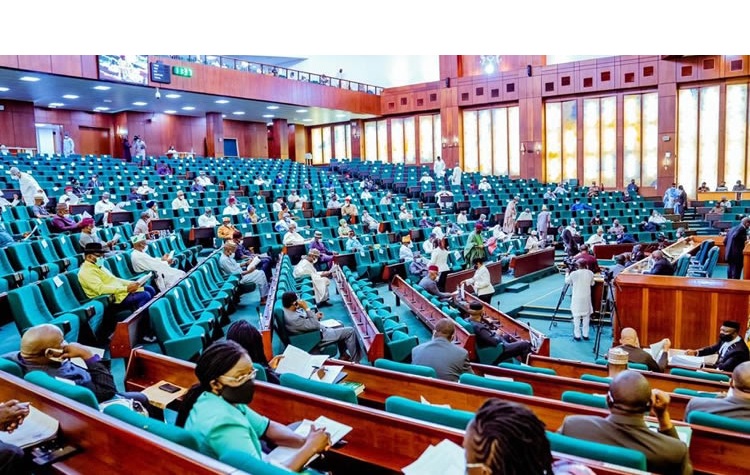
The House of Representatives has approved President Bola Ahmed Tinubu’s request to extend the implementation of the capital component of the 2025 Appropriation Act to 31 March 2026, citing funding constraints and fiscal realities.
The approval was granted on Tuesday during plenary after lawmakers adopted the report of the House Committee on Appropriations following a clause-by-clause consideration of the revised 2024 and 2025 budget bills in the Committee of Supply.
President Tinubu had last Friday transmitted the Appropriation (Repeal and Re-enactment) Bills for 2024 and 2025, seeking legislative approval to repeal the existing budgets and replace them with revised expenditure frameworks aligned with prevailing fiscal conditions.
In his request, the president said the revised budgets reflect a 30 per cent capital implementation target, which he described as more realistic given the government’s execution capacity. He added that extending the 2025 budget timeline would ensure the full release and utilisation of capital allocations by ministries, departments and agencies (MDAs).

As part of the review, the House passed the revised 2024 budget, increasing the total size from ₦35.05 trillion to ₦43.56 trillion. The revised framework provides ₦1.74 trillion for statutory transfers, ₦8.27 trillion for debt servicing, ₦11.27 trillion for recurrent expenditure, and ₦22.28 trillion for capital expenditure and development fund contributions.
Lawmakers also approved the revised 2025 budget, reducing total expenditure from ₦54.99 trillion to ₦48.32 trillion for the period ending March 31, 2026. The budget allocates ₦3.64 trillion to statutory transfers, ₦14.31 trillion to debt service, ₦13.58 trillion to recurrent spending, and ₦16.76 trillion to capital expenditure.
Presenting the committee’s report, Chairman of the Appropriations Committee, Abubakar Bichi, said the revisions were necessary due to revenue shortfalls and funding gaps affecting capital projects. He disclosed that about ₦16.76 trillion earmarked for capital projects could not be funded within the original 2025 timeline and would be rolled over to 2026.
While acknowledging concerns over overlapping budget cycles, Bichi said the committee agreed the extension was unavoidable given current fiscal constraints.
The House passed the bills for third reading and adjourned plenary until 27 January 2026 for the Christmas and New Year recess.




