



While millions of people around the world are still counting down the final hours of December 31, decorating homes, planning fireworks, and drafting New Year resolutions, one small nation in the Pacific Ocean has already turned the page on the calendar. Long before midnight strikes in Europe, Africa, Asia, or the Americas, the Republic of Kiribati has already stepped into the New Year 2026.
This annual phenomenon is not a matter of celebration alone, but a fascinating intersection of geography, global timekeeping, and a strategic national decision that permanently reshaped the world’s understanding of time zones.

Kiribati earns its distinction as the first country to welcome the New Year because of its position on the far eastern edge of the globe, near the International Date Line. In particular, Kiritimati, also known as Christmas Island, located in the country’s Line Islands group, operates on the UTC+14 time zone. This is the most advanced time zone on Earth, placing Kiribati up to 26 hours ahead of the last places to ring in the New Year, such as parts of Hawaii and the U.S. Pacific territories.

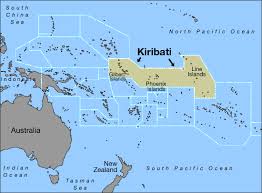
When the clock strikes midnight in Kiritimati, ushering in January 1, it is still the morning—or even the previous calendar day—in cities like New York, London, or Lagos. As a result, Kiribati reliably becomes the first nation on the planet to pop the champagne corks and raise the New Year’s banner.
This remarkable time advantage did not happen by accident. In the 1990s, Kiribati made a deliberate and unprecedented decision to adjust its national time zones. Before then, the country was split across the International Date Line, meaning that different parts of the same nation were observing different calendar days at the same time. Government operations, communication, and national planning became unnecessarily complicated.
To solve the problem, Kiribati shifted the International Date Line eastward around its territory, effectively placing all of its islands on the same calendar day. The move brought administrative unity and, unintentionally, global attention. From that moment on, Kiritimati became the first inhabited place on Earth to greet the New Year, a status it has held ever since.
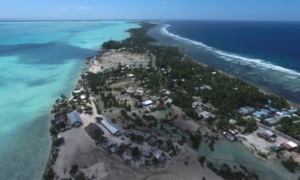
Beyond its place in the global clock, Kiribati is one of the world’s most geographically unique and environmentally vulnerable nations. The country is made up of 33 coral atolls and one raised coral island, scattered across the central Pacific Ocean and straddling the equator. Although its landmass totals just about 811 square kilometres—roughly half the size of London—its maritime territory stretches across an ocean area comparable to the size of India.
Kiribati is home to approximately 130,000 people, most of whom are I-Kiribati of Micronesian descent. The capital, South Tarawa, is a narrow chain of islets that houses more than half of the country’s population and is among the most densely populated areas in the Pacific. The official languages are Gilbertese, also known as I-Kiribati, and English, while Christianity—predominantly Roman Catholic and Protestant—shapes much of daily life and cultural practice.
The nation’s history dates back thousands of years to early Micronesian settlers, with later cultural influences from Fiji and Tonga. Under British colonial rule, the islands were known as the Gilbert Islands until Kiribati gained independence in 1979. Notably, Kiribati remains the only country in the world that lies across all four hemispheres: north, south, east, and west.
Its national flag reflects its identity and environment—a golden sun rising over blue and white ocean waves, with a frigate bird soaring above, symbolising freedom, resilience, and the deep connection between the people and the sea.
Daily life in Kiribati revolves around fishing, coconut cultivation, and strong communal bonds. However, the country faces an existential threat from climate change. Rising sea levels, coastal erosion, and saltwater intrusion threaten to render many of its low-lying atolls uninhabitable within decades. In response to this looming danger, Kiribati has taken extraordinary measures, including the purchase of land in Fiji as a potential future resettlement option for its people.
As the rest of the world continues its countdown to midnight, Kiribati stands as a powerful reminder of how interconnected—and yet divided by time—our planet truly is. Each year, as it quietly steps into the future ahead of everyone else, this small island nation highlights both the marvels of human timekeeping and the urgent challenges facing vulnerable countries on the frontlines of climate change.
While much of the world is still waiting for the New Year to arrive, Kiribati has already begun writing the first chapter of 2026—offering a hopeful message of resilience, foresight, and unity for the year ahead.




