


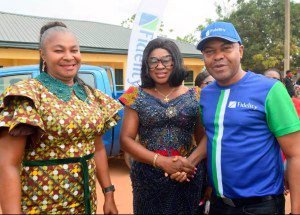
(DDM) – Fidelity Bank Plc has renovated an administrative building at Community Secondary School in Enugwuabo Ufuma, Orumba North Local Government Area of Anambra State, to improve learning conditions.
DDM gathered that the project targeted long-standing infrastructure problems that teachers and students had faced for years.
The bank completed a comprehensive upgrade of the one-storey administrative block to restore offices, workspaces, and essential facilities.
The school community received the renovated structure during a formal handover ceremony attended by officials and community stakeholders.

Residents said the building had previously shown visible signs of decay that worried parents and staff.
The ceremony drew local education authorities, traditional leaders, and representatives of the state government.
Fidelity Bank representatives said they chose the school after identifying urgent needs in underserved communities.
The bank linked the intervention to its corporate social responsibility programs across Nigeria.
Dr. Nosa Orumwense, Regional Bank Head in Awka, said the project supports youth development through better education spaces.
He stated that improved facilities can raise discipline, morale, and academic focus among students.
He added that investment in schools strengthens the long-term future of communities.
Education officials welcomed the renovation as timely support for a public school system under pressure.
Professor Ngozi Chuma-Udeh represented the Anambra State governor at the event.
She described the intervention as a practical example of corporate responsibility in action.
She said organizations show their human side when they invest in social needs.
She recalled that authorities earlier placed the school on an emergency list because of poor infrastructure.
She said previous inspections raised safety concerns for both learners and staff.
She noted that the school environment now looks safer and more encouraging for study.
Community members expressed gratitude and urged other companies to support public schools.
Parents said better facilities can motivate students to attend classes regularly.
Nigeria’s public education sector has struggled with funding gaps and overcrowded classrooms for decades.
Many rural schools operate with aging buildings and limited teaching resources.
Analysts say private sector interventions increasingly fill gaps left by tight government budgets.
However, experts warn that isolated projects cannot replace systemic education reforms.
They argue that sustained funding and policy stability remain essential for quality schooling.
Fidelity Bank listed education as a priority area in its national CSR framework.
The bank serves millions of customers through digital platforms and physical branches.
It operates offices across Nigeria and maintains a United Kingdom subsidiary.
Observers say bank-led projects can build goodwill and strengthen community relations.
Critics also question whether CSR projects sometimes double as brand promotion.
Supporters counter that communities benefit regardless of corporate motives.
Students at the Ufuma school resumed activities in the improved facility with optimism.
Teachers said a better workspace can improve administration and record keeping.
Local leaders called the renovation a partnership between business and society.
They encouraged sustained collaboration to address broader educational challenges.
Education advocates stress that safe buildings alone do not guarantee quality learning.
They recommend teacher training, materials, and monitoring alongside infrastructure.
The Anambra project now stands as one example of private support for public education.
Many communities across Nigeria still await similar upgrades.
The debate continues over how best to fund and manage Nigeria’s schools.
For now, students in Enugwuabo Ufuma study in a safer environment because of the intervention.




