


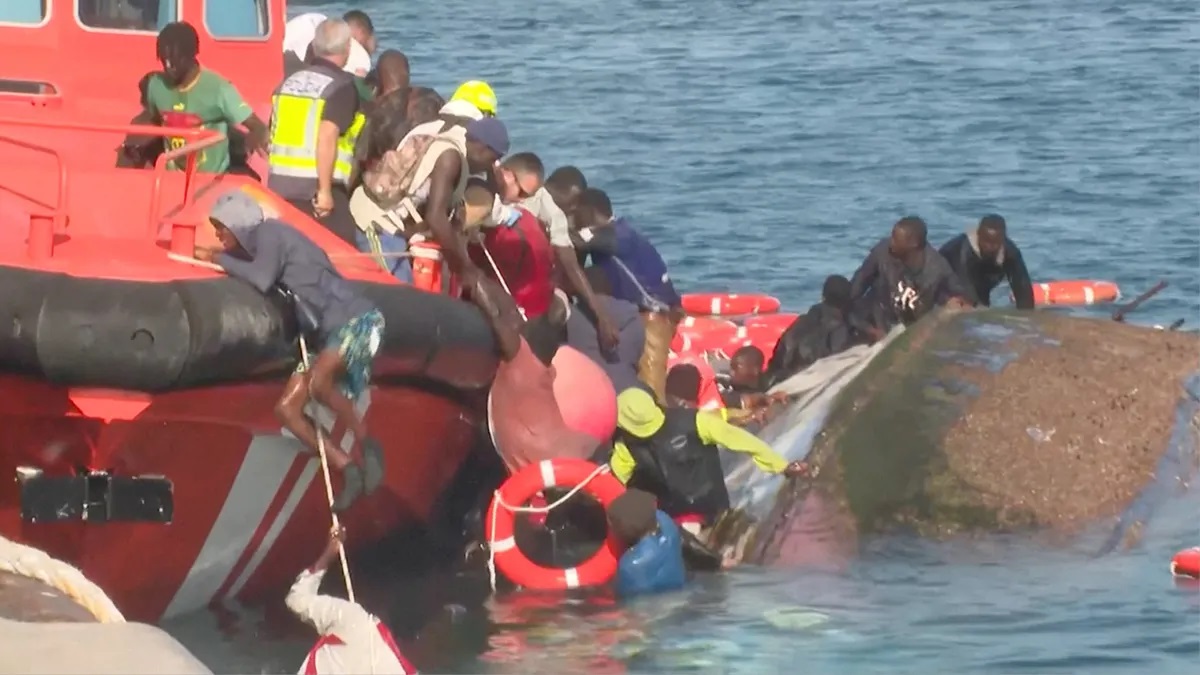
At least 53 migrants, including many Nigerians, are feared dead or missing after a rubber boat carrying 55 people capsized off Libya’s coast, the International Organization for Migration (IOM) has said.
In a statement, the UN migration agency confirmed that two Nigerian women were rescued during a search-and-rescue operation conducted by Libyan authorities. The incident occurred over the weekend in the central Mediterranean Sea, north of the coastal town of Zuwara.
According to the IOM, the boat departed from Zawiya at about 11:00 p.m. on Thursday. Approximately six hours into the journey, the vessel began taking on water before eventually capsizing in cold winter conditions.
One of the rescued Nigerian women reported that her husband drowned in the incident, while the other said both of her babies had died.

The survivors told aid workers that the vessel was carrying migrants and refugees from several African countries. Although their intended destination was not confirmed, many boats departing Libya attempt the dangerous crossing to the Italian island of Lampedusa, located about 350 kilometres from Zawiya.
The IOM has repeatedly warned that the inflatable rubber dinghies commonly used for such journeys are unsafe and ill-suited for open sea travel, particularly during harsh weather conditions.
Describing the tragedy as the latest in a series of deadly shipwrecks, the agency warned that many more incidents may go unrecorded.
“IOM does not consider Libya to be a safe port for migrants,” the agency stated.
The organisation also disclosed that investigations revealed some migrants had previously been held in captivity and subjected to torture in attempts to extort ransom payments from their families. Following a raid on an illegal detention facility in Ajdabiya, authorities uncovered evidence of abuse.
In a separate operation in Kufra, officials discovered an underground detention site where 221 migrants and refugees — including women, children and a one-month-old baby — were freed. Initial findings suggested they had been held for prolonged periods in inhumane conditions.
To assist vulnerable migrants, the IOM continues to facilitate voluntary humanitarian return flights. In late January, the agency supported 177 Nigerian migrants in returning home through such a programme.
The Mediterranean remains one of the world’s deadliest migration routes, with humanitarian organisations repeatedly calling for stronger protections and safer migration pathways.




