In the simmering political heat of Nigeria’s journey toward the 2027 general elections, a new socio-political force has emerged from the depths of online youth mobilisation, igniting spirited debate and challenging established narratives about who speaks for the everyday Nigerian. Known simply as the Village Boy Movement, this loosely organised but rapidly expanding collective has taken to social media to position ordinary Nigerians — particularly those from rural, small-town, and grassroots backgrounds — at the forefront of political discourse and as a counter-weight to elite-driven campaigning in support of President Bola Ahmed Tinubu’s bid for re-election. The movement’s emergence on February 13, 2026 has captured the attention of commentators, activists, and political strategists alike, not merely for its rhetoric but for what it signals about the evolving dynamics of political engagement in Nigeria’s fractured and highly contested public sphere.
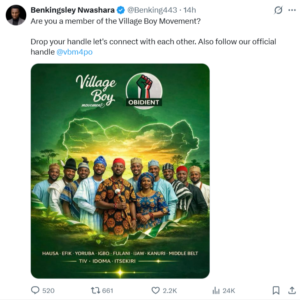
At its core, the Village Boy Movement presents itself as the authentic voice of “the people who built Nigeria with their sweat, ambition, and resilience,” unfiltered by elite interests and free from what they portray as the commercial and celebrity-driven political machinery that has dominated the last election cycle. This self-described grassroots uprising has explicitly aligned itself with supporters of Peter Obi — the former Labour Party presidential candidate and prominent opposition figure — urging adherents to rally behind his vision ahead of 2027 under the rallying cry #PeterObiOrNothing. Although Obi himself has not publicly endorsed the movement or directly commented on its formation on his official social media platforms, the campaign’s creators have made no secret of their intent to tap into the deep well of enthusiasm that buoyed his 2023 presidential bid and to channel it into a sustained force of popular mobilisation for the next election cycle. This online energy contrasts sharply with the more structured, well-financed campaigns backing President Tinubu, particularly the City Boy Movement, a pro-Tinubu youth platform reportedly supported by influential figures and corporate backers across Nigeria’s economic diaspora.
The movement’s rise is inseparable from the broader terrain of Nigerian political identity — a battleground where narratives about authenticity, elite influence, and socio-economic marginalisation are fiercely fought. As its name suggests, the Village Boy Movement rejects the urban-elitist imagery and influence associated with what its members term “City Boy” politics — epitomised by well-heeled business leaders, celebrity figures, and metropolitan networks that have rallied behind President Tinubu’s Renewed Hope Agenda and his introduction of nationwide reforms. The City Boy Movement has boldly proclaimed intentions to mobilise millions of votes nationwide and continues to enjoy significant visibility and institutional backing, with marches, empowerment programmes and endorsements from key political stakeholders.


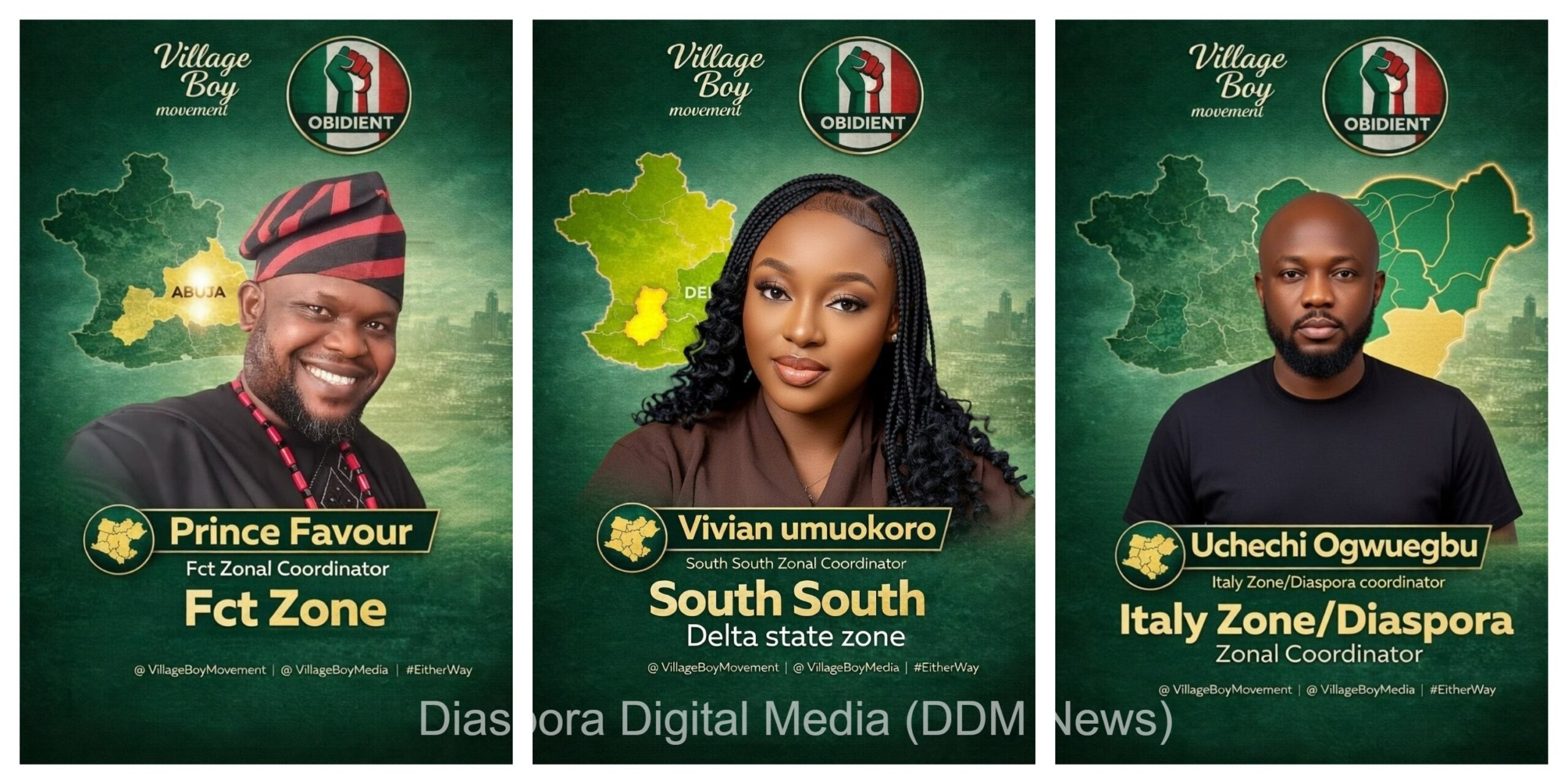
In contrast, the Village Boy Movement’s appeal is rooted in the conviction that Nigeria’s villages, small towns, and rural communities have long been excluded from political influence and economic opportunity. Their messaging leans heavily on culturally resonant themes — pride in humble origins, distrust of perceived elite paternalism, and a desire for political representation that “sounds like us, feels like us, and fights for us.” In practice, this has translated into social media campaigns featuring self-styled regional leaders representing areas such as the South East, North America diaspora, the Federal Capital Territory (FCT), and Rivers State — all echoing similar sentiments about reclaiming political agency for the undercounted and underserved.
What makes the Village Boy Movement particularly noteworthy is not merely its opposition posture but its strategic use of digital platforms to carve out a narrative space in Nigeria’s highly polarized political discourse. In a country where digital activism has previously fuelled major socio-political moments — from the #EndSARS protests to vibrant political advocacy groups — the movement’s architects are deliberately positioning their campaign as both cultural and political resistance. They are tapping into a set of frustrations that resonate across Nigeria’s multi-ethnic population: economic hardship, perceived disconnects between leadership and the masses, and long-standing debates over equitable representation and governance. In doing so, they have effectively reinvented grassroots mobilisation for the digital age, staking their claim in the political arena long before official campaign structures are fully formed around the 2027 elections.
For its part, the movement has not escaped criticism or skepticism. Observers aligned with pro-Tinubu camps have dismissed the Village Boy rhetoric as superficial online posturing with little measurable impact beyond social media engagement. Meanwhile, some political analysts caution that the absence of formal organisation, clear leadership structures, and defined policy frameworks could limit the movement’s influence, particularly when contrasted with the resource-rich machinery backing the incumbent president. Nevertheless, the emotional resonance of the Village Boy message — amplified by countless social media posts, viral hashtags, and communal exchanges — reflects a palpable yearning among segments of Nigeria’s youth and rural population for more inclusive political expression.
Despite the absence of an official endorsement from Peter Obi, the movement’s leaders have intentionally refrained from overtly personalising their appeal, instead framing their activism as a collective journey towards systemic change. This stance resonates with Obi’s own 2023 campaign legacy, which energised many Nigerians with its promise of economic reform, institutional accountability, and a break from traditional power politics. Whether Obi re-enters the fray for 2027 — a question that has yet to be answered — the Village Boy Movement’s existence suggests that his ideas remain influential and that a segment of Nigeria’s electorate remains eager for leaders who embody humility, authenticity, and a connection to grassroots experiences.
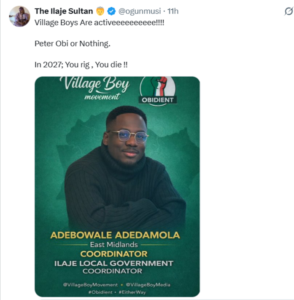
The emergence of the Village Boy Movement comes at a time of heightened political activity nationwide, with public figures, celebrities, and influential business leaders openly declaring their political affiliations and future ambitions. Backers of President Tinubu, such as socialite Obi Cubana and other high-profile personalities, have already thrown their weight behind the incumbent’s re-election bid through initiatives like the City Boy Movement, generating visibility, brand partnerships, and coordinated outreach efforts across Nigerian states and beyond.
In the end, the Village Boy Movement’s story is about more than just another faction within Nigeria’s 2027 electoral contest. It speaks to deeper questions about identity, power, and the nature of political belonging in a nation where demographic diversity and youth activism are reshaping the rules of engagement. Whether it translates into measurable electoral support or evolves into something more structurally potent remains to be seen. What is undeniable, however, is that in the digital agora of contemporary Nigerian politics, voices once relegated to the sidelines are finding new platforms, new confidence, and, perhaps most importantly, new audiences — rewriting the narrative not just of who makes noise, but who might ultimately decide the future of Nigeria.