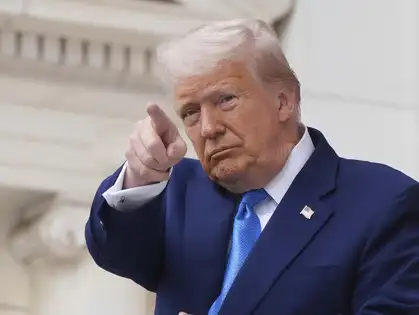
United States President Donald Trump has suggested that regime change in Iran would be “the best thing that could happen,” marking one of his clearest endorsements yet for replacing the country’s clerical leadership.
Speaking on Friday, Trump criticised Iran’s rulers, saying they had spent decades engaging in rhetoric while lives were lost. He declined to identify a preferred successor but added that “there are people” capable of leading the country.
Iran’s Supreme Leader, Ali Khamenei, has not publicly responded to the remarks.
U.S. deploys additional carrier
As tensions intensify, the United States is sending a second aircraft carrier to the Middle East to increase pressure on Tehran during negotiations over a new nuclear agreement.

The USS Gerald R. Ford the newest and largest U.S. aircraft carrier is expected to relocate from the Caribbean soon and will join the USS Abraham Lincoln already stationed in the region.
The Pentagon initially deployed a carrier strike group earlier this year after warning it could strike Iran following a crackdown on mass protests among the most significant unrest since the Iranian Revolution established the Islamic Republic.
Nuclear deal pressure and regional tensions
Trump has repeatedly threatened military action if Tehran does not agree to new nuclear terms.
However, after talks at the White House with Benjamin Netanyahu, he said negotiations would continue.
Speaking at Fort Bragg, Trump urged Iran to accept a new deal “if it wants to avoid confrontation.”
Washington is demanding that Iran halt uranium enrichment. Israel has also called for limits on Tehran’s ballistic missile programme and its support for regional groups such as Hamas and Hezbollah.
Iran has signalled willingness to limit aspects of its nuclear programme in exchange for sanctions relief. However, President Masoud Pezeshkian warned that Tehran “will not yield to excessive demands.”
Diplomatic track remains open
Trump withdrew the U.S. from the 2015 nuclear accord during his first term and reimposed sweeping sanctions that weakened Iran’s economy.
Talks resumed last year toward a new agreement but were disrupted by a brief 12-day conflict between Israel and Iran.
His latest remarks reflect a sharper rhetorical stance even as diplomacy remains officially on the table.