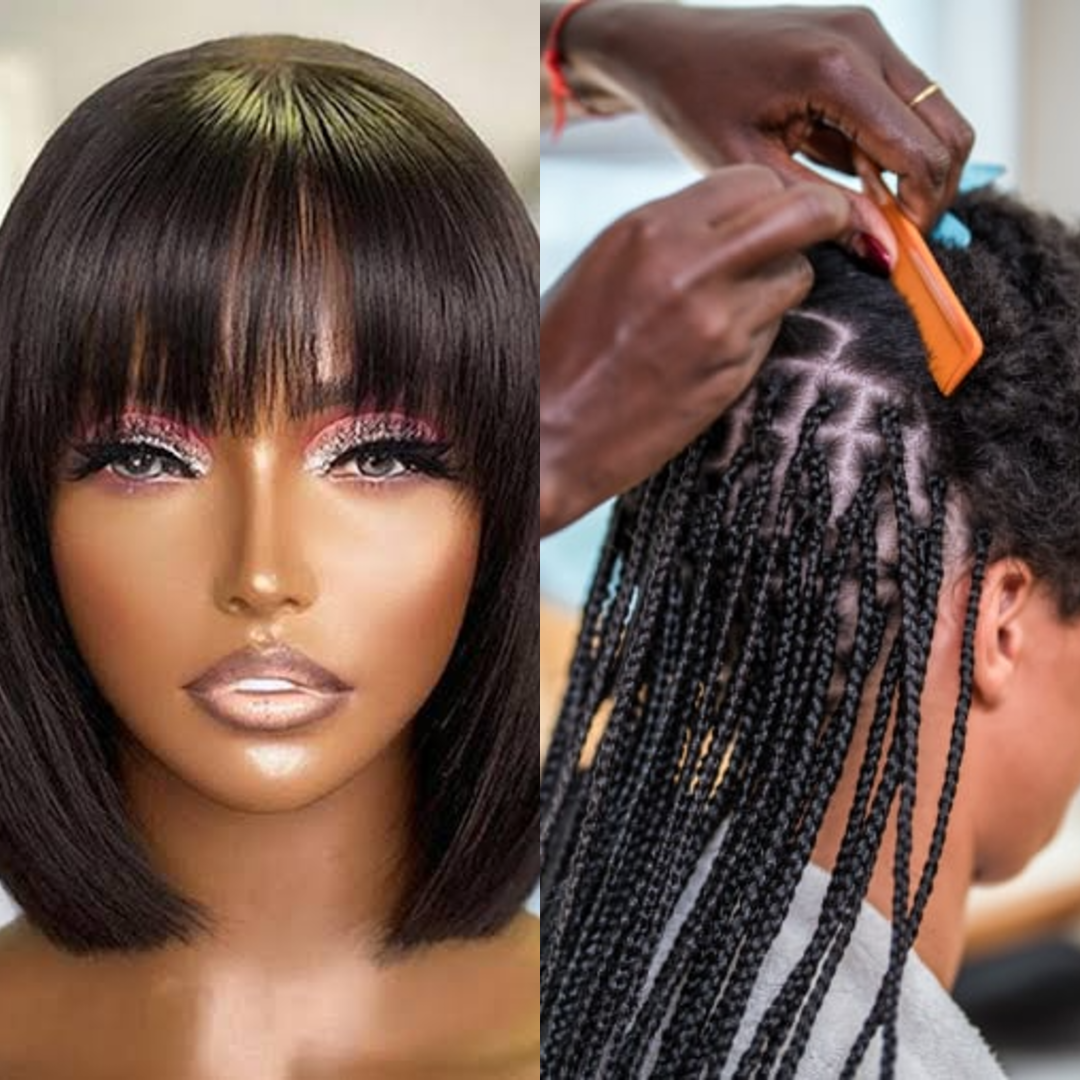
Hair extensions have long been more than a beauty accessory across Africa they are identity, convenience, culture, and confidence woven into everyday life.
From braids and weaves to wigs and lash extensions, millions of women rely on them as protective styling options and expressions of personal style.
However, a new scientific study is raising serious health concerns that cannot be ignored.
Researchers publishing in the journal Environment & Health have found that both synthetic and human hair extensions may contain hundreds of chemicals linked to cancer, hormonal disruption, and reproductive harm.

This revelation is especially significant for Nigerian women, where protective hairstyles are not just fashionable but practical in managing natural hair in humid climates and busy lifestyles.
What Scientists Found
The study analyzed 43 hair samples, including synthetic extensions, human hair extensions, eyelash extensions, and banana fiber hair.
The findings were alarming:
More than 900 chemical substances were detected.
169 chemicals were identified, many linked to human health risks.
Nearly all samples contained potentially harmful compounds.
Some contained organotin compounds, chemicals historically used in industrial processes such as preventing barnacles from attaching to ships.
Phthalates, linked to hormonal disruption, were present.
Some samples contained pesticides and flame retardants.
17 chemicals linked to breast cancer were detected.
12 substances are listed under California’s Proposition 65 for cancer and reproductive harm warnings.
Perhaps most troubling: many of these chemicals are not disclosed on product labels.
Why This Matters for Nigerian Women
Hair extensions are deeply embedded in African beauty culture. Studies indicate that over 70% of Black women use extensions at least once a year.
But repeated and prolonged exposure raises questions:
Extensions are worn for weeks or months at a time.
Chemicals can be absorbed through the scalp.
Heat styling and hot water treatments can release toxic fumes.
Users may inhale volatile compounds during installation or styling.
Common complaints such as scalp irritation, rashes, itching, and swelling may be early warning signs of chemical sensitivity or allergic reactions.
Beyond surface irritation, long-term exposure may pose deeper health risks that science is only beginning to understand.
Heating and Chemical Exposure
Many installation methods involve:
Dipping synthetic braids in hot water
Heat sealing ends
Blow drying and straightening
Research shows heat exposure can release volatile organic compounds (VOCs) from synthetic fibers.
These emissions may cause:
headaches
eye, nose, and throat irritation
respiratory problems
nervous system effects
increased cancer risk with prolonged exposure
Are “Natural” or “Organic” Options Safer?
Not necessarily.
Labels such as natural, organic, or green do not guarantee safety. However, the study found that products labeled “non-toxic” or “toxic-free” showed fewer harmful substances — though research remains limited.
Practical Steps to Reduce Risk
While regulation remains weak globally, experts suggest precautionary steps:
✔ Rinse extensions before use to reduce chemical residue
✔ Avoid excessive heat styling and burning synthetic fibers
✔ Limit how long extensions are worn continuously
✔ Choose products labeled non-toxic where possible
✔ Pay attention to scalp irritation and remove extensions if reactions occur
✔ Take breaks between installations
Some users report rinsing extensions with apple cider vinegar helps reduce irritation, although this is not scientifically proven.
The Bigger Issue: Lack of Regulation
Experts stress that consumers should not bear the burden of safety.
Unlike food and medicines, hair extension products often lack strict regulatory oversight. Manufacturers are not required to fully disclose chemical treatments used during production.
As a result, women may unknowingly expose themselves to harmful substances through routine beauty practices.
Culture, Choice, and Health
Hair extensions remain an important part of African identity and self-expression. The goal is not fear but awareness.
Women should not have to choose between beauty, cultural expression, and health.
As research continues, transparency, regulation, and consumer education will be essential in ensuring that beauty does not come at a hidden cost.
Until then, awareness remains the first line of protection.