



Health authorities in London have confirmed a fast-spreading measles outbreak affecting several schools in the northern part of the city, with at least 34 children infected.
The UK Health Security Agency (UKHSA) said the laboratory-confirmed cases were recorded in January, mainly in Enfield, and account for more than one-third of the 96 measles cases reported across England during the first month of the year.
Local health providers reported that one in five infected children required hospital care, noting that all admitted patients had not been fully immunised.
Schools and Communities Affected

Officials said infections have been confirmed in at least seven schools across Enfield and neighbouring Haringey. Enfield Council stated it is working with health agencies and local partners to curb the spread in line with national public health guidelines.

Councillor Alev Cazimoglu said the outbreak has primarily affected children, with some requiring short hospital stays.
Health experts emphasised that vaccination remains the most effective protection against measles. Families are being urged to ensure children are up to date with their immunisations, with free catch-up clinics available nationwide.
Dr Vanessa Saliba of the UKHSA warned the outbreak is largely affecting unvaccinated children under 10 and stressed that measles can lead to severe complications and, in rare cases, death.
Recent data show measles vaccination coverage in Enfield remains low. Only 64.3% of five-year-olds had received both doses of the MMR vaccine in 2024/25, significantly below the recommended 95% threshold needed for community protection.
Nationwide coverage stands at 84.4%, down from 88.8% in 2014/15.
The World Health Organization recently announced that the UK lost its measles elimination status following outbreaks in 2024.
Symptoms and Spread
Measles is highly contagious and spreads through coughs, sneezes, and contact with contaminated surfaces.
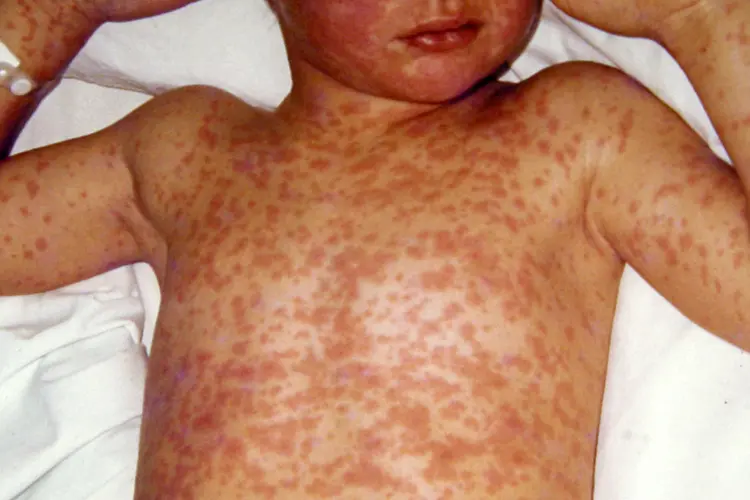
Symptoms include high fever, red watery eyes, coughing, sneezing, white spots inside the mouth, and a blotchy rash that usually begins on the face before spreading.
Health officials advise parents to seek medical guidance and isolate suspected cases to prevent further transmission.

