


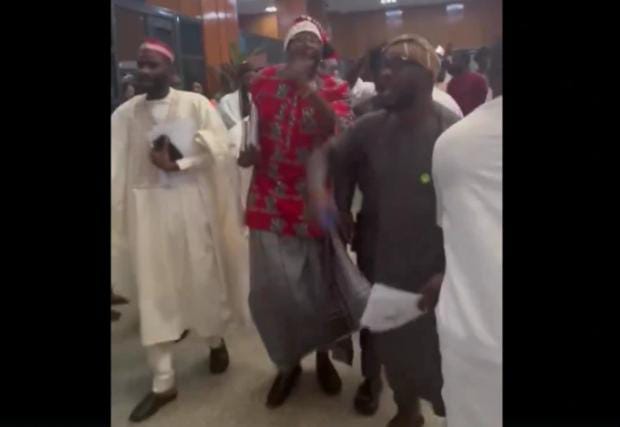
(DDM) – A dramatic protest unfolded in Nigeria’s lower legislature on Tuesday as members of the House of Representatives staged a walkout while chanting “APC ole” during deliberations on the Electoral Act Amendment Bill.
The incident followed the adoption of Clause 60(3), a provision dealing with the transmission of election results and the role of electronic systems in the process.
Tension reportedly began when Bamidele Salam moved a motion seeking to remove the option of manual transmission of results.
He argued that allowing manual transmission alongside electronic methods could weaken election credibility and slow the country’s technological progress in electoral management.
The motion was seconded by Kingsley Chinda, who supported a stronger commitment to full electronic transmission.
However, the proposal failed after the “nays” carried the vote during a voice count on the floor.
The outcome immediately generated tension among lawmakers, with raised voices and visible disagreement across party lines.
The presiding officer, Tajudeen Abbas, later called for an executive session in a bid to calm frayed nerves and find consensus.
Despite the closed-door meeting, disagreements persisted and lawmakers returned to plenary without a clear resolution.
As proceedings resumed, some members confronted the chair and disrupted the flow of debate.
Lawmakers were seen preventing Benjamin Kalu from continuing with legislative business.
The confrontation eventually led to a coordinated walkout by aggrieved members.
Those who exited the chamber maintained that their protest targeted Clause 60(3) and what they viewed as a weakening of compulsory electronic transmission.
Chants referencing the ruling All Progressives Congress echoed in the chamber as the protesting lawmakers departed.
Observers say the episode highlights deep divisions over how elections should be conducted in Nigeria.
Electronic transmission of results has remained a sensitive topic since previous elections, with supporters citing transparency and critics raising logistical and legal concerns.
Analysts note that disagreements over electoral reforms often intensify as the country moves closer to another election cycle.
The latest clash underscores how central election credibility has become in Nigeria’s political discourse.
As of the time of reporting, no final compromise had been announced on the disputed clause.
The Electoral Act Amendment Bill is expected to continue through legislative processes, where further debates and possible revisions may still occur.
Post Views: 325




