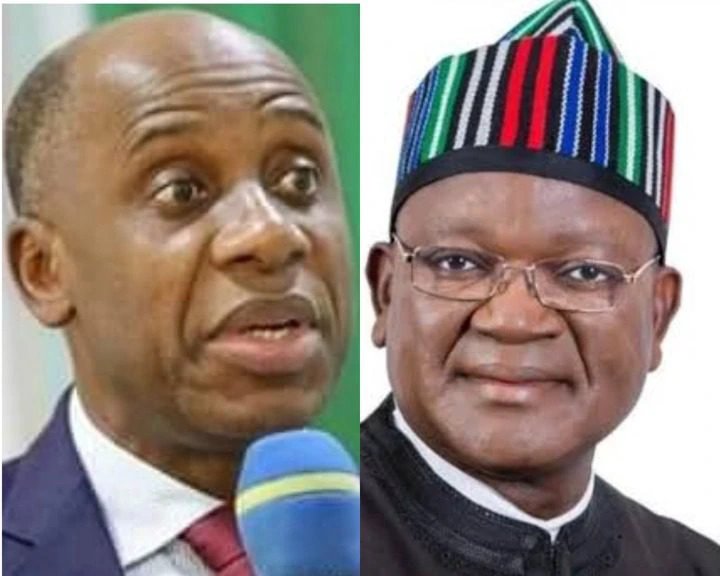
(DDM) – Former Rivers State governor Rotimi Amaechi has recounted an incident in which a Catholic priest allegedly stopped former Benue governor Samuel Ortom from addressing a congregation during a thanksgiving Mass in Makurdi.
Amaechi narrated the episode while speaking about integrity and accountability in public life, using the story as an example of what he described as rare moral courage among religious leaders.
According to his account, Ortom moved to speak to worshippers after the church service but was quickly interrupted by the officiating priest.
Amaechi claimed the priest took the microphone and warned the former governor not to make untrue statements inside the church.

He quoted the cleric as telling Ortom that any falsehoods should be said outside the church premises, not in what he described as God’s house.
The former Rivers governor praised the priest’s action, saying it showed boldness in the presence of political authority.
He argued that many clergy might hesitate to openly challenge powerful politicians, especially sitting or former governors.
Amaechi presented the story as a broader lesson on the role of moral voices in society, particularly from the pulpit.
Neither Ortom nor representatives of the Catholic Church in Benue State have publicly responded to the claim at the time of this report.
It also remains unclear when exactly the alleged incident occurred or what Ortom intended to say before being stopped.
Public figures in Nigeria often attend church services and thanksgiving ceremonies, where they sometimes address congregations.
Such appearances can blend religious gatherings with political messaging, a practice that has drawn both support and criticism.
Observers note that religious institutions in Nigeria hold significant social influence and sometimes serve as spaces where political leaders seek public goodwill.
Analysts also say tensions can arise when political narratives enter religious settings meant for worship.
Amaechi’s remarks have since circulated in political discussions online, with supporters citing them as a call for honesty in leadership.
Critics, however, caution that the story reflects one side of events and requires independent confirmation.
The account adds to ongoing debates about the relationship between politics, religion and public accountability in Nigeria.