


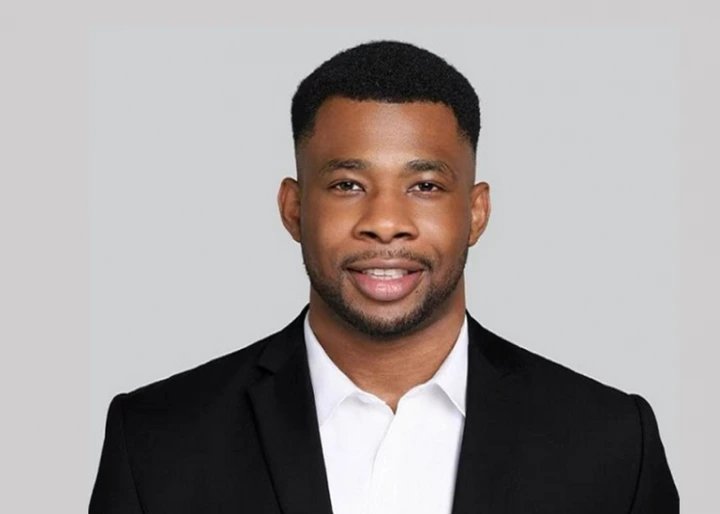
(DDM) – In the bustling tech hub of Shenzhen, often referred to as China’s Silicon Valley, a Nigerian engineer is breaking barriers in artificial intelligence and robotics.
Francis Okafor, originally from Anambra State, has spent eight years in China, establishing himself in one of the world’s most competitive innovation ecosystems.
Currently serving as Tech Lead at IDEMIA, a multinational company specializing in biometrics and identity security, Okafor manages complex DevOps, AI, and robotics projects spanning five continents.
Despite his high-ranking corporate role, Okafor remains deeply involved in coding and technical execution. He told Techeconomy, “Even though I’m a tech lead, I still write the core code. My work is about 70 per cent tech and 30 per cent managerial. I’m still a full-fledged tech guy.”

Okafor’s work goes beyond corporate responsibilities. He is a passionate advocate for technology and community building, chairing the Shenzhen Afrotech Community and co-founding the Shenzhen–Hong Kong Afrotech Network. His goal is to connect African tech talent with China’s fast-growing innovation landscape.
He notes the challenge of African representation in elite tech circles. Many locals still associate Africans with sports and music, making Okafor’s presence as a Nigerian AI expert both unique and impactful.
“In China, Africans are usually seen as being good at sports or music. When you say you’re an engineer or working in AI, people don’t really associate that with Africans,” he said.
Okafor also offers insights into China’s rapid technological advancement. He explains that the country succeeded by transforming from mere consumers of technology to innovators.
“The Chinese don’t just adopt technology. They take the idea, block it, improve it, and build their own,” he said.
He contrasts this with Nigeria’s tech ecosystem, which he believes is still trapped in a consumption loop, relying heavily on imported ideas rather than developing original solutions.
By combining technical excellence with advocacy and mentorship, Okafor aims to reshape perceptions of African professionals in global technology.
His journey underscores the importance of representation, skill, and initiative in building bridges between African talent and international tech markets, highlighting how leadership in innovation can extend far beyond national borders.
Through his work, Francis Okafor is proving that Africans can thrive in deep tech and AI, challenging stereotypes while contributing to cutting-edge developments in one of the world’s most competitive tech environments.




