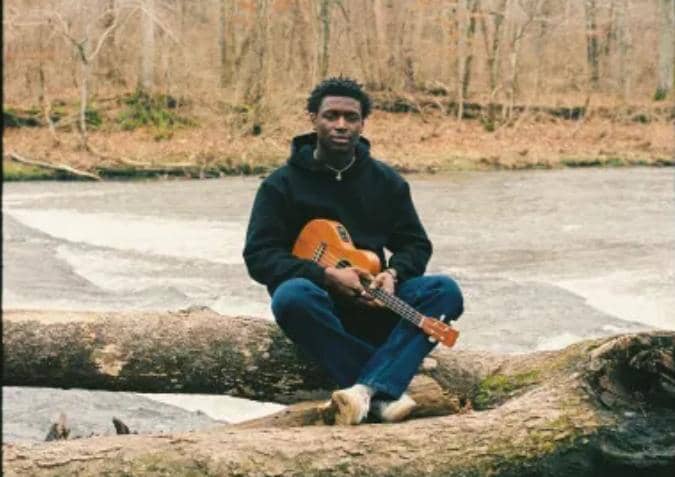
(DDM) – A new cultural conversation is emerging around the idea of Afro-Appalachia, and singer-songwriter Mon Rovîa is positioning himself at the center of it.
The rising artist, born Janjay Lowe in war-torn Liberia and raised in the United States, says he is inspired by ancient West African storytelling traditions.
His artistic vision recently found resonance in the film Sinners directed by Ryan Coogler.
The movie, nominated for a record-breaking 16 Oscars, follows Sammie, a preacher’s son whose powerful voice and Dobro guitar carry him through supernatural turmoil into modern musical success.
At the heart of the film is the concept of the griot, the revered West African storyteller who preserves history through poetry and song.
The opening narration references these centuries-old cultural custodians, drawing a line between ancestral memory and contemporary creativity.
For Mon Rovîa, that symbolism feels deeply personal.
Speaking about the film’s impact, he described the power of seeing a young singer portrayed as carrying the voices of his ancestors.
He said the character’s gift represents a spiritual inheritance meant to uplift a community.
The idea of ancestral energy, he noted, mirrors his own artistic journey.
Raised between continents, he has often reflected on what it means to carry West African identity into American spaces.
The Appalachian foothills of Tennessee, long associated with folk and country traditions, may not immediately evoke images of African heritage.
Yet historians have documented the overlooked Black roots embedded within Appalachian music and culture.
The banjo itself, now synonymous with Appalachian sound, traces its origins to West African instruments brought to America during the transatlantic slave trade.
By blending folk textures with African storytelling traditions, Mon Rovîa aims to spotlight that historical connection.
He sees himself as a modern griot, tasked with narrating both personal and collective histories.
In interviews, he has emphasized that griots come specifically from West Africa, the same region where he was born.
That lineage, he believes, gives him a unique responsibility to tell stories that bridge continents.
Afro-Appalachia, as a concept, challenges narrow assumptions about regional identity.
It suggests that Black cultural contributions to Appalachian life are not peripheral but foundational.
Through songwriting, Mon Rovîa explores themes of migration, displacement, resilience, and belonging.
His lyrics often reflect on the experience of being shaped by both African memory and American reality.
Cultural analysts say artists like him are redefining how audiences understand American roots music.
Rather than treating African influence as distant history, he presents it as a living, breathing force.
The success of films like “Sinners” has amplified conversations about lineage, heritage, and artistic inheritance.
For Mon Rovîa, that cinematic portrayal serves as affirmation that ancestral stories still matter.
As he continues to release music and perform across the United States, he carries forward a narrative that merges Liberia, Appalachia, and the broader African diaspora.
In doing so, he is not only reshaping genre boundaries but also inviting listeners to reconsider whose voices have always echoed through the mountains.