


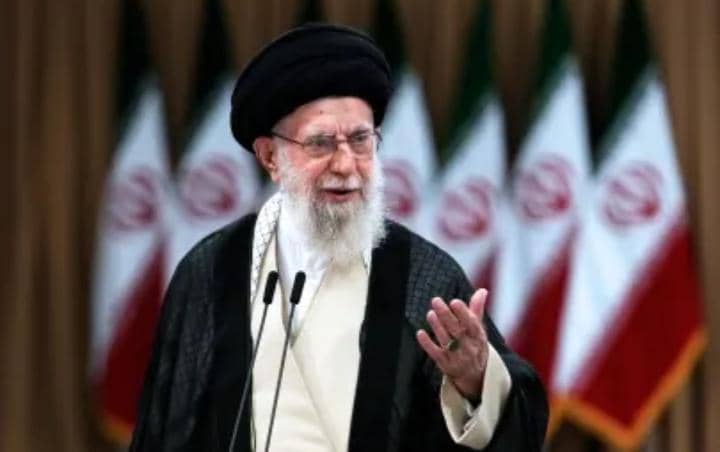
(DDM) – The killing of Iran’s Supreme Leader has opened an uncertain chapter for the Islamic Republic, with no clear successor immediately positioned to assume the country’s most powerful office.
The death of Ayatollah Ali Khamenei in joint US-Israeli strikes has left Iran’s clerical establishment scrambling to manage a political transition at a time of military confrontation and internal tension.
For nearly four decades, Khamenei ruled Iran with sweeping authority over the armed forces, judiciary, intelligence services and state broadcasting apparatus.
His leadership shaped Iran’s confrontational posture toward the United States and Israel, as well as its regional strategy of backing proxy militias across Lebanon, Syria, Iraq and Yemen.

Yet despite his long tenure, Khamenei did not publicly designate an official heir.
Under Iran’s constitution, the responsibility for appointing a new supreme leader falls to an elected clerical body known as the Assembly of Experts.
This body consists of 88 senior clerics chosen by public vote, though candidates themselves are vetted by institutions aligned with the supreme leader.
The Assembly’s role is both powerful and rarely exercised.
Since the establishment of the Islamic Republic in 1979, it has formally selected a supreme leader only once.
That moment came in 1989 following the death of Ayatollah Ruhollah Khomeini, the founder of the Islamic Republic.
At the time, Khamenei was hastily elevated to the position despite not initially being considered among the most senior religious authorities.
His appointment surprised many observers and demonstrated how political calculations inside Iran’s clerical elite can outweigh traditional religious hierarchy.
Now, analysts say the Assembly of Experts faces its most consequential decision in decades.
Potential successors could emerge from senior clerical ranks, including figures close to Iran’s powerful Revolutionary Guard establishment.
Some observers have previously speculated about the possibility of Khamenei’s son playing a behind-the-scenes role, though no formal process has endorsed such speculation.
The selection process is expected to involve intense deliberations among senior clerics, military commanders and political elites.
Unlike presidential elections, the decision will unfold largely behind closed doors.
The stakes are exceptionally high.
Iran is not only navigating internal political uncertainty but also responding to external military pressure following the strikes that killed its top leader.
A new supreme leader will inherit control over Iran’s nuclear policy, regional alliances and its confrontation with Washington and Tel Aviv.
The position holds ultimate authority above the president and parliament, making it the central pillar of Iran’s power structure.
Any delay or division within the Assembly of Experts could deepen uncertainty at a time when the country faces unprecedented security challenges.
International observers are watching closely for signs of unity or fracture within Iran’s ruling elite.
The transition could determine whether Iran doubles down on hardline policies or cautiously recalibrates its domestic and foreign agenda.
For now, there is no officially declared frontrunner.
What is clear is that the Assembly of Experts must act swiftly to prevent a prolonged power vacuum.
The coming days may shape not only Iran’s leadership but also the broader trajectory of Middle Eastern geopolitics for years to come.




