


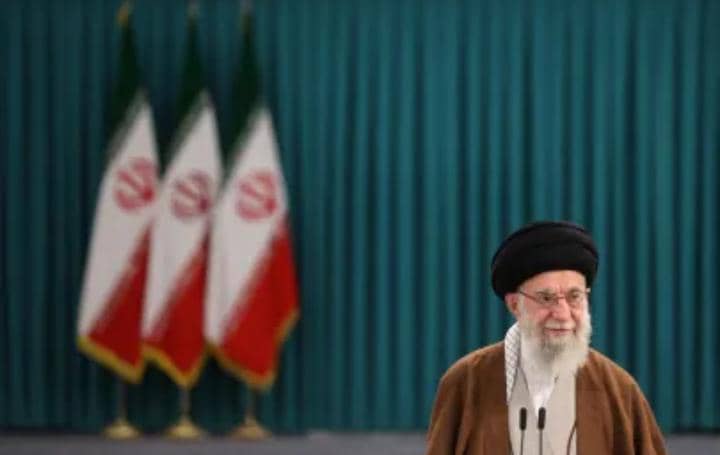
(DDM) – The dramatic death of Iran’s Supreme Leader, Ayatollah Ali Khamenei, in a coordinated United States–Israeli military strike has left Tehran facing a deepening leadership crisis, with no obvious successor ready to step in, intensifying uncertainty at a moment of already heightened regional peril.
The surprise confirmation of Khamenei’s death by Iranian state media has created a vacuum at the pinnacle of the Islamic Republic’s political and religious hierarchy.
Ayatollah Ali Khamenei had wielded dominant authority over Iran’s government, armed forces and judiciary since 1989, shaping decades of domestic repression and a foreign policy centered on resisting Western influence.
His removal has stunned Iran’s clerical establishment and triggered urgent deliberations over what comes next for a regime already under military pressure.

Under Iran’s constitution, the next supreme leader must be selected by the Assembly of Experts, an 88-member council of senior Shiite clerics.
This body, elected for eight-year terms but vetted by a powerful religious oversight system, is tasked with choosing and supervising the country’s top clerical authority.
Yet the Assembly has only exercised this responsibility once since the Islamic Republic was established in 1979.
That moment came in 1989 following the death of Ayatollah Ruhollah Khomeini, the founder of the Islamic Republic.
Khamenei himself was then selected in a rapid and politically sensitive process, despite not being regarded at the time as the most senior religious authority.
The current leadership vacuum emerges at an extraordinary and volatile moment.
Khamenei’s rule was marked by centralized control in which the supreme leader’s authority extended far beyond ceremonial religious status.
He held final say over Iran’s nuclear and missile programs, the Revolutionary Guard, and the national judiciary.
Few figures within Iran’s governing elite possess comparable influence or institutional backing, complicating the Assembly’s task of finding an immediate and broadly accepted replacement.
Iranian law allows for a temporary leadership arrangement if a successor cannot be swiftly chosen.
In such a scenario, a provisional council consisting of the sitting president, the head of the judiciary, and a cleric selected by the Guardian Council would assume the supreme leader’s responsibilities.
However, analysts warn that an interim structure may struggle to contain factional rivalries between hardliners and more pragmatic political actors.
Externally, the leadership void has already sent shockwaves through the Middle East.
Iran has launched retaliatory missile and drone attacks across the region, escalating an already volatile confrontation.
The removal of such a central authority figure has unsettled allies and adversaries alike, prompting urgent questions about whether Iran’s strategic direction will remain confrontational or undergo recalibration.
Regional observers suggest that a successor could emerge from within the senior clerical ranks, potentially someone closely aligned with Iran’s powerful Revolutionary Guard establishment.
Speculation has also surfaced about behind-the-scenes influence by individuals close to Khamenei, though no official indication has confirmed such scenarios.
The deliberations of the Assembly of Experts are expected to take place largely behind closed doors.
Given the secrecy surrounding Iran’s clerical politics, the selection process may offer limited transparency to the public or international community.
What remains clear is that the choice of Iran’s next supreme leader will shape not only the country’s domestic stability but also its nuclear policy, military posture and diplomatic trajectory.
As Tehran navigates this uncertain transition, the world is watching closely.
The power vacuum left by Khamenei’s death may prove far easier to create than to control, raising profound questions about whether the forces that engineered this moment will ultimately welcome what follows.




