


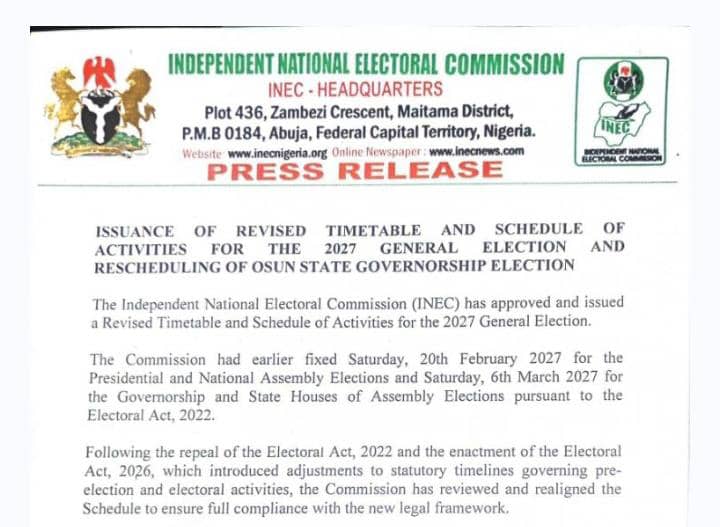
(DDM) – A prominent Diaspora political figure has raised alarm over Nigeria’s evolving electoral framework, warning that new digital compliance requirements could reshape the country’s democratic landscape ahead of the 2027 general elections.
Diaspora Digital Media (DDM) reports that Dr. Kenneth Gbandi, a Hamburg-based opposition stalwart and former leader within the Nigerians in Diaspora Organisation Europe (NIDOE), has openly criticized the Independent National Electoral Commission’s 2027 electoral timetable.
At the center of the controversy is INEC’s directive requiring political parties to submit verified digital membership registers within 34 days, a move the commission says is part of broader efforts to modernize party administration and strengthen internal democracy.
But Gbandi argues the timeline is not reform-driven innovation, but what he describes as “digital disenfranchisement” disguised as modernization.
In a strongly worded statement, he warned that the compressed deadline may function as a structural barrier that disproportionately disadvantages smaller political parties lacking financial and technological capacity.
He described the 34-day window as a “predatory timeline” in a country still grappling with unstable power supply, uneven broadband access, and wide digital literacy gaps.
Nigeria’s 2023 general elections provide important context for the current distrust.
INEC had promised technological safeguards, including the Bimodal Voter Accreditation System (BVAS) and real-time results upload through the IReV portal, to enhance transparency and credibility.
However, delays and inconsistencies in results transmission during the presidential election sparked nationwide debate and litigation, leaving segments of the electorate skeptical about the system’s reliability.
Gbandi referenced this history in his critique, saying millions of Nigerians endured economic hardship during the 2023 vote because they believed technology would safeguard their mandate.
According to him, introducing stricter digital conditions without first conducting a transparent audit of past technological failures risks deepening public suspicion.
He also warned that the new compliance requirements could consolidate incumbency advantage, since dominant political structures often have better access to state-linked resources, technical consultants, and digital infrastructure.
Smaller parties, by contrast, may struggle to harmonize membership data nationwide within such a narrow timeframe.
Beyond domestic party politics, Gbandi tied the issue to the long-running campaign for Diaspora voting rights.
Nigeria receives billions of dollars annually in remittances from citizens abroad, making the Diaspora one of the country’s most significant economic stakeholders.
Yet, Nigerians living outside the country remain excluded from direct participation in national elections.
Gbandi, who has previously described the Diaspora as Nigeria’s “37th State,” argued that if INEC can enforce digital compliance in 34 days, it should demonstrate equal urgency in implementing voting rights for citizens overseas.
He further called for what he termed “symmetrical reform” before imposing additional administrative burdens on political actors.
Specifically, he demanded an independent audit of the 2023 IReV and BVAS performance, broader consultation with political parties and civic groups in designing digital timelines, and clear proof of institutional reliability under new INEC leadership.
Nigeria’s 2027 election cycle is expected to be politically decisive, as parties recalibrate alliances and opposition blocs attempt to consolidate against the ruling establishment.
Analysts say debates over digital governance, electoral transparency, and inclusivity may become defining campaign themes.
For Gbandi and other Diaspora advocates, the question is larger than administrative procedure.
It is whether technological reform will expand democratic participation or quietly narrow the space through compliance thresholds that only the strongest institutions can meet.
As Nigeria approaches another pivotal electoral season, the tension between modernization and access is now firmly at the center of national conversation.

