


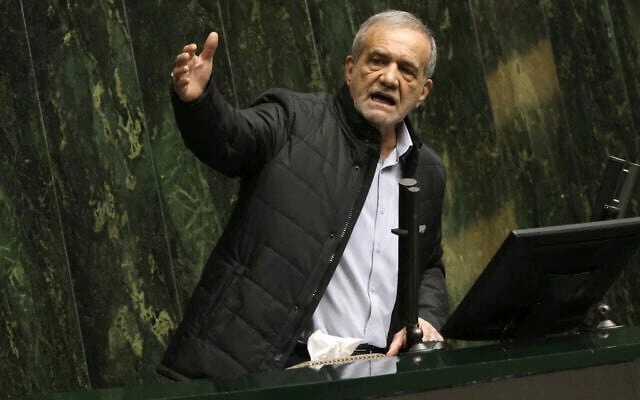
(DDM) – Iran’s leadership has vowed a strong response following the assassination of Supreme Leader Ayatollah Ali Khamenei, with President Masoud Pezeshkian framing the killing as a “clear declaration of war against Muslims.”
Diaspora Digital Media (DDM) reports that Pezeshkian made the statement on Sunday, March 1, 2026, at a moment of heightened political tension, as the nation mourns one of its most influential figures.
Speaking to state media, the president characterized retaliation as both a “duty and a legitimate right,” signaling that Tehran intends to pursue those responsible for the strike with decisive measures.
“The Islamic Republic has the obligation and the right to exact revenge on the people responsible and those who authorised this historic crime,” Pezeshkian declared, according to Sputnik.

Officials emphasized that the assassination represents “a dangerous escalation” and that Iran views the attack as not just a political affront but an existential threat to its governance and regional influence.
Khamenei’s death has left a vacuum in Iran’s political and military hierarchy. As Supreme Leader, he had ultimate authority over the country’s armed forces, foreign policy, and strategic institutions, meaning the state’s decision-making apparatus faces unprecedented strain.
Observers note that Pezeshkian’s language is consistent with Iran’s historical political lexicon, where official statements of duty and revenge often precede overt military, covert, or diplomatic action.
The president’s remarks appear aimed at both domestic and international audiences, signaling Tehran’s resolve to assert authority, maintain internal cohesion, and warn adversaries that it perceives the attack as a turning point requiring strong action.
Regional and global implications are already being felt. Iranian authorities have indicated that retaliation could extend beyond national borders, potentially targeting both military and strategic assets associated with the United States, Israel, and other nations perceived as complicit.
Analysts stress that the rhetoric underscores the heightened risks of escalation in the Middle East, particularly as Iran mobilizes interim leadership structures and prepares for potential military, economic, and political responses.
For Iranians, the killing of Khamenei is both a personal and national trauma. While citizens mourn a long-standing religious and political figure, the government is framing the event as a challenge to state sovereignty and a justification for assertive retaliation.
Experts note that Pezeshkian’s statement could serve as a prelude to military operations, cyber campaigns, or diplomatic pressure, all intended to signal Iran’s capacity and willingness to respond to what it perceives as existential threats.
As the situation develops, the international community is closely watching Iran’s next moves, with the president’s statement serving as a stark warning that the nation intends to act decisively in defense of its leadership, institutions, and strategic interests.
The coming days are expected to reveal how Tehran balances retaliation with the need to avoid broader regional destabilization, while sending a message to both allies and adversaries that the Islamic Republic considers this act intolerable.




