


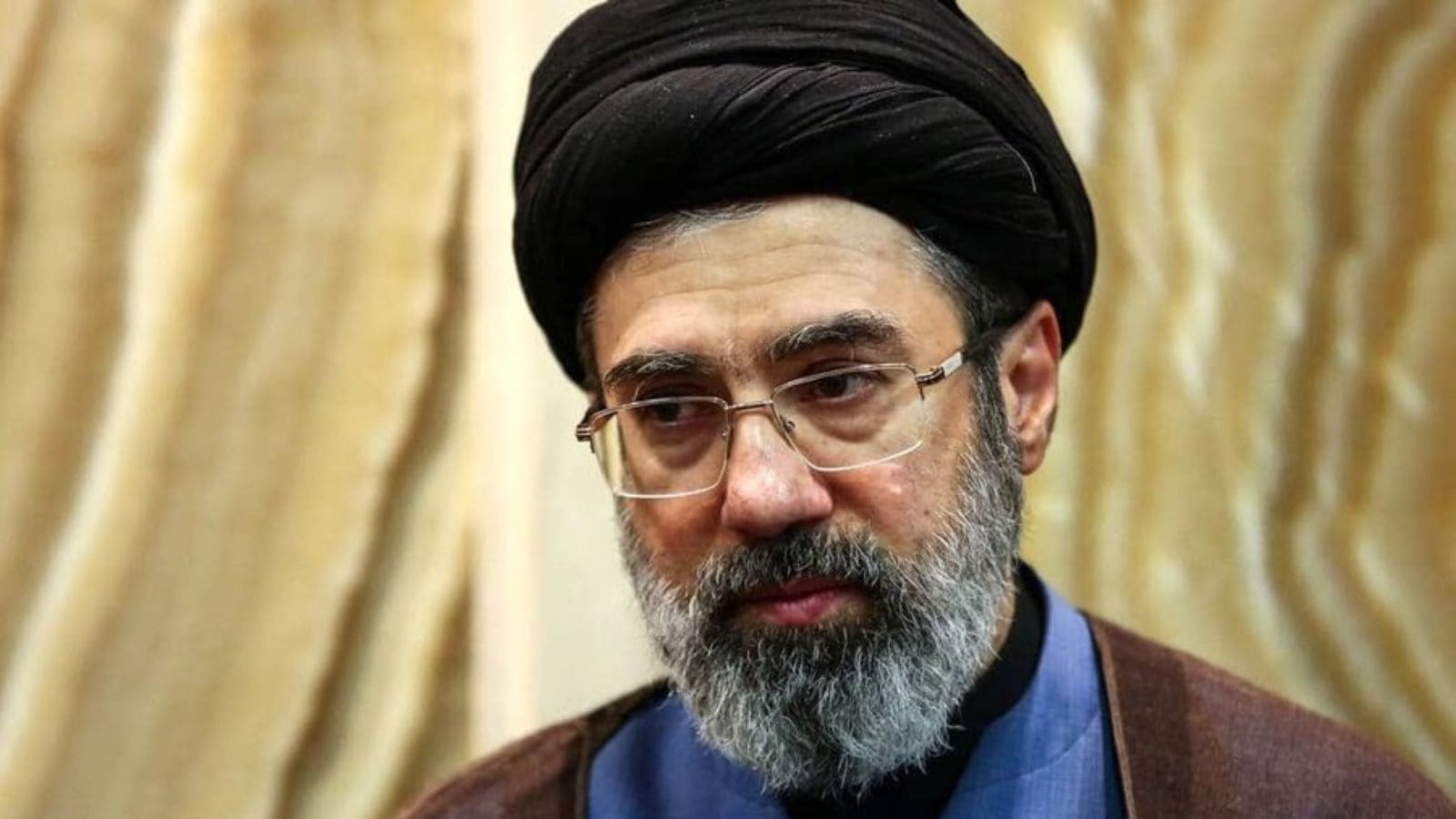
In a dramatic and potentially transformative development for the Islamic Republic of Iran, reports emerging Tuesday indicate that Mojtaba Khamenei, the second son of the late Supreme Leader Ali Khamenei, has been selected by the powerful Assembly of Experts as the country’s new supreme leader. The decision, first reported by Iran International, was said to have been made during a confidential vote allegedly conducted under significant pressure from the influential Islamic Revolutionary Guard Corps, widely known as the IRGC.
According to sources cited in the report, members of the 88-member Assembly convened amid extraordinary security conditions following the assassination of Ayatollah Ali Khamenei during Israel’s military campaign known as Operation Roaring Lion. The operation, which marked an unprecedented escalation in the region, resulted in the death of Iran’s highest authority and plunged the nation into political uncertainty. With the country reeling and regional tensions at boiling point, the urgency to establish continuity at the apex of power became paramount.
Senior Israeli officials, speaking anonymously, have indicated that they expect the Assembly to formally announce Mojtaba Khamenei’s appointment within hours. While no official confirmation has yet been issued by Iranian state media, insiders suggest that the groundwork for the succession had been quietly discussed for years, even if Mojtaba was not widely seen as the leading contender in public discourse.
The reported selection is already stirring controversy both inside and outside Iran. According to Iran International’s correspondent, the vote was conducted “under pressure from the Revolutionary Guards,” suggesting that the IRGC — Iran’s most powerful military and economic institution — may have played a decisive role in shaping the outcome. The Guards, who command vast influence over security policy and regional strategy, are believed to have favored a candidate aligned with their hardline worldview, particularly at a time of open confrontation with Israel and the United States.

Mojtaba Khamenei, a mid-ranking cleric who teaches Shiite theology at a seminary in Qom, has long been a shadowy but significant figure within Iran’s inner power structure. Though he has never held a formal government post, he has been widely regarded as a behind-the-scenes operator with deep ties to the security establishment. Analysts have frequently described him as a “gatekeeper” within his father’s inner circle, someone who managed access, coordinated political alliances, and maintained close working relationships with senior commanders in the Revolutionary Guards.
His ideological posture is viewed as closely aligned with that of his late father. Mojtaba has publicly supported strong measures against regime opponents within Iran and has endorsed assertive policies toward what Tehran describes as foreign adversaries. His reported elevation therefore signals continuity rather than reform — a consolidation of hardline authority at a moment of national vulnerability.
In 2019, the United States imposed sanctions on Mojtaba Khamenei, asserting that although he did not hold an official title, he effectively represented the supreme leader’s office and exercised considerable influence in state affairs. That designation reinforced the perception among Western observers that Mojtaba was more than simply a cleric in Qom; he was a political actor embedded within the regime’s strategic decision-making framework.
Yet despite his name periodically surfacing as a potential successor over the years, many Iran watchers did not consider him the most likely heir. One major reason was the optics of dynastic succession. Elevating the son of the supreme leader could be interpreted domestically and internationally as a hereditary transfer of power — an uncomfortable echo of the monarchy that was overthrown during the 1979 Islamic Revolution. Critics argue that such a move risks undermining the ideological foundation of the Islamic Republic, which was established in opposition to royal autocracy.
There are also theological considerations. Traditionally, the position of supreme leader requires significant clerical seniority and recognition within the Shiite religious hierarchy. Some observers have noted that Mojtaba may not be regarded as sufficiently senior by classical standards, raising questions about how religious legitimacy will be framed in the official announcement. However, constitutional provisions allow the Assembly of Experts broad discretion in determining suitability, particularly during times of national emergency.
Under Iran’s constitution, the supreme leader is chosen by the Assembly of Experts, whose members are themselves elected by the public but must first be vetted and approved by the Guardian Council — a body appointed directly or indirectly by the supreme leader. The structure ensures that ultimate authority remains within a tightly controlled ideological framework. The supreme leader wields unparalleled power, commanding the armed forces, overseeing the judiciary, influencing foreign policy, and maintaining final authority over key state institutions.
Israeli officials have previously suggested that Mojtaba has been deliberately kept out of the public spotlight, cultivating influence without assuming overt visibility. That low profile may now shift dramatically if the Assembly formally confirms his appointment. The timing of the reported decision — coming so soon after his father’s death — suggests a calculated effort to project stability and prevent factional fragmentation within the regime.
For Iran’s domestic audience, the transition will be framed as constitutional continuity. For international observers, it represents a defining moment in the evolution of the Islamic Republic. Whether Mojtaba Khamenei’s leadership will mirror his father’s in both tone and substance, or whether the extraordinary circumstances of his ascent will alter Iran’s strategic trajectory, remains to be seen.
As of now, Iranian state media has not issued immediate confirmation of the reported selection. However, with foreign governments monitoring developments closely and regional tensions already inflamed, the formal announcement — if it comes — will mark the beginning of a new and uncertain chapter in Iran’s political history, one that could reshape the balance of power within the Middle East for years to come.




