


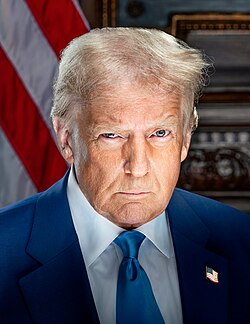
(DDM) – When the leader of the United States makes a dramatic move, countries across the globe pay attention.
When that leader is Donald Trump, the reaction is often intensified by his unpredictable and forceful style of leadership.
Supporters describe him as a disruptor of established global systems, while critics argue that he has unsettled long-standing diplomatic conventions.
Under his tenure, Washington’s foreign policy approach has frequently appeared more transactional, with alliances and partnerships evaluated through the lens of direct American interest.

Recent tensions involving Iran and Venezuela have reinforced perceptions of a United States willing to project power assertively beyond its borders.
Trump’s visible alignment with Israeli Prime Minister Benjamin Netanyahu has further shaped geopolitical developments, particularly in the Middle East.
These global shifts have implications that stretch far beyond the immediate regions of confrontation.
Nigeria, as Africa’s most populous nation and a significant regional power, cannot remain immune to such geopolitical currents.
With the 2027 general elections on the horizon, political actors within the country are carefully observing signals emanating from Washington.
Although Nigeria’s electoral process is constitutionally sovereign, the diplomatic posture of the White House can subtly influence political dynamics, especially in areas tied to security and international legitimacy.
In late 2025, Trump reportedly issued strong remarks alleging targeted violence against Christians in Nigeria.
The claim, which Nigerian authorities firmly rejected, reignited longstanding sensitivities surrounding religion and national security.
President Bola Tinubu chose a measured diplomatic response rather than direct confrontation.
National Security Adviser Nuhu Ribadu subsequently travelled to Washington for high-level engagements aimed at easing tensions.
Shortly afterward, U.S. Congressman Riley Moore visited internally displaced persons camps in parts of North-Central Nigeria as part of a fact-finding mission.
The sequence of events illustrated how foreign commentary can intersect with Nigeria’s internal security narrative.
Security concerns have historically played decisive roles in Nigeria’s elections.
In 2015, the insurgency linked to Boko Haram significantly influenced public perception.
Then-President Goodluck Jonathan faced mounting criticism over his administration’s response to extremist violence.
While the intensity of that insurgency has diminished, Nigeria now grapples with widespread banditry and kidnapping affecting rural communities.
The reintroduction of religious framing into political discourse adds another layer of complexity as 2027 approaches.
During the 2023 elections, the Muslim-Muslim ticket presented by the All Progressives Congress generated heated debate across religious lines.
Tinubu’s administration has since attempted to demonstrate inclusiveness to calm sectarian anxieties.
However, renewed external scrutiny of religious freedom has reopened delicate conversations.
Former Kano State Governor Rabiu Musa Kwankwaso has reportedly been referenced in discussions surrounding potential U.S. sanctions tied to religious freedom concerns.
A legislative proposal in the U.S. House of Representatives is said to contemplate measures such as visa restrictions and asset freezes.
The draft reportedly mentions the Miyetti Allah Cattle Breeders Association of Nigeria (MACBAN) among entities of interest.
Kwankwaso’s New Nigeria People’s Party has rejected the allegations, describing them as politically motivated.
Even so, the mere possibility of international sanctions can reshape political strategy and alliances.
Candidates seeking national office must weigh how global perception may affect their domestic viability.
For opposition movements hoping to challenge the incumbent, Washington’s posture may appear both advantageous and unpredictable.
For the ruling establishment, sustained diplomatic engagement becomes essential to prevent foreign narratives from overshadowing domestic priorities.
As Nigeria edges closer to 2027, the intersection of global geopolitics and local electoral strategy grows increasingly evident.
Trump’s assertive foreign policy style introduces uncertainty into calculations already shaped by security, religion and economic pressures.
In an interconnected world, Nigeria’s democratic journey cannot be entirely separated from international power dynamics.
Whether these external influences will decisively shape the outcome of the next presidential contest remains uncertain.
What is clear, however, is that developments in Washington will continue to echo within Nigeria’s political corridors as the race toward 2027 gathers momentum.




