


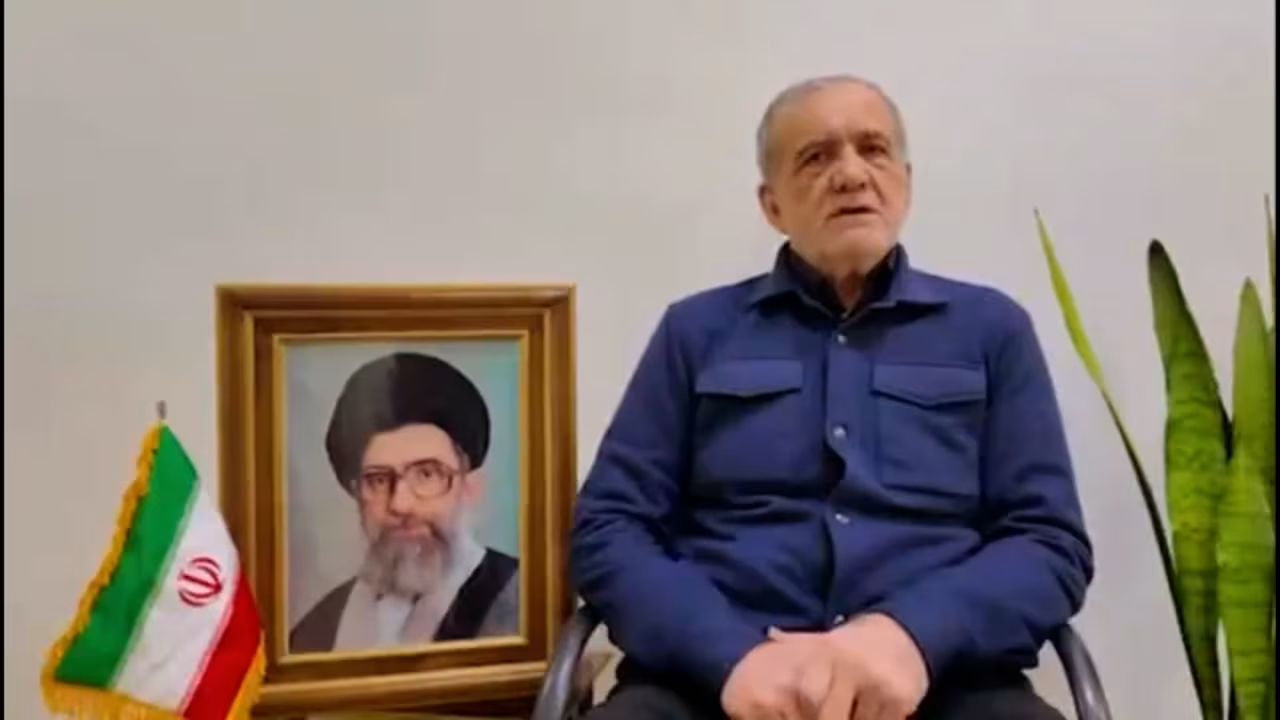
Iran’s President Masoud Pezeshkian has apologized to Gulf nations affected by Iranian missile and drone strikes, saying Tehran will halt attacks on neighboring countries unless those territories are used to launch attacks against Iran.
In a televised address on Saturday, Pezeshkian said Iran would “never surrender” despite escalating military pressure from Israel and the United States.
“I personally apologize to the neighboring countries that were attacked by Iran,” the Iranian leader said, describing Gulf nations as “brothers” and urging them not to become involved in the conflict.
His comments came less than a day after U.S. President Donald Trump said Washington would not negotiate with Tehran unless it accepted “unconditional surrender.”

The war entered its seventh day with new Israeli airstrikes targeting military infrastructure in Tehran and Isfahan.
The Israel Defense Forces said more than 80 fighter jets were used in a broad wave of strikes aimed at military facilities, including missile launch sites and infrastructure linked to Iran’s nuclear program.
Footage from the Iranian capital showed flames and smoke rising from Mehrabad International Airport, one of the country’s busiest airports, following the overnight attacks.
The extent of the damage to the airport remains unclear.
Iranian state media also reported explosions in several areas of the capital hours after the initial bombardment.
Despite the Iranian president’s apology, Gulf nations continued to face missile and drone attacks early Saturday.
Authorities in Qatar said a ballistic missile launched from Iran had been intercepted, while sirens sounded across Bahrain.
Air defense systems in the United Arab Emirates also responded to drone threats, with Dubai airport briefly suspending flights before operations resumed later in the day.
Meanwhile, Saudi Arabia reported intercepting drones heading toward the Shaybah oil field, one of the largest oil-producing sites in the Middle East.
The bodies of six American service members killed in the conflict will be returned to the United States later Saturday in a formal transfer ceremony at Dover Air Force Base in Delaware.
President Trump and Vice President JD Vance are expected to attend the ceremony honoring the fallen troops.
Since the reported killing of Iran’s Supreme Leader Ali Khamenei in earlier strikes, the country has been governed by a temporary leadership council.
The council includes President Pezeshkian, judiciary chief Gholamhossein Mohseni Ejei, and senior cleric Alireza Arafi until a successor is selected.
As missile exchanges continue and regional tensions grow, international leaders have warned the conflict could expand further across the Middle East if diplomatic efforts fail to contain the crisis.




