


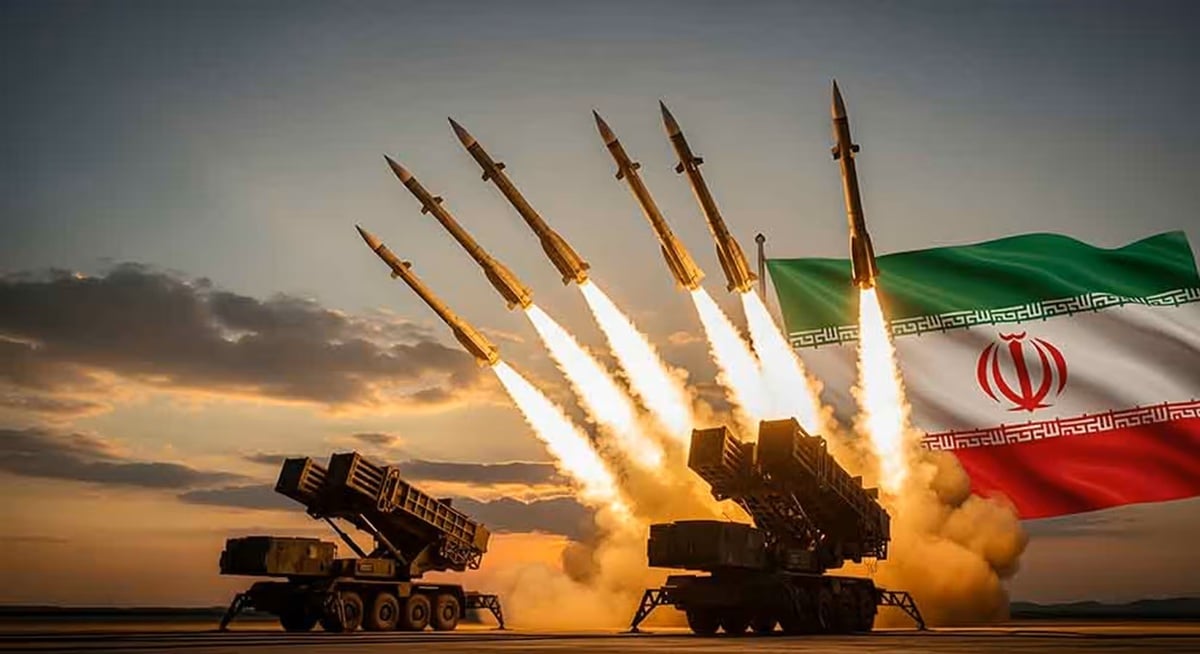
Israeli authorities have launched an extensive investigation into a missile strike that hit central Tel Aviv amid rising tensions in the ongoing confrontation between Israel and Iran, after early indications suggested the weapon may have split into several warheads before impact, raising serious questions about the evolving sophistication of Iran’s missile technology and the potential implications for regional security.
According to officials from the Israeli government’s press office, the incident involved what was described as a direct hit from a ballistic missile launched toward the densely populated metropolitan area. Although Israel’s advanced air defense systems were active at the time and reportedly intercepted a number of incoming projectiles, investigators say debris recovered at the scene indicates that at least one missile may have fragmented in mid-air, scattering multiple explosive components across a wider area before striking the ground.
The unusual nature of the explosion quickly drew the attention of security agencies and military analysts. A police commander stationed in the Tel Aviv district confirmed during an interview with a local Israeli television station that preliminary observations from the blast site pointed to what he described as a “splitting missile,” a term that has sparked intense debate among defense experts about whether the weapon may have carried several warheads designed to separate during the final phase of its flight.
Such a capability could indicate the use of cluster-type munitions or a multiple-warhead system intended to overwhelm missile defense systems by dispersing smaller explosive payloads over a broad area. Cluster munitions typically contain numerous submunitions—often called bomblets—that detach from the main projectile before detonation, spreading across a target zone and increasing the destructive reach of the weapon.

Investigators and military specialists examining fragments recovered from the site have not yet confirmed the exact nature of the missile, but the description of the projectile splitting into separate components has raised suspicions that the strike may represent an evolution in the type of weapons being deployed in the intensifying conflict between the two countries.
DDM News gathered that the incident has triggered heightened scrutiny within Israel’s defense establishment, with specialists carefully analyzing the debris in an effort to determine whether the weapon was designed to evade interception systems such as Israel’s multilayered air defense network, which includes the well-known Iron Dome, David’s Sling, and Arrow missile defense platforms.
Cluster munitions themselves remain one of the most controversial categories of modern weapons due to their potential to cause widespread civilian harm. More than one hundred countries around the world have banned their use under the Convention on Cluster Munitions, an international treaty aimed at limiting the humanitarian impact of these weapons. However, several major military powers—including Iran, Israel, and the United States—have not signed the agreement, meaning they are not legally bound by its restrictions.
Israel has previously accused Iran of employing similar types of munitions earlier in the confrontation between the two nations. During the intense 12-Day War last June, Israeli officials alleged that some Iranian missiles carried warheads capable of dispersing smaller explosive components, a tactic they argued was intended to bypass Israel’s sophisticated missile defense systems by creating multiple simultaneous threats in the sky.
At the scene of the latest strike in Tel Aviv, investigators from several Israeli security agencies were seen combing through rubble and fragments believed to belong to the missile’s payload and outer casing. The atmosphere around the blast site remained tense as teams worked to piece together what had happened during the critical moments when the missile approached the city.
A journalist reporting from the location described how authorities were examining a large fragment believed to be part of the projectile while pieces of debris continued to fall intermittently from the sky following earlier interceptions.
“Debris still falls in central Tel Aviv even after interceptions,” the reporter said while standing near the impact site. “One key piece behind me here that investigators are poring over appears to be part of what officials think may be one of the warheads. Some analysts believe the missile may have split in the sky and sent separate fragments downward.”
Despite the alarming nature of the strike, early reports suggested that no injuries were recorded at the exact location of the impact, a fact officials attributed partly to rapid emergency response and the city’s warning systems that alert residents to incoming missile threats.
However, security officials emphasized that the incident demonstrates how even a single missile can create significant disruption and potential destruction, particularly in densely populated urban areas such as Tel Aviv. The event has also reinforced concerns about the evolving nature of missile warfare in the Middle East, where technological advancements are rapidly changing the dynamics of aerial defense.
DDM News understands that Israeli intelligence agencies are now working closely with military analysts to determine whether the missile used in the strike represents a new development in Iran’s arsenal or simply a variation of existing ballistic weapons that have been modified for greater impact.
The broader regional context is also shaping the investigation. In recent days, reports have indicated that Iran may have reduced the overall number of missiles being fired toward Israel compared to earlier phases of the conflict. However, analysts say the apparent shift could signal a strategic change, focusing on fewer but potentially more advanced weapons designed to penetrate defenses more effectively.
Meanwhile, attention across the region has increasingly turned to Iran’s ability to project force closer to its own borders using drones and other aerial systems. Some experts believe Tehran may be diversifying its tactics, combining drones, ballistic missiles, and possibly multi-warhead technologies to complicate the defensive calculations of its adversaries.
For Israel, the discovery of a missile capable of splitting into multiple warheads would represent a serious challenge, as such weapons are specifically designed to reduce the effectiveness of interception systems by presenting multiple targets simultaneously.
As investigators continue to analyze the fragments recovered from the Tel Aviv blast site, the findings could play a critical role in shaping Israel’s future defense strategies and may also influence international discussions about the rapidly evolving missile capabilities emerging from the region. For now, the unusual strike remains under intense examination, with authorities determined to understand whether it marks the beginning of a new phase in the already volatile confrontation between Israel and Iran.




