


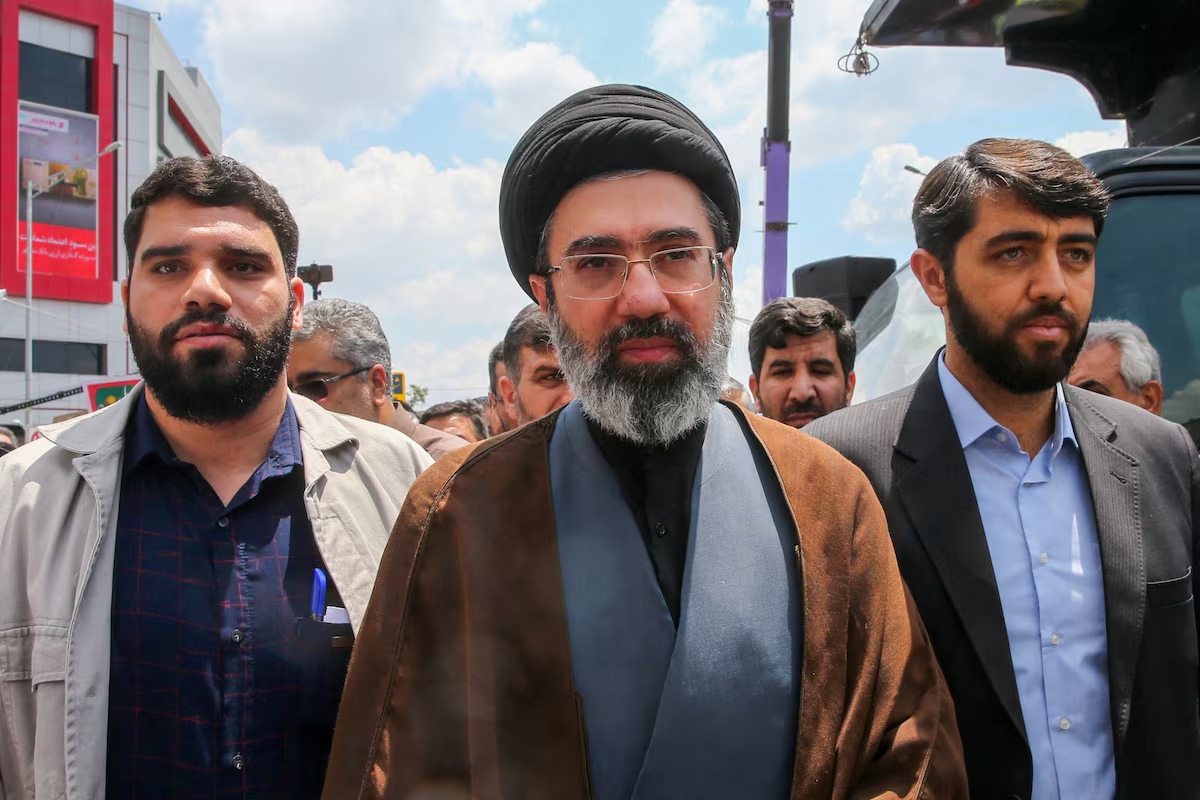
Iran’s newly appointed Supreme Leader, Mojtaba Khamenei, on Thursday declared that the strategic Strait of Hormuz should remain closed as a means of exerting pressure amid the ongoing conflict involving Iran, the United States and Israel.
In a message broadcast on Iranian state television his first public statement since assuming power Khamenei said the closure of the key global oil shipping route should continue to be used as leverage.
The message was read by a television presenter, marking the first official communication from the new Iranian leader since he succeeded his father, Ali Khamenei, who was killed at the start of the war on February 28.
Khamenei also warned that American military bases across the Middle East should be shut down, saying they would remain targets of Iranian attacks.

In the statement, Khamenei vowed that Iran would retaliate against those responsible for the deaths of Iranian citizens during the conflict.
“Iran will not hesitate to avenge the blood of Iranians,” the message said.
He specifically referenced an incident in the city of Minab, where Iranian authorities said a U.S. strike near a school killed 168 people, including about 110 children.
The United States has denied responsibility for the strike while investigations continue.
Khamenei, the second son of Ali Khamenei, was named Iran’s Supreme Leader on March 8 after the death of his father in U.S.-Israeli strikes.
Despite his appointment, he has not appeared publicly since the war began.
Iranian state media described him as a “veteran of the Ramadan war,” although no details were provided.
DDM reported that the Iranian officials previously suggested that the new leader may have been lightly injured during early stages of the conflict.
Meanwhile, tensions continue to rise in the Gulf region, with several cargo ships recently attacked near the coasts of Iraq and the United Arab Emirates.
Maritime security agencies say multiple vessels have sustained damage in incidents believed to be linked to the conflict.
The Strait of Hormuz remains one of the world’s most critical energy corridors, handling roughly one-fifth of global oil shipments.
Any prolonged disruption in the channel could have significant consequences for global energy markets and international trade.




