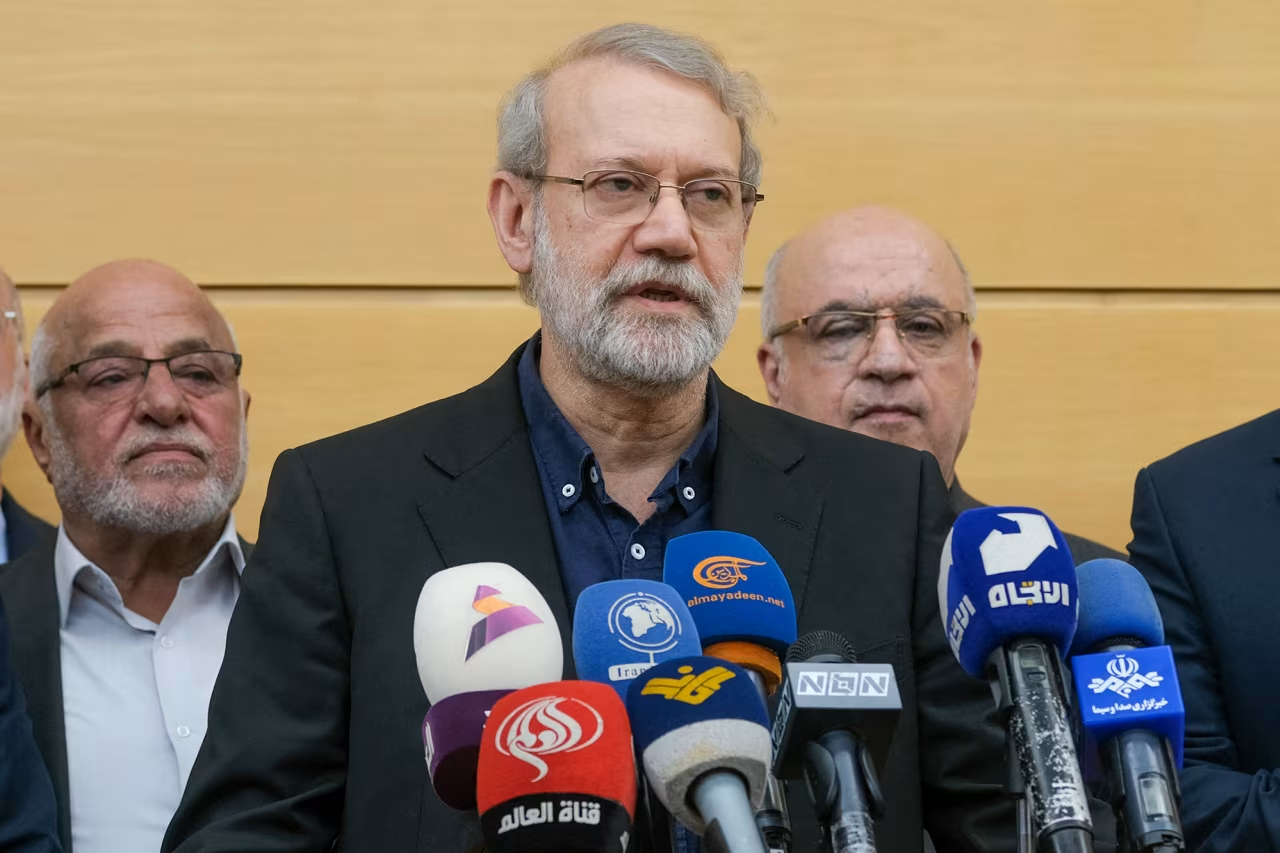
Iran is set to hold a state funeral for its slain security chief, Ali Larijani, as tensions in the Middle East continue to intensify following a wave of retaliatory attacks between Iran and Israel.
Larijani was killed in an Israeli airstrike, prompting Tehran to launch a barrage of missiles toward Israeli targets, including areas near Tel Aviv, where at least two people were reported dead.
According to Iranian media, funeral ceremonies for Larijani and Gholamreza Soleimani, head of the Basij paramilitary force, will take place in Tehran.
Larijani is among the most senior figures killed since the United States and Israel launched strikes on Iran on February 28, an offensive that also led to the death of Iran’s former supreme leader, Ali Khamenei, and triggered a wider regional war.

Iranian military officials have vowed a strong response to the killing, with Army chief Amir Hatami warning that retaliation would be “decisive and regrettable.”
The Islamic Revolutionary Guard Corps said the death of Larijani would fuel further attacks, describing it as a catalyst for what it called a “national awakening.”
Iran has already launched missiles and drones at Israeli targets and U.S.-linked positions across the region, while Gulf nations have intercepted several incoming threats.
In Lebanon, Israeli airstrikes hit parts of Beirut, killing several people, as the Iran-backed group Hezbollah became increasingly involved in the conflict.
Elsewhere, Saudi Arabia reported intercepting a ballistic missile near the Prince Sultan Air Base, which hosts U.S. military personnel, while an Iranian projectile landed near a military facility in the United Arab Emirates.
The conflict continues to disrupt global energy markets, particularly around the Strait of Hormuz, a key shipping route for global oil supplies.
Iran’s Foreign Minister, Abbas Araghchi, warned that the global consequences of the war were only beginning, noting that the situation could have far-reaching economic effects.
Oil prices have remained around $100 per barrel amid fears of prolonged disruption to supply chains.
The United States Central Command said it had deployed heavy munitions to destroy Iranian missile sites threatening maritime routes, as part of efforts to secure shipping lanes.
Meanwhile, President Donald Trump expressed frustration over what he described as limited support from U.S. allies, insisting that Washington could act independently if necessary.
Israel has also vowed to continue targeting Iran’s leadership, including newly installed supreme leader Mojtaba Khamenei, signaling the potential for further escalation.
As both sides intensify military operations, fears are growing that the conflict could expand further across the region, with significant humanitarian and economic consequences.