



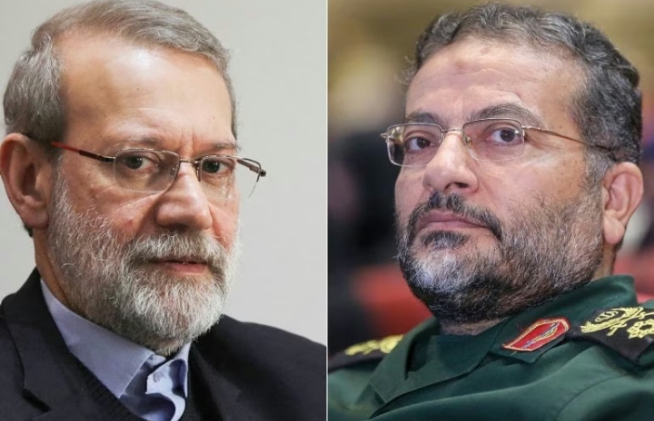
Iran has launched missiles carrying cluster warheads at Tel Aviv, killing at least two people, in what it described as retaliation for the assassination of its security chief, Ali Larijani, as the conflict with Israel and the United States intensifies.
Iranian officials said the killing of Larijani and other senior figures would not weaken the country’s leadership or military operations.
Foreign Minister Abbas Araghchi stated that the Islamic Republic remained stable and capable of functioning despite the losses.
“The system does not depend on individuals,” he said, insisting governance and military activities would continue uninterrupted.
Iran also confirmed it had swiftly appointed replacements for key positions following the attacks.
Iran’s Islamic Revolutionary Guard Corps said the missiles used in the attack included Khorramshahr-4 and Qadr systems, both capable of carrying multiple warheads.
Cluster munitions disperse smaller explosives over a wide area, making them harder to intercept and increasing their destructive reach.
Israeli authorities said the latest strike brings the total death toll in Israel since the war began to at least 14.
The war, now entering its third week, shows no sign of de-escalation.
Iran’s new supreme leader, Mojtaba Khamenei, has rejected proposals for a ceasefire, saying it is not the right time for peace until the United States and Israel “accept defeat.”
Iran has also executed a man accused of spying for Israel’s intelligence agency, Mossad, underscoring its hardline stance during the conflict.
Israel has intensified its military campaign beyond Iran, launching airstrikes across Lebanon, including in the capital Beirut, where at least six people were reported killed.
The strikes are targeting the Iran-backed group Hezbollah, which has been involved in cross-border attacks since the escalation began.
Lebanese authorities say hundreds have been killed and hundreds of thousands displaced as the violence spreads.
The United States Central Command said it had carried out strikes along Iran’s coastline near the Strait of Hormuz, using bunker-buster bombs to destroy missile sites threatening international shipping.
The strategic waterway, which handles about a fifth of global oil supply, remains largely disrupted, contributing to a sharp rise in oil prices.
The conflict is increasingly affecting the global economy, with oil prices rising sharply and concerns growing over inflation and supply disruptions.
International agencies warn that prolonged fighting could trigger a major humanitarian crisis, with millions at risk of food insecurity if the war continues.
Airlines have also reported soaring fuel costs and widespread flight disruptions as much of Middle Eastern airspace remains closed due to security concerns.
The war has drawn in multiple countries across the Middle East, with missile and drone attacks reported in Gulf states and beyond.
Diplomatic efforts to ease tensions have so far failed, while major powers remain divided over how to respond, raising fears of a broader and more prolonged regional conflict.

