


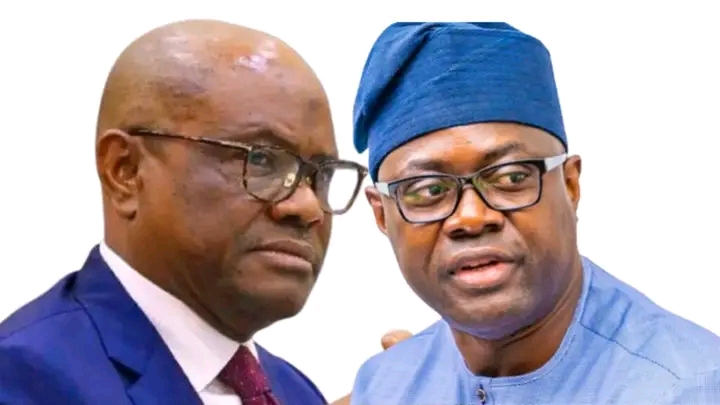
(DDM) — The Peoples Democratic Party (PDP) is grappling with deepening internal tensions as state governors across the party formally rejected the consensus arrangement for a national chairman backed by Nyesom Wike.
The disagreement, which has intensified factional disputes within the party, threatens to undermine cohesion ahead of the 2027 general elections. Governors loyal to various blocs argued that the Wike-endorsed candidate does not reflect the collective interests of the party and could skew internal democracy.
PDP insiders say the rejection has raised the likelihood of legal confrontations over the national chairmanship, signaling a possible escalation from political negotiation to litigation. Some governors have already indicated readiness to approach the courts to challenge the perceived imposition of leadership decisions by a single faction.
The controversy comes at a critical time for the party, which is striving to maintain unity after previous defections and internal disputes. Analysts warn that continued infighting could erode public confidence in the PDP and weaken its position against rival parties as Nigeria approaches the 2027 polls.
Party members aligned with Wike, however, insist that the consensus model is intended to promote stability and avoid drawn-out primary contests that could split votes at the national level. They argue that the arrangement is in line with party statutes and designed to expedite leadership decisions.
Political commentators note that the rejection reflects a broader struggle for influence among the PDP’s state governors and regional power blocs. The move underscores the tension between central party leadership and state executives, each vying to shape candidate selection and strategic direction.
Legal experts suggest that any court action over the chairmanship could further delay the party’s organizational activities, including the approval of candidate lists and preparations for primaries. Such delays may have consequences for PDP’s election readiness in key states.
Observers also warn that internal fractures may embolden opposition parties, giving rivals an advantage in mobilizing support and presenting themselves as more unified alternatives to the electorate. The PDP’s ability to reconcile its factions and present a coherent leadership structure will be crucial in shaping its electoral prospects.
As the situation unfolds, party stakeholders are calling for dialogue and mediation to prevent escalation and preserve the party’s image. A resolution will require negotiation between Wike’s bloc, the governors’ faction, and other influential figures within the PDP hierarchy.
The outcome of this dispute is expected to influence not only the immediate leadership of the PDP but also the broader dynamics of Nigeria’s political landscape as the nation prepares for the 2027 general elections.




