


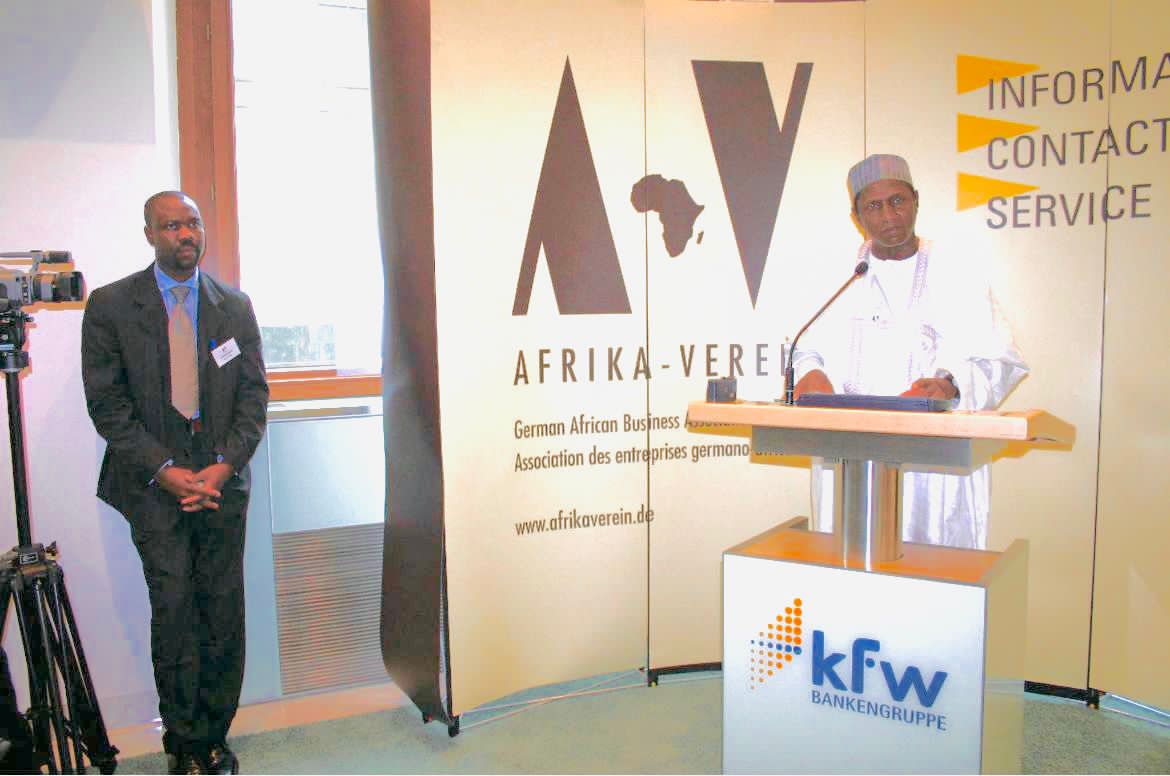
(DDM) – Diaspora political leader Kenneth C. Gbandi has reflected on a past diplomatic encounter involving former Nigerian President Umaru Musa Yar’Adua during an official visit to Germany, describing it as a defining moment of humility in leadership.
Gbandi said the experience occurred during Yar’Adua’s first official trip to Germany after assuming office, following the administration of former President Olusegun Obasanjo.
He recalled that the reception was heavily secured, with strict protocol arrangements and the presence of diplomats and security personnel in attendance.
According to him, a moment unfolded during the event when Nigeria’s then Ambassador, Abdulkadir Bin Rimdap, reportedly whispered to the President during the formal proceedings.
He stated that shortly after, President Yar’Adua unexpectedly stepped down from the podium and walked into the crowd, prompting a brief moment of confusion among security personnel.

Gbandi recounted that the President’s action surprised many in attendance as he moved away from the elevated platform and joined participants at ground level.
He quoted Yar’Adua as saying that he did not need security separating him from his people and preferred to sit among them.
The statement, according to him, drew a strong and emotional response from the audience at the event.
He described the reaction as genuine and spontaneous, contrasting it with what he referred to as politically driven displays of support.
Gbandi said the incident demonstrated that leadership is defined not by distance or authority, but by service, trust, and direct engagement with citizens.
He added that true leadership requires the courage to connect with people across different communities and platforms without barriers.
According to him, such examples should guide contemporary governance and political leadership discussions in Nigeria.
He argued that rebuilding public trust requires stronger ties between leaders and grassroots communities, especially in regions where citizens feel disconnected from government institutions.
Gbandi further stated that as political conversations intensify ahead of future elections, there is a need for what he described as fresh and service-driven leadership.
He specifically referenced Delta North, calling for leaders who are grounded in service rather than elite separation from the people.
He maintained that the future of leadership should be shaped by accessibility, accountability, and purpose-driven governance.
The reflections have sparked renewed discussion on leadership style and public engagement within Nigeria’s political space.



 and then