


(DDM) – United States President Donald Trump has stated that taking control of Iran’s oil resources remains a possible option as tensions continue in the Middle East.
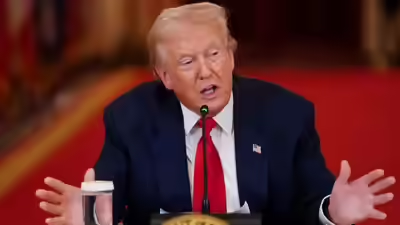
The remark was made during a cabinet meeting where Trump was asked about potential next steps in dealing with Iran.
He responded that such a move was “an option,” though he did not provide further details.
Trump compared the idea to previous US actions in Venezuela, where Washington sought influence over the country’s oil sector following political upheaval.
He claimed the United States had benefited significantly from access to Venezuela’s oil resources, describing the outcome as economically advantageous.

The statement comes amid an ongoing conflict involving Iran, the United States, and its allies, with diplomatic efforts yet to produce a ceasefire agreement.
Analysts say the comment reflects a broader strategy of leveraging energy resources as part of geopolitical negotiations.
However, experts warn that attempting to seize control of Iran’s oil would present far greater challenges than similar efforts elsewhere.
Iran’s military capabilities, regional alliances, and strategic position in the Middle East make any such move highly complex.
Security observers also note that such rhetoric could further escalate tensions and complicate ongoing diplomatic efforts.
The Middle East crisis has already raised concerns about global oil supply disruptions and economic instability.
Energy markets remain sensitive to developments in the region, particularly due to Iran’s role as a major oil producer.
Trump’s remarks are likely to draw strong reactions from Tehran, which has consistently rejected external interference in its resources.
International stakeholders continue to call for restraint and diplomatic engagement to avoid further escalation.
The situation highlights the intersection of military strategy, economic interests, and global energy politics.
As the conflict evolves, statements from key leaders are expected to influence both negotiations and market reactions worldwide.



 and then