



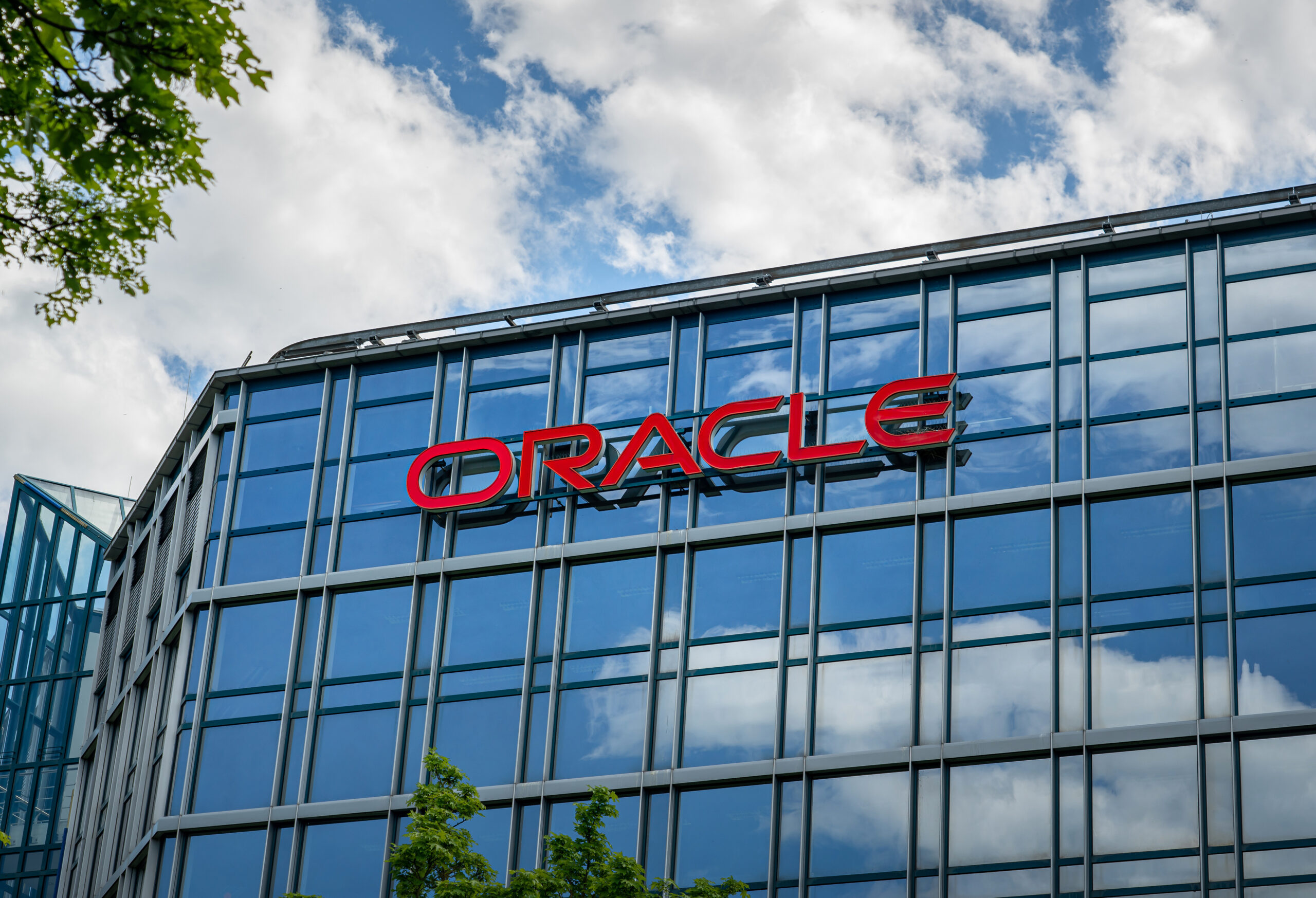
The announcement that Oracle Corporation had abruptly terminated tens of thousands of employees sent shockwaves across the global technology industry, not merely because of the scale of the layoffs, but because of what they represent in the unfolding era of artificial intelligence. In the early hours of Tuesday morning, at precisely 6 a.m. EST, between 20,000 and 30,000 workers—nearly 18 percent of the company’s global workforce—reportedly received a single, impersonal email informing them that their services were no longer required. There had been no prior warning, no phased restructuring plan, and no opportunity for dialogue. Within moments of receiving the message, many discovered that their system access had already been revoked, effectively locking them out of the very infrastructure they had helped to build and sustain.
The decision, as startling as it was, did not emerge from a company in immediate operational collapse. On the contrary, Oracle Corporation had recently reported a remarkable 95 percent surge in net income in the previous quarter. Yet this apparent contradiction underscores a deeper and more complex reality—one where profitability alone is no longer the sole determinant of workforce stability. According to insiders and financial analysts, the layoffs are part of a broader strategic recalibration tied to the company’s aggressive, debt-fueled expansion into artificial intelligence infrastructure.
DDM News has closely followed this unfolding narrative for months, documenting how Oracle Corporation positioned itself at the forefront of the AI arms race. Central to this ambition is its involvement in the massive $300 billion partnership with OpenAI under the Stargate initiative, a deal that signaled Oracle’s intent to become a dominant force in next-generation computing infrastructure. This commitment has been matched by staggering capital expenditures, including an estimated $50 billion earmarked for this fiscal year alone.
However, such ambition has come at a cost—one that is now being borne, in part, by the company’s workforce. Oracle’s total debt has ballooned to over $124 billion, a sharp increase from $89 billion just a year earlier. At the same time, its free cash flow slipped into negative territory, reportedly reaching minus $10 billion in the last quarter. These figures have raised alarm bells among investors and financial institutions, prompting several major U.S. banks to scale back or withdraw financing for Oracle-linked data center projects. Bondholders, too, have taken legal action, accusing the company of failing to fully disclose the extent of additional borrowing required to sustain its AI investments.
The financial markets have responded with visible unease. Oracle’s stock has lost more than half of its value since September 2025, while its credit default swap spread—a key indicator of perceived risk—has climbed to a three-year high. In simple terms, lenders are increasingly concerned about the company’s ability to meet its debt obligations. Against this backdrop, the mass layoffs begin to appear less like a sudden corporate decision and more like a calculated move to generate liquidity. By eliminating a significant portion of its workforce, Oracle is expected to free up between $8 billion and $10 billion in cash flow—funds that can be redirected toward servicing its mounting debt and sustaining its AI expansion.

Yet, beyond the numbers lies a more human story—one that DDM News believes deserves equal attention. The employees who received that early morning email were not abstract figures in a balance sheet. They were engineers, developers, administrators, and support staff who had spent years, in many cases decades, building the very systems and products that Oracle has monetized so successfully. Their expertise and labor formed the backbone of the company’s rise in enterprise software and cloud computing. And yet, in a matter of minutes, their roles were rendered obsolete in the face of a technological pivot that prioritized machines over manpower.
This development highlights a growing paradox in the age of artificial intelligence. Companies are achieving unprecedented levels of efficiency and profitability through automation and advanced computing, but these gains are often accompanied by significant human displacement. The very technologies designed to drive progress are also reshaping the labor market in ways that challenge traditional notions of job security and corporate responsibility.
Critics argue that the burden of these strategic bets is disproportionately borne by employees rather than executives or shareholders. The decision to invest heavily in AI infrastructure—and to finance that investment through massive borrowing—was made at the highest levels of corporate leadership. Those decisions, while potentially transformative, carry inherent risks. Yet the consequences of those risks are now being felt most acutely by workers who had little or no influence over the company’s strategic direction.
In many ways, the situation at Oracle Corporation serves as a microcosm of a broader transformation sweeping across the global economy. As organizations race to harness the power of AI, they are simultaneously redefining the relationship between capital, technology, and labor. The question that remains is whether this transformation can be managed in a way that balances innovation with inclusivity, ensuring that the benefits of technological progress are not achieved at the expense of widespread economic displacement.
For now, the story continues to unfold, with far-reaching implications not just for Oracle, but for the entire tech industry and beyond. As DDM News continues to monitor developments, one thing is clear: the AI revolution is no longer a distant prospect—it is here, and it is reshaping the world of work in real time.

