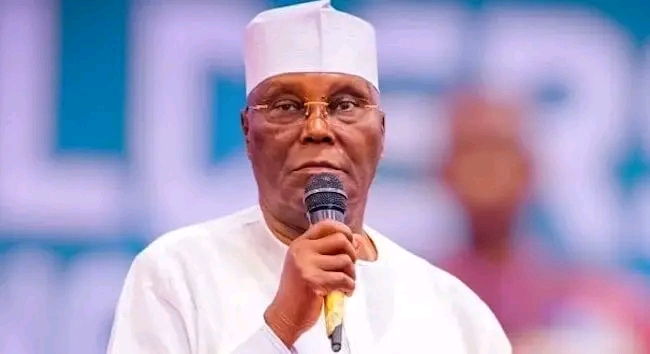
ABUJA, NIGERIA — Former Vice President Atiku Abubakar has expressed deep concern over the rising level of poverty in Nigeria, following a recent report by the World Bank which placed the country’s poverty rate at 63 percent.
DDM learnt that Atiku made the remarks on Friday, warning that the worsening economic situation reflects deeper structural challenges affecting millions of Nigerians across both urban and rural areas.
The former presidential candidate noted that the increasing poverty level is a clear indication that current economic policies may not be effectively addressing the needs of the population.
He emphasized that urgent and decisive action is required to reverse the trend and improve living conditions, particularly for vulnerable groups who are most affected by economic hardship.

According to Atiku, the growing poverty rate underscores the need for comprehensive reforms in key sectors such as agriculture, industry, and social welfare, which are critical to job creation and income stability.
Background analysis shows that Nigeria, Africa’s largest economy by population, has faced persistent economic challenges in recent years, including inflation, unemployment, and currency instability.
The World Bank report highlighting a 63 percent poverty rate has further intensified public discourse around economic management, inequality, and the effectiveness of government interventions.
Experts note that poverty in Nigeria is influenced by multiple factors, including rapid population growth, limited industrial expansion, insecurity in farming regions, and insufficient social protection systems.
Rising food prices and cost of living have also compounded the situation, pushing more households below the poverty line and increasing economic vulnerability among low-income earners.
Analysts argue that without targeted policies aimed at boosting productivity, improving infrastructure, and supporting small and medium enterprises, the poverty rate may continue to rise.
Atiku also stressed the importance of transparent governance and accountability, noting that efficient use of public resources is essential for achieving meaningful economic progress.
Observers say his comments reflect broader concerns shared by economists, civil society organisations, and international partners about Nigeria’s economic trajectory.
They add that addressing poverty will require coordinated efforts between federal, state, and local governments, as well as collaboration with private sector stakeholders.
The issue of poverty is expected to remain a central topic in Nigeria’s political and policy discussions, particularly as the country prepares for future elections and debates on economic direction intensify.
As the conversation continues, stakeholders are calling for practical solutions that can deliver measurable improvements in living standards and restore confidence in the nation’s economic outlook.