


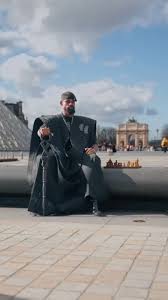
Nigerians have taken to social media to celebrate Tunde Onakoya, founder of Chess in Slums Africa, after he shared a striking video of himself playing chess at the iconic Louvre Museum in Paris dressed proudly in traditional agbada.
In the now-viral clip, Onakoya is seen calmly focused over a chessboard, his richly designed outfit flowing as tourists and onlookers move around the historic location. The moment, simple yet powerful, quickly caught attention online, with many praising not just his skill but the symbolism behind the scene.
For supporters, the image represented more than a casual game of chess it was a bold statement of identity. Wearing agbada in one of the world’s most visited cultural landmarks struck a chord with Nigerians, who described it as a proud display of heritage on a global stage.
Many users applauded Onakoya for consistently merging intellect with culture, noting how he continues to redefine what modern African excellence looks like. Comments flooded in, describing the moment as “graceful,” “intentional,” and “deeply inspiring,” especially for young Nigerians who look up to him.

Beyond the aesthetics, others highlighted the deeper message tied to his journey. Through his work with Chess in Slums Africa, Onakoya has built a reputation for using chess as a tool for social change empowering children in underserved communities and giving them access to opportunities many never imagined.
Seeing him in Paris, confidently dressed in traditional attire while engaging in a game often associated with strategy and intellect, reinforced that mission. It showed that global relevance does not require abandoning cultural roots a sentiment many found refreshing.
Some users also pointed out the contrast between the historic European setting and his distinctly Nigerian outfit, calling it a “beautiful collision of worlds.” To them, it symbolized a new narrative where African culture is not just present but celebrated in global spaces.
As the video continues to circulate, it has sparked conversations about representation, pride, and the evolving image of Nigerians abroad. For many, Onakoya didn’t just play chess in Paris he made a statement without saying a word.




