


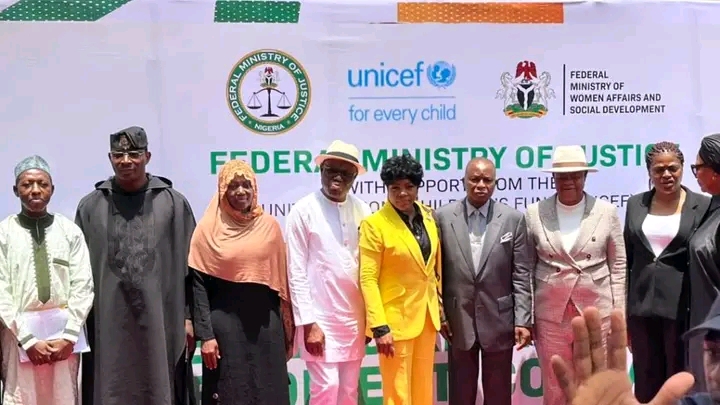
ABUJA, NIGERIA — The Federal Government of Nigeria has begun reviewing the 2003 Child Rights Act in response to increasing reports of child abuse, cyber threats, and enforcement gaps that continue to undermine child protection across the country.
The review process is aimed at strengthening existing legal frameworks to better safeguard children in both physical and digital environments, where new forms of exploitation have emerged in recent years.
Government officials say the current law, while progressive at the time of its enactment, no longer fully addresses modern challenges affecting children, particularly the rapid rise of online exploitation and digital exposure risks.
The proposed reforms are expected to focus on improving enforcement mechanisms, closing legal loopholes, and enhancing coordination between federal and state-level child protection agencies.

Authorities also intend to address inconsistencies in implementation across different states, as adoption and enforcement of the Child Rights Act have historically varied across Nigeria’s federating units.
Rising cases of domestic abuse, child trafficking, neglect, and online grooming have increased pressure on policymakers to modernise child protection laws in line with global standards.
Officials involved in the review process say the updated framework will place stronger emphasis on prevention, early intervention, and accountability for offenders.
The government is also expected to expand provisions relating to cyber safety, given the growing exposure of children to harmful content and online predators through social media platforms and digital communication tools.
Child welfare advocates have long argued that enforcement remains one of the weakest aspects of the existing law, with limited resources and inconsistent prosecution of offenders.
The review is also expected to explore improved collaboration between law enforcement agencies, schools, healthcare providers, and social welfare institutions to ensure a more coordinated protection system.
Experts believe that strengthening the Child Rights Act could significantly improve Nigeria’s child protection outcomes if effectively implemented at all levels of government.
Stakeholders have welcomed the review initiative but stress that meaningful change will depend on political will, adequate funding, and sustained public awareness campaigns.
As discussions continue, attention is now focused on how quickly the government can translate proposed reforms into actionable legislation that effectively responds to the evolving threats facing children across the country.




