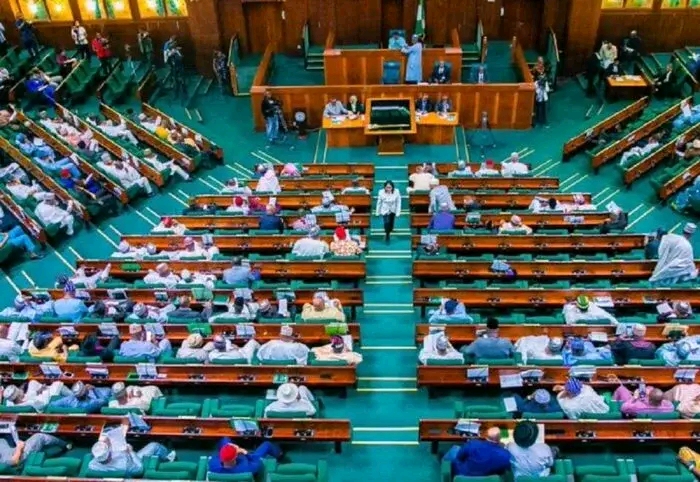
ABUJA, NIGERIA — Nigeria’s House of Representatives has moved forward with a proposed 50-year national development plan after passing the bill through second reading, marking a significant step toward establishing a long-term framework for economic growth and policy continuity.
The proposed legislation seeks to institutionalise a comprehensive national plan spanning five decades, designed to guide successive administrations and reduce the frequent policy reversals that have historically affected Nigeria’s development trajectory.
Lawmakers supporting the bill argue that the initiative will provide a stable roadmap for economic planning, ensuring that key sectors such as infrastructure, education, healthcare, agriculture, and industrialisation receive consistent attention over time.
The plan is structured to operate through phased implementation cycles, typically broken into medium-term development plans of five to ten years, each aligned with the broader 50-year vision and subject to periodic review and adjustment.
A central feature of the proposed framework is policy continuity, which aims to prevent abrupt changes in government priorities whenever there is a transition in political leadership.
The bill also proposes the establishment of an independent national planning body responsible for coordinating, monitoring, and evaluating the implementation of the long-term strategy across federal, state, and local government levels.
This coordinating institution would be tasked with setting measurable targets, tracking progress, and ensuring accountability among implementing agencies, while also aligning national goals with global development benchmarks.
The plan emphasises economic diversification as a core objective, with a focus on reducing reliance on oil revenues by promoting sectors such as manufacturing, technology, agriculture, solid minerals, and renewable energy.
Human capital development is another key pillar, with the framework prioritising investments in education, vocational training, healthcare systems, and youth empowerment to build a skilled and productive workforce.
Infrastructure development forms a major component of the strategy, including long-term investments in transportation networks, power generation and distribution, housing, water resources, and digital connectivity.
The bill also highlights the importance of private sector participation, encouraging public-private partnerships to drive large-scale projects and attract both domestic and foreign investment.
In addition, the proposed plan incorporates governance and institutional reforms aimed at strengthening transparency, reducing corruption, and improving the efficiency of public service delivery.
Environmental sustainability is integrated into the framework, with provisions targeting climate resilience, sustainable resource management, and the transition toward cleaner energy sources.
Regional development is also addressed, with strategies aimed at reducing inequalities between different parts of the country by promoting balanced economic growth and equitable resource allocation.
The bill further outlines mechanisms for stakeholder engagement, including consultations with civil society, the private sector, academia, and development partners to ensure inclusiveness in planning and execution.
Lawmakers noted that the success of the plan will depend heavily on political will, effective implementation, and sustained commitment across multiple administrations.
Critics, however, have raised concerns about the feasibility of enforcing a 50-year plan in a dynamic political and economic environment, warning that flexibility and adaptability will be crucial.
The second reading marks an important legislative milestone, after which the bill is expected to proceed to committee stage for detailed scrutiny, public hearings, and possible amendments.
If eventually passed into law, the 50-year national development plan could redefine Nigeria’s approach to long-term planning, providing a structured pathway toward sustainable growth and national development.