


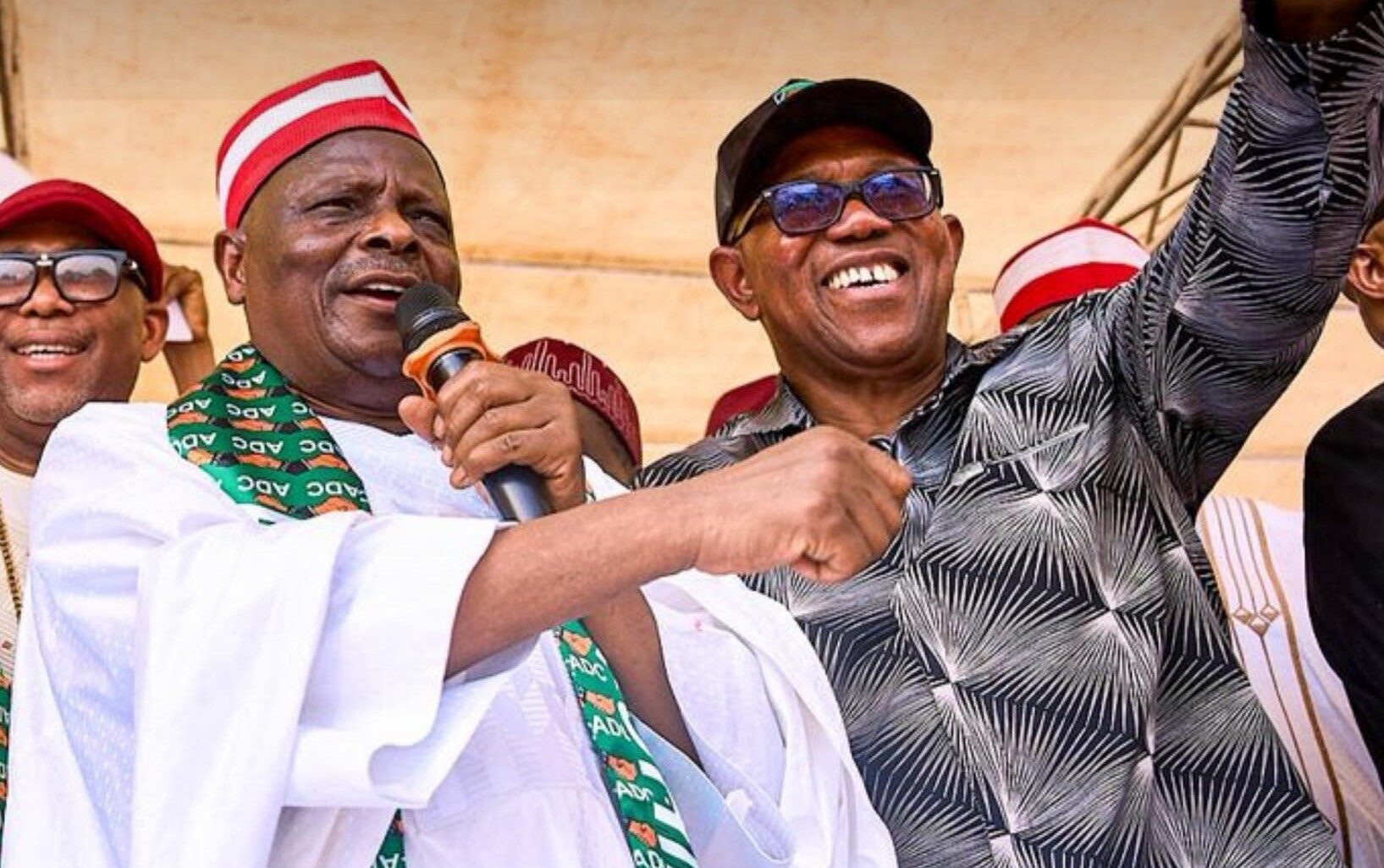
Supporters of Peter Obi and Rabiu Musa Kwankwaso are pushing for the opposition to field a presidential candidate from the South, adding fresh pressure to ongoing coalition talks ahead of the 2027 elections.
The call comes as opposition parties including the African Democratic Congress (ADC), the New Nigeria Peoples Party (NNPP), and the Social Democratic Party (SDP) remain divided over whether the ticket should go to the North or South.
The debate gained momentum after a high-level meeting in Ibadan, where key political figures, among them Atiku Abubakar, Obi, Kwankwaso, and Rotimi Amaechi, explored the possibility of forming a united front to challenge President Bola Tinubu in 2027. The gathering ended with a broad agreement to work towards presenting a single candidate — but not without disagreements over how that candidate should emerge.
Speaking to The PUNCH, key voices within the Obidient and Obi–Kwankwaso movements argued that zoning the ticket to the South is a matter of fairness, given that the current presidency is already held by a southerner.

Yunusa Tanko, national coordinator of the Obidient Movement, said maintaining the rotation principle would help preserve balance in the country’s political structure. He added that Obi has already indicated he would serve only one term if elected — a position supporters say aligns with the zoning argument.
Tanko also expressed confidence that Obi would emerge as the consensus choice if the opposition unites, pointing to his strong following, particularly among young Nigerians.
Similarly, Justin Ijeh, spokesperson for the Obi–Kwankwaso Movement, said while zoning is not written into the constitution, it remains a practical way to ensure inclusion in a diverse country like Nigeria.
Despite these arguments, not all parties are on the same page. The ADC, through its spokesman Bolaji Abdullahi, has signalled that its priority is not zoning but selecting a candidate with the best chance of winning.
With talks still ongoing, the push for a southern candidate has become one of the biggest sticking points in efforts to build a cohesive opposition alliance ahead of the next presidential race.




