


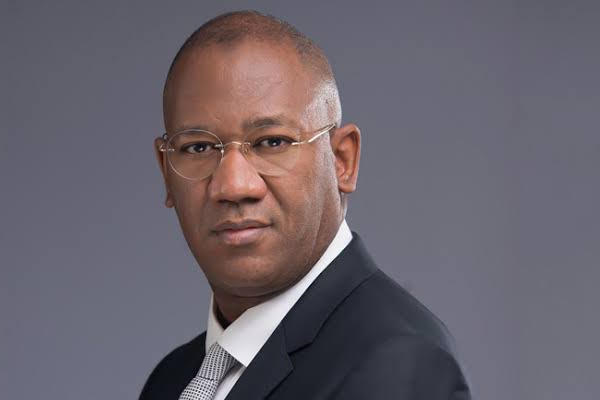
Yusuf Datti Baba-Ahmed has expressed doubts that northern political blocs will unite behind a potential joint ticket involving Peter Obi and Rabiu Kwankwaso ahead of future elections.
Speaking during an interview on the shifting alliances within Nigeria’s opposition, the former Labour Party vice-presidential candidate said regional dynamics still play a decisive role in determining electoral success.
According to him, it is “very unlikely” that the North would rally behind what he referred to as an “OK” alliance widely interpreted as a possible Obi-Kwankwaso pairing.
Datti revealed that he had earlier advised Obi to broaden his political outreach. He recalled a meeting in early 2024 where he urged him to engage key northern figures, including Kwankwaso and Nasir El-Rufai, as part of a long-term strategy.

“If you can’t plan ahead for 2027 as early as 2024, then it becomes difficult to stay aligned,” he said, stressing the importance of early groundwork in Nigerian politics.
While acknowledging that recent opposition cooperation may have stemmed from such early conversations, Datti questioned whether those alliances could hold.
He pointed to what he described as inconsistencies, asking why some political actors failed to support certain candidates in the last election cycle but are now forming new partnerships.
He also raised concerns about internal contradictions within proposed political tickets, particularly around leadership balance and influence.
Using Kwankwaso as an example, Datti noted his strong political base and ambition, questioning how power would be shared in any joint arrangement.
“The local government is almost his state, the state is almost his region,” he said, hinting at the complexity of merging strong political personalities.
Datti further warned that while there is growing demand for a new generation of leadership in Nigeria, mismatched political pairings could undermine that goal.
According to him, age, experience, and regional influence all remain critical factors.
In the end, he maintained that while opposition unity is possible on paper, Nigeria’s voting patterns and internal party dynamics make such coalitions difficult to sustain without clear strategy and consistency.




