


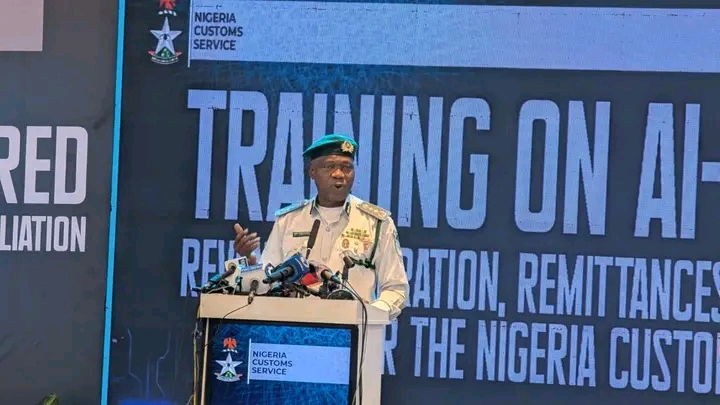
ABUJA, NIGERIA — The Nigeria Customs Service has intensified efforts to modernise trade operations through ongoing digital reforms aimed at improving efficiency, revenue generation, and border security.
The reforms are being implemented under the Trade Modernisation Project, a programme designed to automate and simplify customs processes across Nigeria’s ports and border points.
According to Customs officials, the initiative seeks to reduce delays in cargo clearance, improve transparency, and strengthen monitoring of imports and exports.
The agency explained that digital transformation remains critical to improving trade facilitation and supporting economic growth.

Officials added that the reforms are expected to minimise manual procedures that often contribute to inefficiency and administrative bottlenecks.
The Trade Modernisation Project is also intended to enhance data management and improve coordination among agencies involved in international trade operations.
Customs authorities believe technology-driven systems will help increase revenue collection by reducing leakages and improving compliance.
Industry stakeholders have long advocated modernisation within Nigeria’s trade and port systems to reduce costs and improve competitiveness.
Analysts say digital reforms could significantly improve Nigeria’s position in regional and global trade rankings if fully implemented.
The Customs Service also noted that stronger digital systems would support border security by improving surveillance and tracking capabilities.
Experts argue that automation can help identify suspicious transactions and reduce smuggling activities along Nigeria’s borders.
The agency reaffirmed its commitment to aligning operations with global best practices in customs administration and trade facilitation.
Business groups welcomed the reforms, saying efficient customs procedures are essential for attracting investment and improving ease of doing business.
Importers and exporters have repeatedly complained about delays, high transaction costs, and bureaucratic obstacles affecting trade activities.
The Customs Service said the reforms would gradually create a more predictable and transparent trading environment for businesses.
Economic observers believe efficient customs administration plays a major role in strengthening government revenue and supporting industrial growth.
The digital reforms are also expected to improve inter-agency cooperation through integrated information-sharing systems.
Stakeholders noted that successful implementation would require continuous staff training, infrastructure upgrades, and strong cybersecurity measures.
Analysts say Nigeria’s expanding trade volume makes digital transformation increasingly necessary for effective customs management.
The Customs Service maintained that the reforms are part of broader national efforts to modernise public sector operations through technology.
Attention now remains on how quickly the digital systems will be fully deployed and how effectively they improve trade operations across the country.


