


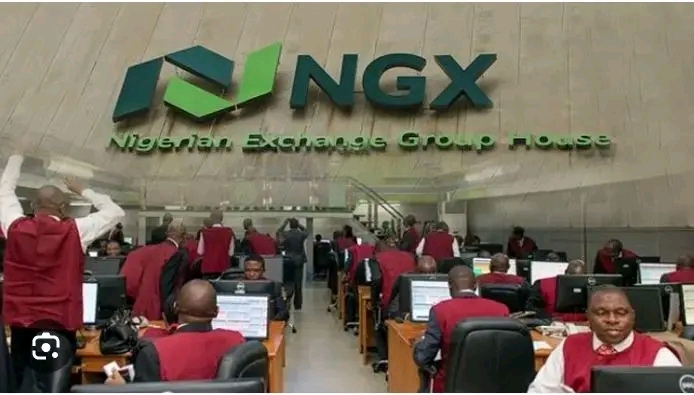
LAGOS, NIGERIA — Investors on the Nigerian Exchange Limited (NGX) recorded a sharp loss of about ₦1.92 trillion in market value following renewed uncertainty triggered by the Central Bank of Nigeria’s foreign subsidiary regulatory framework affecting banking operations and capital flows.
The policy, introduced by the Central Bank of Nigeria, is aimed at tightening oversight of Nigerian banks operating foreign subsidiaries, strengthening capital adequacy compliance, and reducing systemic risks linked to cross-border banking exposure.
However, market reactions to the regulatory direction were swift, as investors responded with heavy sell-offs across key sectors, particularly banking and cement stocks, which are among the most capitalised on the Nigerian Exchange Limited.
Financial market data showed that banking stocks led the decline as investors reassessed the potential impact of stricter capital requirements and possible restrictions on profit repatriation from foreign subsidiaries.

Analysts said the policy uncertainty created concerns over liquidity pressures, especially for tier-one banks with significant regional and international operations.
The sell-off also spread to cement stocks, which are often sensitive to macroeconomic and interest rate expectations due to their capital-intensive nature and reliance on financing conditions.
Market operators noted that the sharp decline reflects heightened investor sensitivity to regulatory changes in the financial sector, particularly those affecting capital movement and foreign currency exposure.
The NGX All-Share Index reportedly experienced significant downward pressure as heavyweight stocks dragged overall performance into negative territory.
Investment analysts explained that the ₦1.92 trillion loss represents a broad revaluation of risk across multiple sectors rather than a collapse in underlying fundamentals.
According to market observers, investors are increasingly cautious about policy signals from monetary authorities, especially in an environment already shaped by inflation concerns, foreign exchange volatility, and tight liquidity conditions.
Some financial experts argue that the CBN’s move is part of a broader effort to strengthen the resilience of Nigeria’s banking system amid global financial uncertainty.
However, they also warn that abrupt or unclear regulatory transitions can trigger short-term market instability, as seen in the latest trading sessions.
Institutional investors were reportedly among the most active sellers, as portfolio managers adjusted exposure to risk-sensitive assets.
Retail investors also reacted to the downturn, further amplifying market losses across major counters.
Despite the decline, some analysts believe the market could stabilise once clearer implementation guidelines are issued by the central bank.
They noted that regulatory clarity is crucial to restoring investor confidence and preventing prolonged volatility in the equities market.
Market watchers are now awaiting official clarification from the CBN regarding the scope, timeline, and implementation framework of the foreign subsidiary rule.
Attention is also focused on whether listed banks will issue strategic updates to reassure investors about their foreign operations and capital positions.
For now, the NGX remains under pressure as investors continue to reassess risk exposure in response to evolving monetary policy direction.




