


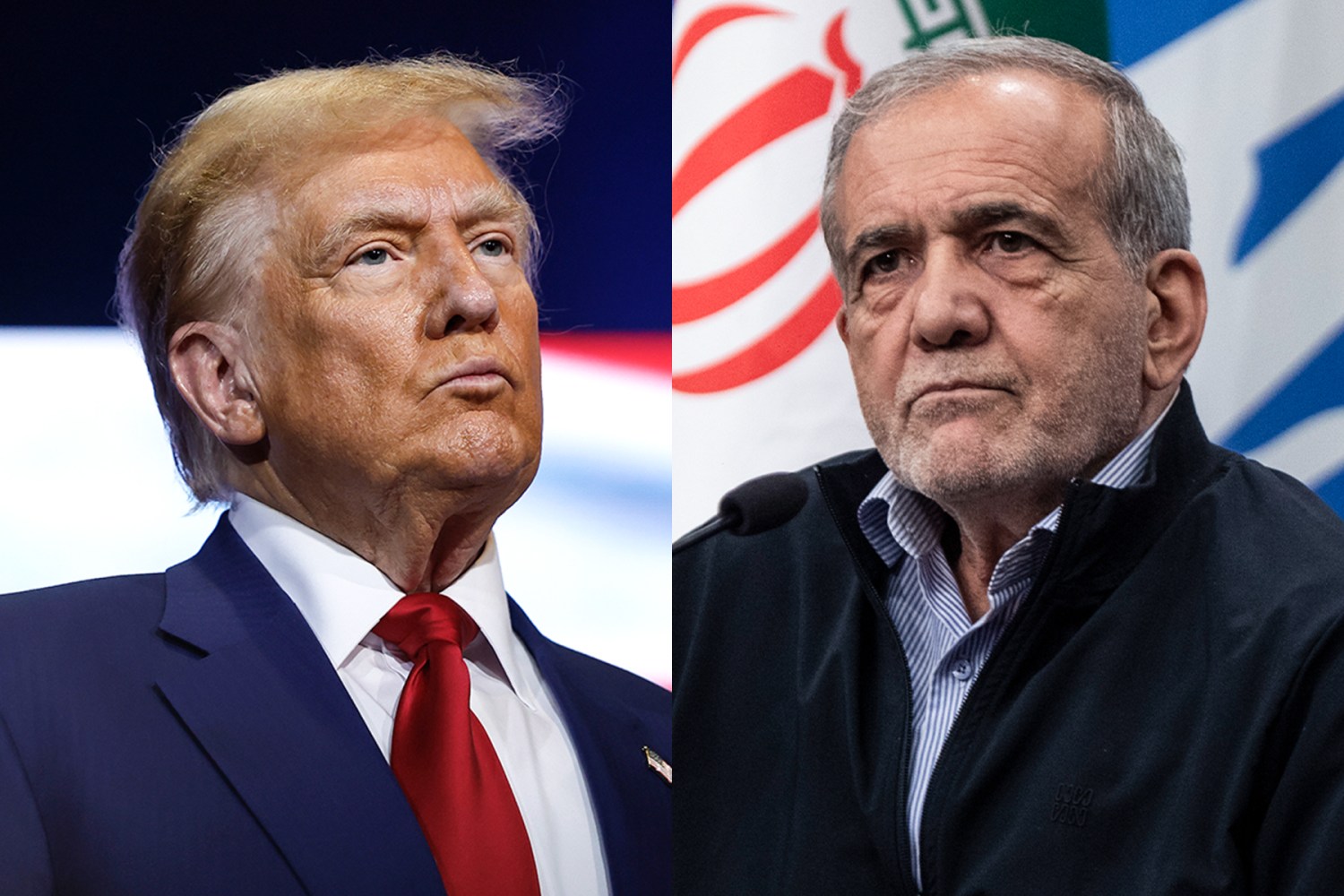
United States President Donald Trump has intensified pressure on Iran, warning that Tehran will “pay the price” for what he described as taking too long to reach a negotiated settlement with Washington.
The warning came just hours after a fresh exchange of military strikes between the United States and Iran, further raising tensions across the Middle East.
In a post on social media on Wednesday, Trump accused Iran of delaying negotiations that he claimed could have produced a favorable outcome for the country.
“Iran has taken too long to negotiate a deal that would have been great for them. Now they will have to pay the price,” Trump wrote.

He also claimed Iran’s military capabilities had been severely weakened, describing the country’s armed forces as being in disarray following months of conflict.
The latest escalation follows U.S. military strikes launched in response to the downing of an American Apache attack helicopter near the Strait of Hormuz earlier this week.
Two crew members were rescued after the helicopter crashed into regional waters.
Iran responded overnight with what it described as retaliatory attacks on U.S. military targets in the region.
Authorities in Bahrain and Kuwait reported intercepting missiles and drones believed to have been launched by Iran.
Bahrain’s Defence Force said its air defense systems successfully neutralized multiple aerial threats, while Kuwait confirmed that its forces intercepted hostile targets entering its airspace.
Iran’s Revolutionary Guards earlier claimed responsibility for attacks targeting American military facilities, including the U.S. Fifth Fleet headquarters in Bahrain.
Meanwhile, Iran signaled that future negotiations with Washington could now be in doubt.
Speaking to reporters on Wednesday, Iranian Foreign Ministry spokesman Esmail Baghaei said Tehran would reassess ongoing talks with the United States following the latest military confrontation.
According to Baghaei, repeated U.S. military actions and what he described as contradictory messages from Washington have undermined diplomatic efforts.
Iranian President Masoud Pezeshkian also called for an end to the prolonged state of uncertainty between the two countries.
He said Iran could not continue indefinitely in a situation that was “neither war nor peace,” stressing the need to create stability and hope for future generations.
At the same time, Iranian state media reported that U.S. missiles struck water infrastructure in Hormozgan Province near the Strait of Hormuz, damaging critical water storage facilities. American officials have not publicly commented on the claim.
The latest developments cast fresh doubt on efforts to revive negotiations aimed at ending months of conflict between Washington and Tehran, with both sides appearing to harden their positions despite international calls for de-escalation.
As military activity continues across the region, concerns are growing that the confrontation could spill beyond the immediate battlefield and further destabilize an already volatile Middle East.




