
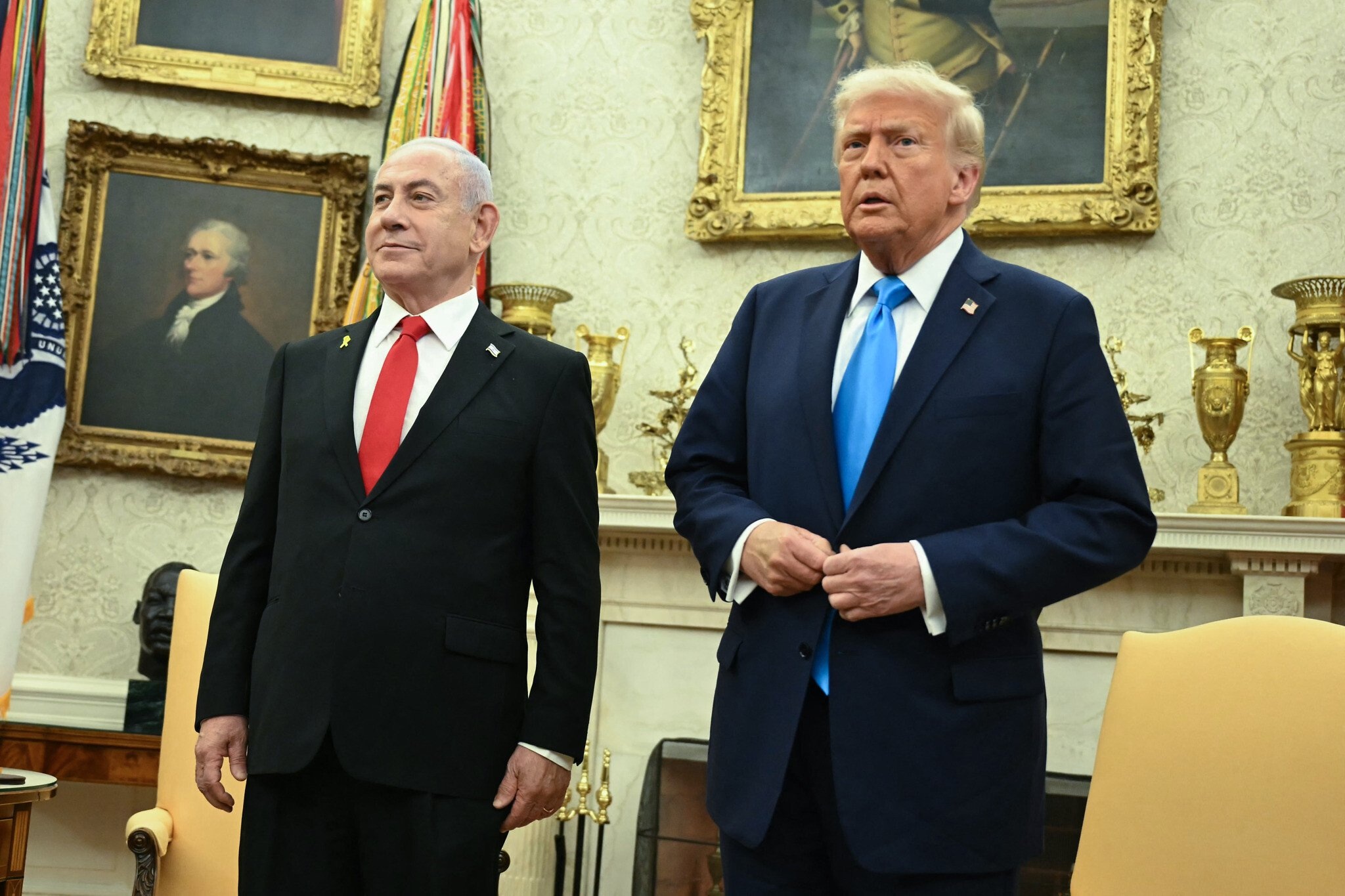
Allies of President Donald Trump have launched a public effort to reassure Israelis worried that Washington’s new agreement with Iran and recent White House criticism of Israel signal a shift in one of the world’s closest alliances.
The campaign unfolded in Jerusalem this week as political leaders, analysts and commentators grappled with growing uncertainty over the future of US-Israel relations.
For many Israelis, the concern is not only the interim agreement reached between Washington and Tehran but also a series of unusually sharp remarks directed at Prime Minister Benjamin Netanyahu by senior figures in the Trump administration.
The tensions mark a dramatic change from the unity displayed earlier in the year when the United States and Israel coordinated military action against Iran. Since then, disagreements have emerged over how to end the conflict and manage the broader regional fallout.
Many Israeli officials fear the agreement could strengthen Iran, which they regard as their most dangerous adversary, while limiting Israel’s freedom to respond to threats from Iran-backed Hezbollah in Lebanon.
Addressing those concerns, US Ambassador to Israel, Mike Huckabee, acknowledged widespread anxiety but insisted the alliance remained intact.
“The United States and Israel have an unbreakable bond,” Huckabee said during the JNS International Policy Summit in Jerusalem.
The state of the relationship dominated discussions throughout the conference, where several prominent Trump supporters sought to reassure Israeli audiences.
Conservative broadcaster Mark Levin, who has publicly criticised the Iran agreement, said he remained opposed to the deal but continued to support Trump, praising his record on religious liberty and support for Israel.
Israeli concerns have intensified following Trump’s calls for a ceasefire between Israel and Hezbollah and his increasingly blunt criticism of Netanyahu.
In recent weeks, Trump publicly questioned Israel’s military tactics and reportedly expressed frustration with Netanyahu’s handling of the conflict. Vice President JD Vance also adopted a more critical tone, arguing that support for Israel should not place it beyond criticism.
Those comments have resonated strongly in Israel because they come from Republicans, a political movement long viewed as Israel’s most dependable ally in Washington.
Adding to the unease are signs of changing attitudes among younger Americans. A recent survey by the Pew Research Center found that 57 percent of Republicans aged 18 to 49 now hold an unfavourable view of Israel, up from 50 percent a year ago.
Many Americans have grown increasingly critical of Israel following the war in Gaza and the wider regional conflict involving Iran.
Conservative radio host Sid Rosenberg acknowledged that many Israelis were angry with Trump but argued that he remained Israel’s strongest option in American politics.
“A lot of people in Israel are very, very upset,” Rosenberg said, before adding that the alternatives could prove far less supportive.
Despite the concerns, Israeli officials close to Netanyahu insist there is no sign of a fundamental change in US policy.
Two officials familiar with the prime minister’s thinking said Netanyahu does not believe recent remarks from Trump and Vance signal any major shift, such as reduced military support or delays in weapons deliveries.
According to the officials, Netanyahu sees some of the criticism as political messaging aimed at American voters ahead of November’s midterm elections, where frustration over Israel and the ongoing conflict has become more pronounced.
Still, the debate has prompted some Israeli lawmakers and analysts to argue that Israel should prepare for a future in which American support is less certain.
Ohad Tal, who chairs the US-Israel caucus in the Knesset, said Israel must strengthen its ability to operate independently and broaden its international partnerships.
“We have to be much more independent and we have to forge new alliances,” he said.
For now, the alliance remains intact. But the debate unfolding in Jerusalem suggests that, for the first time in years, many Israelis are openly questioning how reliable America’s support will be in an increasingly complicated Middle East.