


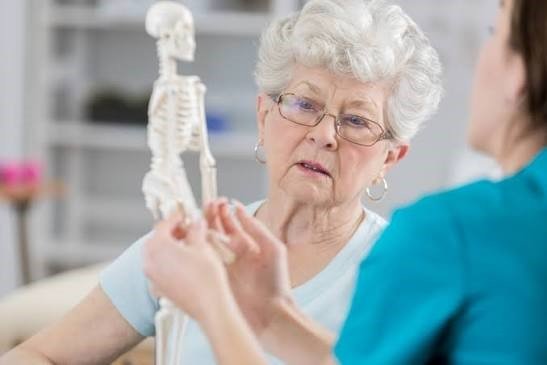
Osteoporosis is a condition that causes bones to become weak, brittle, and more likely to break. It develops gradually over time and is often called a “silent disease” because many people do not notice symptoms until a fracture occurs.
Women are at a higher risk of osteoporosis, especially after menopause, due to a natural decline in estrogen levels, which helps protect bone strength.
What Is Osteoporosis?
Osteoporosis occurs when the body loses too much bone, makes too little bone, or both. This leads to reduced bone density and increased fragility.
The most commonly affected areas include:

- Hips.
- Spine.
- Wrists.
Why Women Are More at Risk
Women are more likely to develop osteoporosis because:
- They generally have smaller, thinner bones than men.
- Bone loss speeds up after menopause due to reduced estrogen levels.
- Pregnancy and breastfeeding may temporarily affect bone density.
- Longer life expectancy increases the chance of developing bone loss over time.
Common Symptoms
Osteoporosis often has no early warning signs. However, as the condition progresses, symptoms may include:
- Back pain caused by fractured or collapsed vertebrae.
- Loss of height over time.
- Stooped posture (hunched back).
- Bones that break more easily than expected.
Many women only discover they have osteoporosis after a minor fall or injury results in a fracture.
Risk Factors
Several factors may increase the risk of osteoporosis:
- Ageing.
- Family history of osteoporosis.
- Low calcium and vitamin D intake.
- Sedentary lifestyle.
- Smoking.
- Excess alcohol consumption.
- Low body weight.
- Certain medical conditions or medications.
How Is Osteoporosis Diagnosed?
A healthcare provider may recommend:
- Bone density scan (DEXA scan).
- Blood tests to check calcium and vitamin D levels.
- Medical history review and physical examination.
Early testing can help detect bone loss before fractures occur.
Prevention Tips
Healthy lifestyle choices can help strengthen bones and reduce risk.
Eat Bone-Healthy Foods
Include foods rich in:
- Calcium (milk, yoghurt, cheese, leafy greens).
- Vitamin D (fish, egg yolks, fortified foods).
- Protein for bone repair and strength.
Stay Physically Active
Weight-bearing exercises help strengthen bones, such as:
- Walking.
- Dancing.
- Jogging.
- Strength training.
Lifestyle Changes That Help
- Avoid smoking.
- Limit alcohol intake.
- Maintain a healthy body weight.
- Get regular sunlight exposure for vitamin D.
Treatment Options
If osteoporosis is diagnosed, treatment may include:
- Calcium and vitamin D supplements.
- Medications that slow bone loss or improve bone strength.
- Lifestyle adjustments and fall prevention strategies.
Treatment is tailored to each individual based on risk and severity.
Preventing Falls
Because weak bones break easily, preventing falls is very important:
- Keep living areas free of clutter.
- Use proper lighting at home.
- Wear supportive footwear.
- Use handrails on stairs and in bathrooms.
When Should You See a Doctor?
Seek medical advice if you:
- Experience frequent fractures.
- Notice a gradual loss of height.
- Have persistent back pain.
- Are postmenopausal and have risk factors for bone loss.
Early evaluation can prevent serious complications.
The Bottom Line
Osteoporosis is a common condition that weakens bones and increases the risk of fractures, especially in women after menopause. While it often develops silently, it can be prevented and managed through a healthy diet, regular exercise, and lifestyle changes. Early detection and treatment can significantly reduce the risk of serious bone injuries.
Disclaimer: This article is for informational purposes only and should not replace professional medical advice. Women at risk of osteoporosis should consult a qualified healthcare professional for proper assessment and treatment.




