



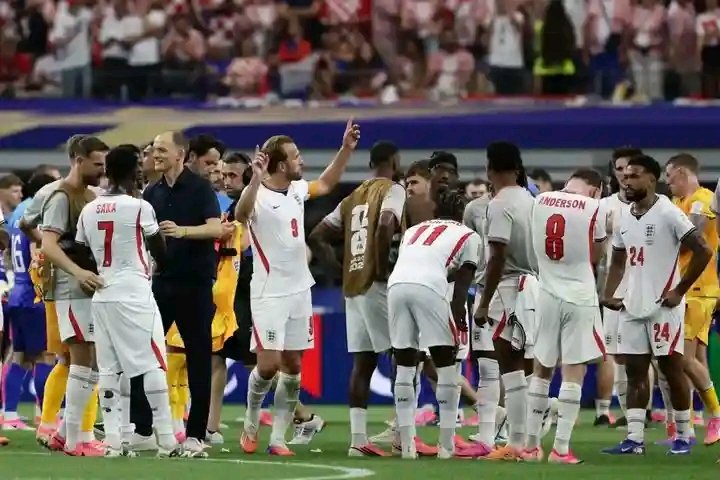
England are preparing for a high stakes World Cup knockout encounter against DR Congo, while the United States continue their pursuit of a historic breakthrough in a tournament that is rapidly intensifying as it moves into its decisive stages.
The fixture between England and DR Congo presents a compelling contrast in football identity, experience and tactical approach. England enter the match with expectations shaped by years of deep tournament runs and a squad filled with players competing at the highest level of European club football. Their ambition remains clear as they target another strong push toward World Cup glory, relying on structure, discipline and attacking quality to overcome any opposition.
Under their current setup, England have developed a more controlled style of play, focusing on possession management, structured pressing and efficient transitions in attack. Their midfield balance has been a key strength, allowing them to dictate tempo and limit opponents’ ability to counter effectively. In attack, their wide players and forwards are expected to play a decisive role in breaking down defensive blocks through movement and creativity in tight spaces.
However, DR Congo arrive as one of the tournament’s most unpredictable and physically demanding opponents. Their style is built on energy, aggression and rapid transitions, often turning defensive situations into immediate attacking opportunities. The team has earned respect for their resilience, particularly in matches where they have been required to absorb sustained pressure before striking quickly on the counterattack.

Their strength lies in athleticism and collective discipline, with players showing strong commitment to defensive organisation and pressing intensity. Against a technically superior England side, DR Congo will likely focus on compact defensive structure while seeking opportunities from set pieces and fast breaks into space behind the defence.
The tactical battle is expected to be shaped largely in midfield, where England will attempt to control possession and dictate rhythm, while DR Congo aim to disrupt flow and create unpredictability through physical duels and aggressive pressing. The ability of England to remain patient and avoid frustration will be critical, especially if the match becomes tightly contested.
England’s defensive structure will also be tested against DR Congo’s direct attacking approach. Maintaining concentration during transitions and defending against pace in wide areas will be essential to avoid being caught out. For DR Congo, defensive discipline and decision making in key moments could determine how long they remain competitive in the match.
Alongside this encounter, the United States are also continuing their World Cup journey with growing ambition as they target a historic achievement on the global stage. The team has shown steady progress in recent years, developing a more balanced identity that blends athletic intensity with improved technical organisation.
The current United States squad features a generation of players gaining experience in top European leagues, which has contributed to greater confidence in possession and improved tactical awareness. Their playing style is built around high pressing, quick transitions and direct attacking movement, making them a dynamic side capable of challenging stronger opponents.
Defensively, the United States have focused on structure and collective effort, aiming to remain compact while reducing spaces between lines. This balance has allowed them to remain competitive in tightly contested matches and build momentum throughout the tournament.
As the knockout stage progresses, the pressure continues to increase for all teams involved. England carry the weight of expectation as one of the traditional football powers, DR Congo represent the spirit of underdog ambition and physical resilience, while the United States embody a rising football nation seeking to establish long term relevance at elite level.
Matches at this stage of the competition are often defined by fine margins. Individual brilliance, tactical discipline and the ability to manage emotional pressure frequently determine outcomes more than overall dominance. Teams that maintain composure and execute their game plans effectively are the ones most likely to progress.
For England, success will depend on their ability to impose control while remaining efficient in the final third. For DR Congo, the challenge lies in staying organised defensively while maximising limited attacking opportunities. For the United States, consistency and mental strength will be crucial as they attempt to convert potential into historic achievement.
As anticipation builds, this phase of the World Cup continues to highlight the evolving landscape of international football, where traditional powerhouses are constantly tested by emerging nations with increasing belief and competitive strength.
The stage is set for another dramatic round of football, where ambition, structure and resilience will all be tested under the highest pressure.




