


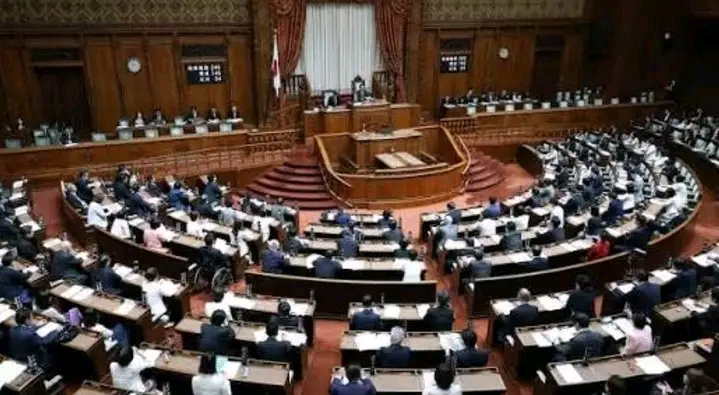
TOKYO, Japan — Japan’s National Diet has passed landmark revisions to the Public Offices Election Law and the Information Distribution Platform Law, mandating clear labels on AI-generated images and videos during election campaigns and requiring social media platforms to actively counter misinformation.
The bills, approved on Monday with support from the ruling and opposition parties, aim to protect the integrity of elections from increasingly sophisticated AI-driven disinformation and deepfakes.
The revised Public Offices Election Law requires users to label AI-generated or AI-modified images and videos that could reasonably be mistaken for authentic footage when posted online. Illustrations, cartoons, and animated content are exempt. The law also explicitly prohibits the dissemination of false information about political candidates that undermines electoral fairness. In a parallel move, the legislation lifts the ban on election campaigning via email, allowing eligible voters to use email alongside social media to encourage support for specific candidates.
The companion Information Distribution Platform Law obliges social media operators such as YouTube and X to take “necessary measures” to mitigate the negative impact of false or distorted information on elections. Platform operators must also publicly disclose the measures they have implemented on an annual basis. The Internal Affairs Minister is tasked with establishing guidelines specifying what constitutes “necessary measures,” with potential examples including suspending monetization of offending content and introducing labeling functions.

Yoshimasa Hayashi, Minister for Internal Affairs and Communications, described the legislation as a crucial step for ensuring fair elections. The revisions were prompted by growing concerns over AI-generated content used to smear candidates, notably during the LDP leadership election in 2025 and the parliamentary election in February 2026.
The revised laws will take effect on March 1, 2027, ahead of the nationwide unified local elections expected in the spring. However, critics have raised questions about the legislation’s effectiveness. Unlike the European Union’s Digital Services Act, the new Japanese laws do not impose penalties on platform operators for non-compliance. Platform operators retain discretion over which measures to adopt, leaving the practical impact of the legislation to be tested in the upcoming elections.




