


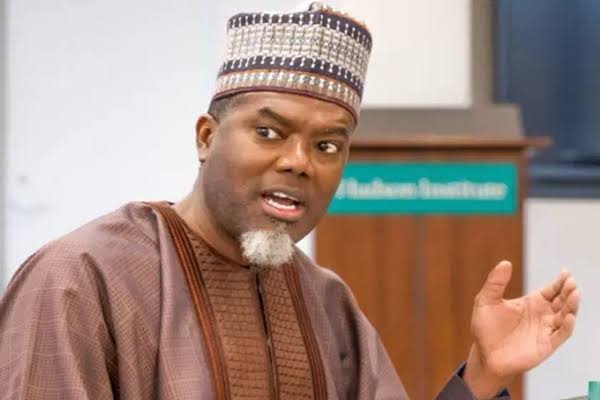
Nigerian author and social commentator Reno Omokri has called on the National Broadcasting Commission (NBC) to introduce measures that would encourage broadcasters to promote Nigerian culture through their appearance and speech.
Omokri made the proposal in a social media post, where he urged the broadcasting regulator to require newscasters and other on-air personalities to wear Made-in-Nigeria clothing and embrace Nigerian accents while presenting programmes.
According to the report by Leadership, Omokri believes television personalities have an important role to play in shaping public attitudes and promoting locally produced goods.
He argued that Nigerian broadcasters could use their visibility to give greater exposure to the country’s fashion industry and encourage Nigerians to appreciate locally manufactured clothing and accessories.

His suggestion also extended beyond fashion.
Omokri called for Nigerian broadcasters to speak naturally with Nigerian accents instead of deliberately adopting foreign accents while presenting programmes.
The proposal has generated discussion about the relationship between broadcasting, cultural identity and national development.
Supporters of Omokri’s position argue that television remains one of the most influential platforms for shaping cultural preferences. They believe regularly seeing Nigerian-made outfits on television could encourage viewers to patronise local designers, manufacturers and fashion businesses.
For Nigeria’s creative industry, such exposure could potentially provide greater visibility for designers and brands producing clothing within the country.
The suggestion concerning accents, however, raises a different set of questions.
Broadcasting has traditionally placed considerable emphasis on clear pronunciation and communication, particularly for national news programmes. While some people believe Nigerian accents should be celebrated as part of the country’s identity, others may argue that broadcasters should retain flexibility in their pronunciation as long as their speech remains clear and professional.
Nigeria is home to hundreds of ethnic groups and a wide range of languages and accents. As a result, determining what should constitute an appropriate “Nigerian accent” for national broadcasting could itself become a complicated issue.
Omokri’s comments therefore touch on a broader conversation about how Nigerians can balance international communication standards with the preservation and promotion of local identity.
His proposal also comes at a time when there is increasing emphasis on supporting Nigerian-made products and strengthening domestic industries. Encouraging local consumption has been presented as one way of supporting businesses, creating employment opportunities and reducing dependence on imported goods.
If the NBC were to consider such recommendations, it would represent a notable change in how cultural identity is incorporated into Nigerian broadcasting.
For now, Omokri’s comments remain a proposal rather than an announced NBC policy. Whether the commission will consider guidelines around locally made clothing or Nigerian accents remains to be seen.
The debate, however, has already raised an important question: Should Nigeria’s most visible broadcasters do more to promote the country’s fashion, culture and identity?




