


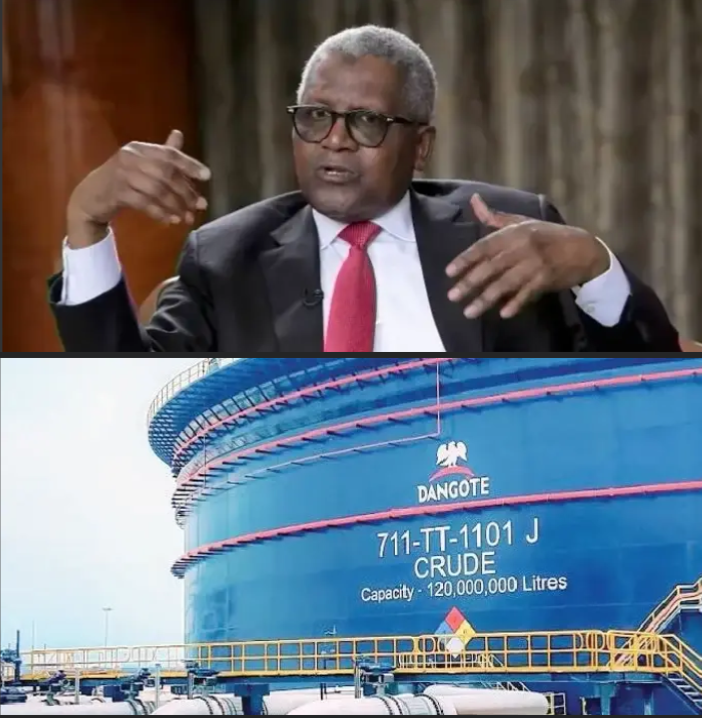
Despite the commencement of petrol production at the Dangote Refinery, Nigerians are still paying significantly higher prices for fuel, with many consumers wondering why the cost remains high in an oil-producing country.
President of Dangote Industries Limited, Aliko Dangote, has offered an explanation, pointing to continued cross-border smuggling and the significant difference between petrol prices in Nigeria and neighbouring countries.
Dangote made the remarks during an interview with Arise TV on Tuesday while discussing petrol prices, domestic supply and the possible impact of the ongoing crisis in the Middle East on petroleum availability.

According to the billionaire businessman, describing petrol as expensive in Nigeria should be considered in relation to what consumers pay in neighbouring countries. He argued that fuel prices across the borders are substantially higher, creating an incentive for traders to move petrol out of Nigeria for profit.
Dangote said petrol in some neighbouring countries could be between 30 and 50 per cent more expensive than in Nigeria. He specifically cited Niger Republic, where he said the product could sell for about 20 to 25 per cent more than the Nigerian price.
The price gap, according to him, makes the illegal movement of petrol across Nigeria’s borders financially attractive.
He explained that individuals can purchase petrol in Nigeria and move it towards border communities, where they can sell it at a higher price. Such activities, he argued, reduce the volume of petroleum products that would otherwise remain available for Nigerian consumers.
Dangote illustrated the situation with a hypothetical example involving petrol selling at around N1,350 per litre in Nigeria. If the same product commands a price that is 20 to 25 per cent higher across the border, traders can potentially make a substantial return simply by moving the commodity from one market to another.
The businessman questioned what other legitimate businesses could provide such an immediate return, stressing that the price disparity remains one of the incentives behind petrol smuggling.
His comments come at a time when Nigerians continue to deal with elevated transportation and living costs linked to petrol prices. Fuel remains a major component of the cost of moving people, food and other goods across the country, meaning changes in petrol prices often have wider consequences for households and businesses.
The development also highlights one of the challenges facing Nigeria’s downstream petroleum sector despite the emergence of the Dangote Refinery as a major domestic source of refined products.
The refinery, located in Lagos, was established to reduce Nigeria’s long-standing dependence on imported refined petroleum products. Its operations have significantly changed the structure of the country’s fuel supply market, allowing locally refined petrol to enter the domestic market.
However, Dangote’s latest comments suggest that domestic production alone may not completely resolve the problem of fuel prices if significant volumes of petrol continue to leave the country through unofficial channels.
He also raised concerns about the possible impact of the Middle East crisis on global petroleum supply. According to him, the issue could eventually become less about the price Nigerians pay for petrol and more about whether sufficient volumes will be available to meet demand.
The warning is particularly important because disruptions in major oil-producing regions can affect international crude oil and refined petroleum markets. Nigeria, despite being a major crude oil producer, remains exposed to developments in global energy markets because of the interconnected nature of the petroleum industry.
For Nigerian motorists and businesses, the immediate concern remains the pump price of petrol and how long elevated prices will continue.
Dangote’s position suggests that addressing cross-border smuggling could form part of the broader efforts required to improve domestic fuel availability and ensure that locally produced petrol reaches Nigerian consumers.
The issue also places renewed attention on Nigeria’s borders and the need for effective monitoring of petroleum products moving between the country and its neighbours.
While the Dangote Refinery has increased domestic refining capacity, the businessman believes market realities beyond production costs must also be considered when discussing the price Nigerians pay for petrol.
For consumers already struggling with higher transportation, food and operating costs, the hope is that increased domestic refining, improved distribution and stronger control of fuel movement will eventually translate into more stable and affordable petrol prices.
For now, however, Dangote’s explanation provides another perspective on why petrol remains expensive in Nigeria, despite the country having a major refinery capable of producing fuel for the domestic market.




