


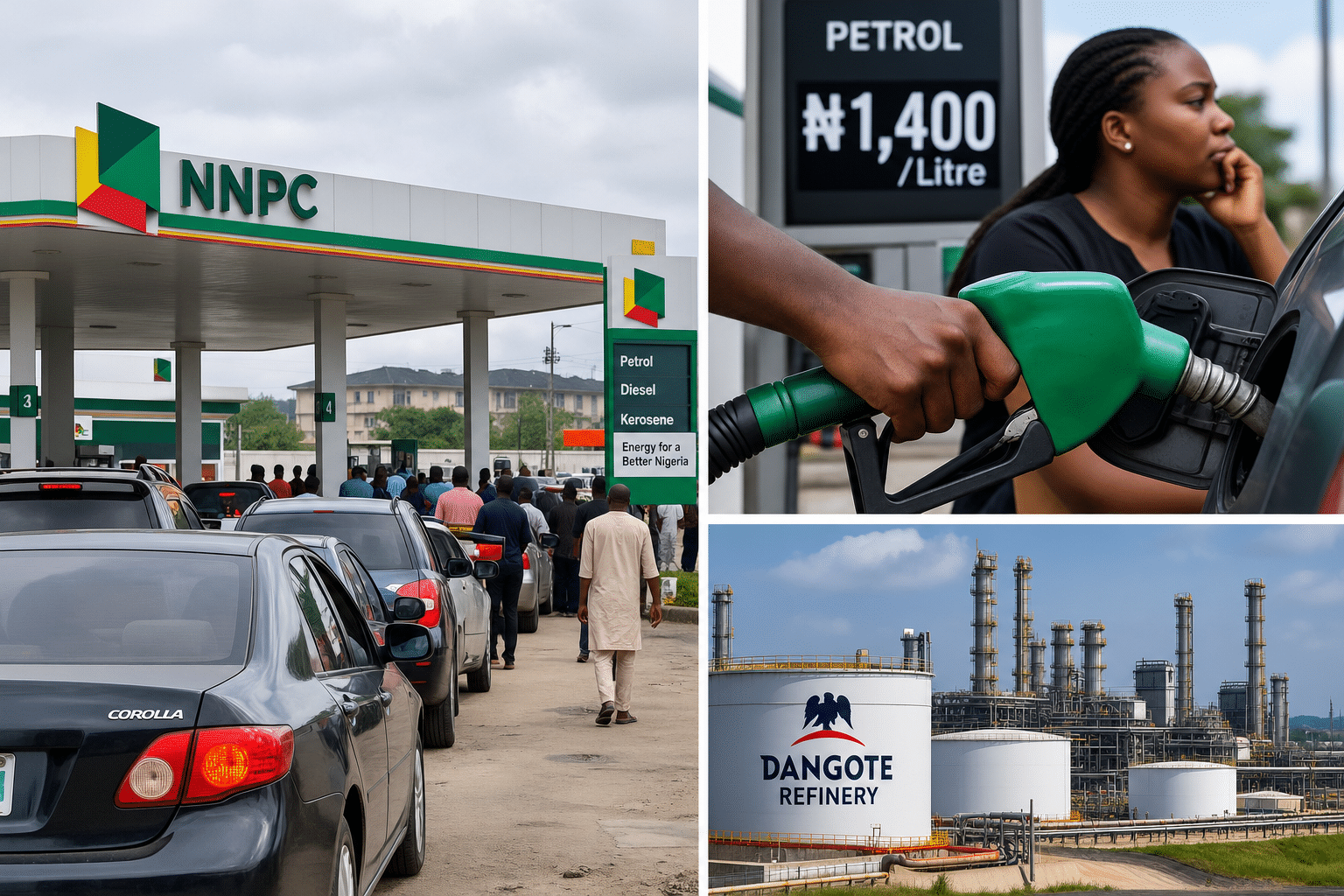
Nigeria’s petrol crisis is reopening an old debate: should the government bring back fuel subsidies to give Nigerians immediate relief?
With petrol now selling at around N1,400 per litre in Lagos and Abuja and as high as N1,500 in parts of northern Nigeria, pressure on households and businesses is rising again. Reuters
Transport fares are climbing.
Logistics costs are increasing.

Businesses that depend on petrol for transportation and power are also feeling the impact.
That has made cheaper petrol an increasingly attractive idea.
But the numbers behind a subsidy revival could create an even bigger problem.
The Centre for the Promotion of Private Enterprise estimates that restoring a universal petrol subsidy could cost Nigeria about N19.16 trillion every year.
Its estimate is based on petrol consumption of 50 million litres per day and a subsidy of N1,050 per litre. That would amount to about N52.5 billion every day. (Punch Newspapers)
The figure is enormous.
At that level, money used to keep petrol prices down would compete with funding for infrastructure, healthcare, education, security and social programmes.
And that is where the subsidy argument becomes more complicated.
A subsidy can reduce the amount motorists pay at the pump, but the cost does not disappear.
It simply moves to government finances.
The government would have to absorb the difference between the actual cost of petrol and the lower price paid by consumers.
If the bill becomes too large, Nigeria could face higher borrowing requirements, greater fiscal pressure and less money available for other priorities.
There is also the question of whether a universal subsidy is the most effective way to protect Nigerians from rising fuel costs.
The current price surge is being driven partly by higher international crude prices. Reuters reported that rising global oil prices have pushed Nigerian petrol prices sharply higher despite increased domestic refining capacity. (Reuters)
This means that simply bringing back a subsidy would not remove the underlying exposure to global oil prices.
It would only make the government responsible for absorbing more of the shock.
Nigeria’s domestic refining expansion, particularly the Dangote refinery, has also changed the structure of the fuel market.
The country is now producing more petrol locally, reducing some dependence on imported products and foreign exchange.
But local refining does not completely isolate Nigeria from international oil prices because crude remains the major input.
That leaves policymakers facing a difficult calculation.
Nigerians need relief from rising transportation and living costs.
Businesses need lower operating costs.
But the government also needs to avoid creating another huge and unpredictable financial obligation.
President Bola Tinubu has ruled out returning to the previous petrol subsidy system, instead pointing to compressed natural gas and other cheaper energy alternatives as part of the response to higher fuel prices. (The Guardian Nigeria)
The debate, therefore, is no longer simply about whether petrol should be cheaper.
It is about who should pay for that cheaper petrol.
If the government spends nearly N20 trillion annually to reduce the pump price, consumers may get immediate relief.
But Nigeria could eventually pay for that relief through higher borrowing, weaker public investment or reduced spending in other areas.
That is why the mathematics of subsidy matters.
A cheaper litre today may feel like relief at the filling station.
But if the country has to spend far more tomorrow to sustain that price, the relief could come with a much heavier bill.




