


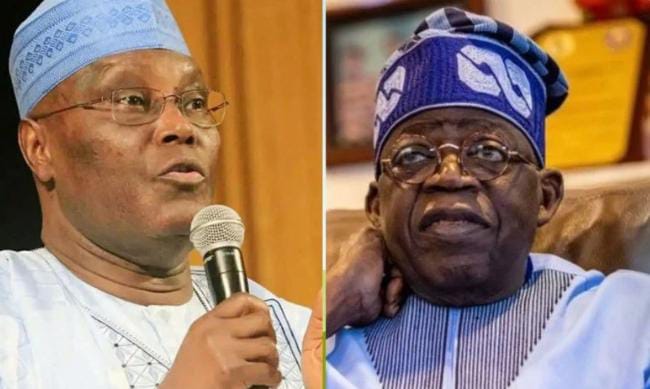
ABUJA, NIGERIA — The African Democratic Congress (ADC) Presidential Campaign Council has rejected an analysis by The Economist on President Bola Tinubu’s prospects in the 2027 presidential election, arguing that forecasts cannot determine how Nigerians will vote.
Phrank Shaibu, Director of Strategic Communications for the ADC campaign council, responded to an October 1 report by The Economist that examined factors that could influence the 2027 presidential contest.
In a statement titled “No forecast can overrule the people: Nigerians will vote out Tinubu and elect Atiku,” Shaibu said electoral projections should not be treated as a substitute for the decisions voters will make at the ballot box.
ADC Challenges Election Forecast
The Economist identified several factors that could affect the 2027 contest, including the advantages of incumbency and access to governing-party structures.

The publication also examined the fragmentation of the opposition, noting that ADC presidential candidate Atiku Abubakar and NDC presidential candidate Peter Obi are contesting the election on separate platforms.
Religion and voter cynicism were also cited as factors that could influence voter behaviour.
Shaibu acknowledged that such factors could affect an election but argued that they could not establish how Nigerians would ultimately vote.
“These factors matter. But they are not the same as public consent, and none can tell us how Nigerians will vote in January. A forecast is not a verdict,” he said.
Economic Hardship Becomes Campaign Issue
The ADC spokesman also challenged interpretations of economic hardship and limited access to public services as evidence that Nigerians had become politically disengaged.
He argued that Nigerians facing insecurity and economic difficulties would still retain the right to make their own political choices.
Shaibu said the cost of living would remain an important issue in the election, pointing to the prices of food, transportation, education, electricity and the cost of running businesses.
He cited inflation at 15.39 per cent in August and food inflation at 19.57 per cent year-on-year.
Shaibu also drew a distinction between a decline in the rate of inflation and an actual fall in prices.
He argued that when inflation slows, it means prices are increasing more slowly rather than that goods and services have necessarily become cheaper.
“Nigerians measure the economy by what their income can buy, what they must go without and whether they can provide a decent life for their families,” he said.
ADC Disputes Turnout Argument
The campaign council also rejected the suggestion that low voter turnout could automatically benefit the incumbent in 2027.
Shaibu argued that the relatively low participation recorded during the 2023 presidential election could have resulted from several factors, including voter apathy, insecurity, logistical problems, distrust and perceptions about the impact of voting.
He maintained that turnout figures alone could not demonstrate broad support for any candidate.
“Tinubu won the election; he did not receive the votes of most registered voters,” he said.
His argument focuses on the distinction between an electoral victory and support from the entire population of registered voters.
Opposition Fragmentation Remains Factor
The ADC response comes as opposition parties prepare for the 2027 presidential election amid competing political alliances and platforms.
The Economist reportedly identified the division among opposition figures as one of the factors relevant to Tinubu’s prospects. Atiku is contesting under the ADC, while Peter Obi is associated with the NDC, meaning the two opposition figures are not campaigning on the same presidential ticket.
The effect of the separate opposition platforms will depend on voter choices and the eventual electoral performance of the candidates.
Debate Over Security Continues
The material also included criticism of Tinubu’s Independence Day address from Atiku’s camp.
According to the report, Atiku’s aide Paul Ibe argued that the president’s speech was notable for issues he said were not addressed in sufficient detail, particularly killings, kidnappings, mass abductions and attacks on communities.
Ibe said Tinubu made references to insecurity and commended security personnel but argued that the address did not provide a detailed assessment of the security situation or explain what the administration intended to do differently.
The comments reflect the opposition’s criticism of the government’s handling of insecurity and form part of the wider political debate ahead of 2027.
Forecasts And Voter Choices
The disagreement illustrates the difference between election forecasting and actual electoral outcomes.
Forecasts and political analyses typically assess factors such as incumbency, party organisation, opposition strength, voter turnout and economic conditions. They do not themselves determine how voters will cast their ballots.
The 2027 election remains subject to the choices of registered voters and the eventual conduct of the electoral process.
As political parties intensify mobilisation, the competing campaigns are expected to continue presenting different interpretations of Nigeria’s economic, security and political conditions as they seek support ahead of the election.




