


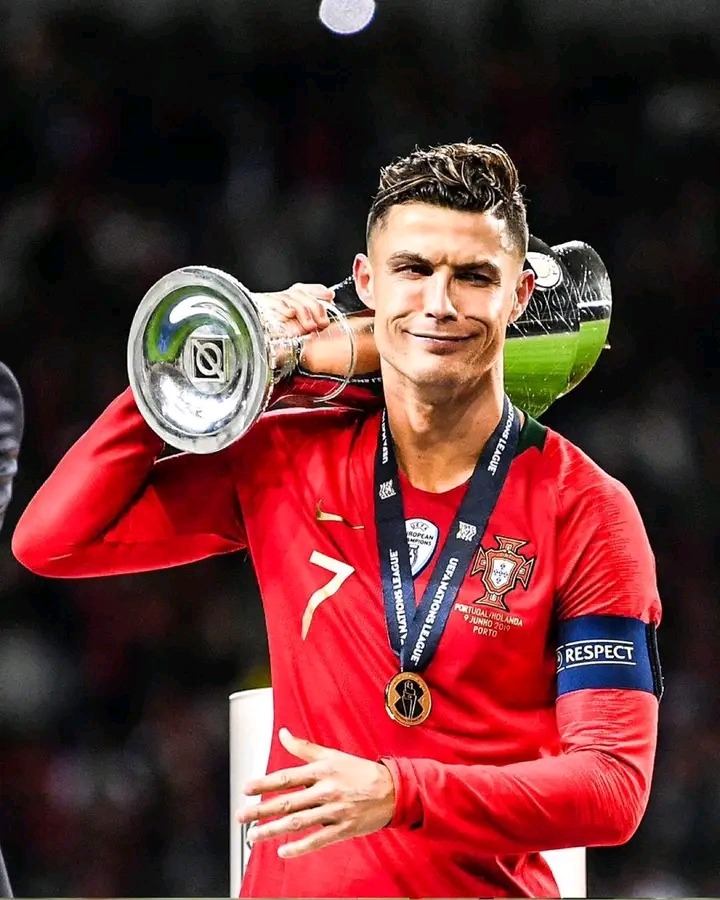
Cristiano Ronaldo has broken his silence over his dramatic departure from Portugal’s national team camp, revealing that a breakdown of trust with the coach was the main reason he decided to leave.
The Portugal captain had promised to explain his decision after abruptly leaving the squad ahead of the Nations League clash with Denmark. On Tuesday, Ronaldo delivered on that promise, issuing a lengthy personal statement in which he gave his own account of the events that led to his departure.
Interestingly, Ronaldo did not mention the name of the coach throughout his statement. Instead, he repeatedly referred to him simply as “the coach”, focusing his explanation on what was discussed between them rather than turning his statement into a direct personal attack.

According to Ronaldo, his relationship with the current Portugal coach initially began on a positive note.
After the 2026 World Cup, Ronaldo said he had originally prepared to leave international football. However, the president of the Portuguese Football Federation convinced him to reconsider and remain available for the national team.
He was then asked for his opinion about the coach who was being considered for the position.
Ronaldo said he supported the choice and was genuinely pleased when the appointment was eventually made.
He explained that the coach later contacted him and requested a face-to-face meeting. During that meeting, Ronaldo said the coach told him that he was an important part of his plans and that his presence was essential to the project.
A plan was then discussed regarding Ronaldo’s involvement in the upcoming international fixtures.
Ronaldo said the coach proposed that he would play the first and final matches of the international window while his workload would be carefully managed because of his physical condition.
The veteran forward said there was also a suggestion that he remain in Portugal rather than travel with the team for the away fixtures before rejoining the squad for the match in Porto.
Ronaldo rejected that arrangement, saying he did not believe it would be appropriate for him, as captain, to receive special treatment by staying behind while his teammates travelled.
The situation, however, changed during the match against Norway.
Ronaldo said he had not initially been expected to play, but after feeling physically ready, he indicated that he could be used if necessary. He subsequently warmed up during the game but was ultimately not brought on.
For Ronaldo, that moment became the first major breach of trust.
He said the coach had previously agreed to a particular plan but did not follow through with it. Ronaldo also said that what was later said publicly did not correspond with what had been agreed during their private discussions.
The two sides subsequently held another conversation in an attempt to settle the matter.
Ronaldo said they agreed that the coach would address the situation publicly and explain that the player had never demanded playing time. He also said the coach was expected to acknowledge that asking him to warm up without eventually using him had been a mistake.
According to Ronaldo, that commitment was not fulfilled.
He described it as the second time his word had been broken.
That, he said, was the moment he decided to leave the training camp rather than remain in an environment where he no longer felt he could trust what had been agreed.
Ronaldo stressed that his decision was not based on a demand to play every match.
The five-time Ballon d’Or winner said that, throughout almost 25 years of professional football, he had never interfered in the technical or tactical decisions of a coach. He maintained that he accepts selection decisions, whether he agrees with them or not, but considers honesty and keeping one’s word fundamental to any professional relationship.
Despite his frustration, Ronaldo accepted responsibility for leaving the camp.
He apologised to his teammates and the Portuguese people, admitting that he should not have departed in the manner he did. He also said he was prepared to accept whatever disciplinary punishment the Portuguese Football Federation considered appropriate, stressing that being captain meant he should face the consequences of his actions.
But Ronaldo made one point particularly clear: he has not retired from Portugal duty.
He said that, after serving any suspension imposed on him, he would remain available for selection provided he was physically fit and performing well for his club.
For Ronaldo, the future is therefore not about arranging an immediate farewell.
He said he expects that farewell matches will eventually happen, but insisted that when he thinks about Portugal, his priority remains competition, winning and representing his country.
His message was ultimately one of unfinished business.
After more than two decades wearing the Portugal shirt, Ronaldo may be approaching the final chapter of his international career, but he has made it clear that he does not consider the story finished yet.
For now, Ronaldo says he has walked away from the camp, not from Portugal.




